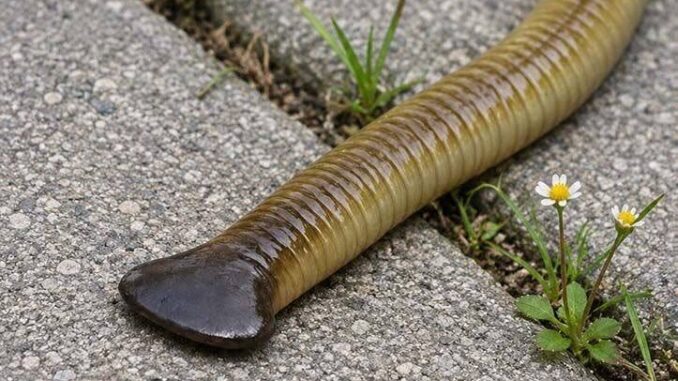
Many homeowners enjoy spending time in their gardens, but every now and then a creature appears that seems completely out of place. One of the most unusual examples is the hammerhead worm, a strange-looking animal that often surprises people when it glides across a patio, driveway, or flower bed.
With its long body and distinctive shovel-shaped head, the hammerhead worm can look more like something from a science-fiction film than a real backyard inhabitant. Although it may seem fascinating at first glance, experts consider it an invasive species in many regions, meaning it can affect local ecosystems in ways that are not always beneficial.
Understanding what these worms are, where they come from, and why they attract attention can help homeowners make informed decisions if they encounter one.
What Is a Hammerhead Worm?
Hammerhead worms are a type of land-dwelling flatworm belonging to the genus Bipalium. They are named after the unusual shape of their heads, which resemble a hammer or shovel.
Unlike ordinary earthworms, hammerhead worms are flat rather than cylindrical. Their bodies are often glossy or slimy in appearance and may be brown, gray, tan, or marked with dark stripes running along their length.
Most species grow between 8 and 12 inches long, although some can become significantly larger under favorable conditions.
Originally native to parts of Southeast Asia, these worms have gradually spread to other regions through the movement of soil, potted plants, and landscaping materials.
Why Do They Look So Different?
The hammerhead worm’s appearance is what usually captures attention first.
Its broad, flattened head stands out immediately because it looks very different from the rounded heads seen on most worms. This unique shape gives the animal its common name.
Their movement can also seem unusual. Instead of wriggling through the soil like earthworms, hammerhead worms glide smoothly across surfaces. They accomplish this using tiny structures on the underside of their bodies along with a layer of mucus that helps them move efficiently.
Because of their shiny skin and slow, gliding motion, many people find them both fascinating and slightly unsettling.
How to Identify One
Recognizing a hammerhead worm is usually straightforward once you know the key features.
Common characteristics include:
- A long, flat body
- A wide hammer- or shovel-shaped head
- Smooth, gliding movement
- A slimy or glossy appearance
- Brown, gray, tan, or striped coloration
They are often found in moist environments, particularly after rainfall. Homeowners may notice them under rocks, around gardens, near mulch, on sidewalks, or across patio stones.
How Did They Spread So Widely?
Hammerhead worms are considered invasive in many areas outside their native range.
One reason for their successful spread is their ability to travel unnoticed in soil associated with plants, landscaping materials, and nursery products.
Another reason involves their unusual method of reproduction.
In some cases, hammerhead worms can regenerate from body fragments. This means that a portion of the worm may develop into a new individual under the right conditions.
Because of this ability, attempts to physically divide the worm are generally discouraged, as they may not always eliminate the problem effectively.
Are Hammerhead Worms Dangerous?
For most people, the immediate question is whether these worms pose a direct threat.
Fortunately, hammerhead worms are not known for attacking humans or pets. They do not bite in the way many people associate with dangerous wildlife, nor are they considered aggressive toward people.
However, experts often recommend avoiding direct contact.
Their bodies produce mucus that may cause mild skin irritation in some individuals. Wearing gloves or using tools when handling them is generally considered a sensible precaution.
The greater concern involves their impact on local ecosystems rather than direct harm to people.
Why Earthworms Matter
Hammerhead worms are predators, and one of their primary food sources is earthworms.
Earthworms play an important role in maintaining healthy soil. They help break down organic matter, improve soil structure, and increase aeration, all of which support plant growth.
Because hammerhead worms prey on earthworms, large populations could potentially affect local soil ecosystems over time.
Scientists and environmental specialists therefore monitor invasive flatworm populations to better understand their impact on gardens, farms, and natural habitats.
The Role of Natural Toxins
Researchers have found that some hammerhead worm species contain a substance known as tetrodotoxin, a naturally occurring neurotoxin also associated with certain marine animals.
The toxin appears to help the worms defend themselves and capture prey.
While the amounts present are generally not considered highly dangerous to humans during casual encounters, experts still advise avoiding direct contact and washing hands thoroughly if accidental contact occurs.
This recommendation is primarily a precautionary measure rather than a cause for alarm.
What Should You Do If You Find One?
If you discover a hammerhead worm in your yard or garden, it is generally recommended to avoid handling it with bare hands.
Practical steps may include:
- Observing it from a safe distance
- Using gloves if removal is necessary
- Following local environmental or agricultural guidance regarding invasive species
- Disposing of specimens according to recommendations from local authorities when applicable
Because guidance may vary by region, checking local extension services or environmental agencies can provide the most accurate information.
How to Reduce the Chances of Seeing More
Although it may not be possible to prevent every encounter, several measures can help reduce conditions that attract hammerhead worms.
These include:
- Limiting excessive moisture in outdoor areas when possible
- Inspecting new plants and soil before introducing them to gardens
- Keeping landscaping areas tidy and well maintained
- Monitoring mulch beds, rocks, and damp hiding places
- Checking outdoor spaces after periods of heavy rain
Early detection can make it easier to monitor potential populations before they become more established.
Why These Worms Receive So Much Attention
Hammerhead worms attract interest because they combine an unusual appearance with genuine ecological significance.
Many invasive species go unnoticed because they resemble native wildlife. Hammerhead worms, however, are immediately recognizable due to their distinctive shape and movement.
Their presence also serves as a reminder of how easily plants, soil, and landscaping materials can transport organisms from one region to another.
Final Thoughts
Encountering a hammerhead worm can be surprising, especially for those seeing one for the first time. Its unusual hammer-shaped head, smooth movement, and impressive size make it one of the most distinctive creatures likely to appear in a garden or yard.
While these worms generally do not pose a serious threat to humans, they are considered invasive in many areas and may affect local ecosystems by preying on beneficial earthworms. For that reason, awareness and proper identification are important.
By understanding what hammerhead worms are, how they spread, and why they matter, homeowners can respond calmly and responsibly if they ever spot one moving across their patio, garden path, or backyard landscape
Leave a Reply