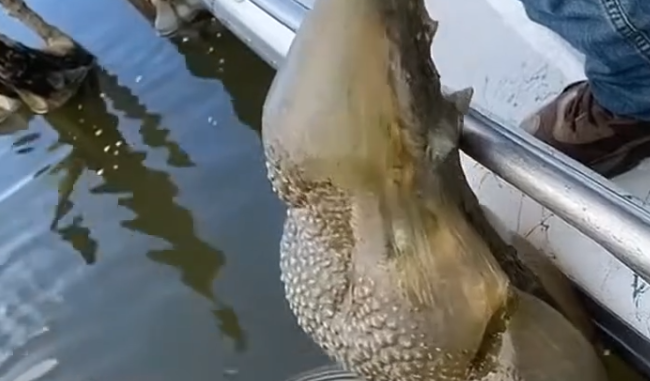
Nature has a remarkable way of surprising us. Even in places that people visit regularly, unexpected discoveries can spark curiosity and inspire a closer look at the incredible diversity of life hidden beneath the surface. Lakes, rivers, and wetlands often contain organisms that many people have never seen before, and some of them can appear quite unusual at first glance.
One such discovery occurred at McGee Creek Reservoir in Atoka County, Oklahoma, where visitors noticed several strange, transparent, jelly-like clusters attached to submerged tree branches. Their unusual appearance quickly led to questions about what they were and whether they posed any risk to people, fish, or the surrounding environment.
As experts investigated the formations, they discovered that these mysterious masses were not pollution, invasive creatures, or anything dangerous. Instead, they belonged to one of the oldest surviving groups of freshwater animals on Earth—a fascinating organism with a history stretching back hundreds of millions of years.
The discovery became an opportunity to educate the public about freshwater ecosystems, biodiversity, and the incredible resilience of life that often goes unnoticed beneath calm lake waters.
An Unexpected Discovery Beneath the Water
During a routine outing on McGee Creek Reservoir, several boaters noticed unusual formations hanging beneath the water’s surface.
Attached to submerged branches and logs were soft, rounded masses with a translucent appearance. Some were only a few inches across, while others were much larger, creating clusters that gently moved with the water.
Because most people rarely encounter anything similar, the formations immediately attracted attention.
Their smooth texture and irregular shape made them appear unfamiliar, leading some observers to wonder whether they were a type of fungus, algae, or even discarded material.
Photographs of the discovery soon began circulating online, where many viewers offered their own guesses about the mysterious objects.
Initial Curiosity Led to Expert Investigation
Whenever unusual natural phenomena appear, scientists encourage people to remain curious while avoiding assumptions.
Wildlife specialists and freshwater biologists examined photographs and later confirmed the identity of the unusual organisms.
Rather than representing a new species or environmental concern, the formations turned out to be colonies of freshwater bryozoans, tiny aquatic animals that have existed on Earth for hundreds of millions of years.
Although individual bryozoans are microscopic, they live together in large colonies that gradually develop into the jelly-like structures visible to the human eye.
For many people, it was the first time they had ever learned that such organisms existed.
What Are Freshwater Bryozoans?
Despite their unusual appearance, freshwater bryozoans are completely natural inhabitants of ponds, lakes, reservoirs, and slow-moving rivers.
Each visible colony is actually made up of thousands of tiny individual animals known as zooids.
These microscopic creatures work together as a colony, sharing resources while performing specialized roles that help the group survive.
Unlike jellyfish or other free-swimming aquatic animals, bryozoans remain attached to underwater surfaces such as:
- Tree branches
- Rocks
- Docks
- Aquatic plants
- Fallen logs
- Artificial structures beneath the water
As colonies continue growing throughout the warmer months, they gradually develop into soft, gelatinous masses that can reach impressive sizes.
Some colonies grow only a few centimeters across, while others may become larger than a basketball under ideal conditions.
A History That Reaches Far Into Earth’s Past
One of the most remarkable aspects of bryozoans is their ancient history.
Scientists estimate that members of this group first appeared more than 500 million years ago, making them among the oldest animal lineages still living today.
Throughout Earth’s long geological history, bryozoans have survived dramatic climate changes, shifting continents, and multiple mass extinction events.
Marine bryozoans are especially common in the fossil record, where they have helped scientists better understand ancient oceans and prehistoric ecosystems.
Freshwater species represent only a small portion of the overall bryozoan family, making sightings in lakes especially interesting to naturalists.
Why They Look So Unusual
Many people mistake bryozoan colonies for something artificial because of their distinctive appearance.
The colonies often resemble:
- Clear gelatin
- Soft sponge material
- Transparent foam
- Floating jelly
- Rounded brain-like patterns
Closer inspection reveals an intricate surface covered with tiny openings where individual zooids extend delicate feeding structures into the surrounding water.
These structures, known as lophophores, capture microscopic food particles carried by gentle currents.
Although invisible from a distance, they perform an essential role in keeping the colony healthy.
Natural Water Filters
Freshwater bryozoans spend much of their lives filtering tiny particles from the surrounding water.
Their diet consists primarily of:
- Microscopic algae
- Bacteria
- Organic particles
- Plankton suspended in the water
By removing these materials, bryozoans contribute to maintaining healthy freshwater ecosystems.
While a single colony filters only a modest amount of water, many colonies living together may collectively process significant volumes over time.
Scientists consider them one of many organisms that naturally support water quality.
Indicators of Healthy Water
Interestingly, bryozoans are often viewed as a positive environmental sign.
They generally thrive in relatively clean freshwater environments with stable conditions.
Although they can tolerate natural seasonal changes, they are less common in heavily polluted waters.
For this reason, discovering thriving colonies may indicate that a lake provides suitable habitat for a wide variety of aquatic life.
Their presence alone does not guarantee perfect water quality, but it often reflects a balanced ecosystem capable of supporting diverse organisms.
Completely Harmless to Humans
Perhaps the most reassuring finding for curious visitors was that freshwater bryozoans pose no known threat to people.
They:
- Do not bite.
- Do not sting.
- Do not release toxins.
- Do not attack fish.
- Do not damage boats.
- Do not spread disease through casual contact.
Because of their unusual appearance, people occasionally worry that the colonies may be hazardous.
In reality, they are gentle filter-feeding animals that spend their entire lives attached to underwater surfaces.
Experts simply recommend observing them without disturbing them whenever possible.
Why They Appear During Certain Times of Year
Bryozoan colonies are most commonly observed during warmer months when water temperatures encourage growth.
Throughout spring and summer, individual zooids reproduce rapidly, allowing colonies to expand.
As temperatures cool in autumn, many colonies gradually decline.
However, the species has developed an impressive survival strategy.
Bryozoans produce tiny structures called statoblasts—durable reproductive capsules capable of surviving freezing temperatures, drought, and other challenging environmental conditions.
When favorable conditions return, new colonies begin developing once again.
This remarkable adaptation has contributed to their long evolutionary success.
A Community of Tiny Specialists
Although the colony appears to function as one organism, each zooid performs essential biological tasks.
Working together allows the colony to:
- Collect food efficiently
- Reproduce successfully
- Repair damaged areas
- Respond to environmental changes
Scientists often describe this cooperation as an excellent example of colonial living in the animal kingdom.
Each microscopic individual contributes to the survival of the larger community.
Why Discoveries Like This Capture Public Attention
In today’s connected world, unusual natural discoveries often spread rapidly through social media.
Photographs of unfamiliar plants, insects, fungi, or aquatic organisms frequently generate thousands of comments as people attempt to identify them.
The Oklahoma bryozoan discovery followed a similar pattern.
Many viewers initially guessed the formations were:
- Alien organisms
- Fish eggs
- Mold
- Pollution
- Plastic waste
- Underwater fungus
The actual explanation proved even more fascinating because it highlighted an ancient form of life that has quietly existed for millions of years.
The Importance of Freshwater Biodiversity
Lakes contain far more life than most people realize.
Beneath the surface lives a complex community including:
- Fish
- Amphibians
- Aquatic insects
- Crustaceans
- Mollusks
- Plants
- Algae
- Microorganisms
- Filter feeders like bryozoans
Every organism contributes to maintaining ecological balance.
Even species that receive little public attention often play important roles in nutrient cycling, water filtration, and food webs.
Protecting freshwater habitats helps preserve these delicate relationships.
Responsible Observation of Wildlife
When encountering unusual organisms outdoors, experts recommend observing them respectfully.
Simple guidelines include:
- Avoid removing organisms from their habitat.
- Do not damage colonies for photographs.
- Keep boats and equipment from scraping attached wildlife.
- Report unusual findings to local conservation agencies if appropriate.
- Allow scientists to identify unfamiliar species before assuming they are harmful.
These practices help protect wildlife while allowing others to enjoy similar discoveries.
Ongoing Scientific Interest
Freshwater bryozoans continue to attract scientific research because they offer insights into evolution, ecology, and environmental health.
Researchers study them to better understand:
- Colonial animal behavior
- Water quality
- Ecosystem dynamics
- Climate adaptation
- Evolutionary biology
- Freshwater biodiversity
Although they may appear simple, these organisms continue to provide valuable information about aquatic ecosystems around the world.
Appreciating Nature’s Hidden Wonders
One of the most rewarding aspects of exploring natural environments is discovering species that often go unnoticed.
Many lakes contain remarkable organisms that quietly perform important ecological roles without attracting attention.
The bryozoan colonies found in Oklahoma remind us that not every unusual sight is cause for concern.
Sometimes, what initially seems mysterious turns out to be an excellent example of nature’s creativity and resilience.
Learning about these organisms helps foster greater appreciation for freshwater habitats and the countless species that call them home.
Conservation Begins with Understanding
Education plays an important role in conservation.
When people understand the value of lesser-known species, they are more likely to support efforts that protect clean water, healthy ecosystems, and wildlife habitats.
Organizations across the country continue working to preserve lakes, rivers, and wetlands through habitat restoration, pollution prevention, scientific monitoring, and public education.
Every healthy freshwater ecosystem supports an interconnected web of life, from microscopic organisms to birds, mammals, reptiles, amphibians, and fish.
Protecting one part of that system benefits countless others.
Final Thoughts
The discovery of unusual jelly-like colonies in McGee Creek Reservoir offered more than an interesting sight—it provided a fascinating glimpse into one of nature’s oldest surviving animal groups.
Although their appearance initially puzzled visitors, freshwater bryozoans are harmless, beneficial organisms that help filter water and contribute to healthy aquatic ecosystems. Their long evolutionary history, unique colonial lifestyle, and important ecological role make them an excellent reminder that many of nature’s greatest wonders remain hidden just beneath the surface.
As scientists continue studying freshwater biodiversity, discoveries like this encourage greater curiosity about the natural world and reinforce the importance of protecting the lakes, rivers, and wetlands that support such extraordinary forms of life. Sometimes, the most memorable wildlife encounters are not with large or dramatic animals, but with small, often overlooked organisms whose stories stretch back hundreds of millions of years.
Leave a Reply