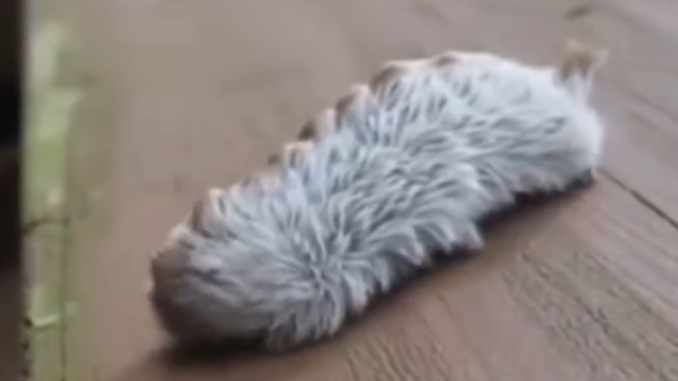
Public parks often serve as serene settings for families to enjoy nature, engage in recreational activities, and create lasting memories. Yet, within these natural environments, there are aspects of wildlife that may not be immediately obvious or understood, especially by children. One such example is the puss caterpillar, an insect that blends innocuously into its surroundings but carries a hidden defense mechanism that can pose risks to humans.
The puss caterpillar, scientifically known as Megalopyge opercularis, is indigenous to parts of the southeastern United States, including areas like Georgia, Florida, and North Carolina. Its distinctive appearance is often described as soft and furry, resembling a small tuft of cotton or a plush toy resting on tree branches or other surfaces. This deceptive look can easily attract the curiosity of park visitors, particularly children, who may be unaware of the potential consequences of close contact.
At first glance, a puss caterpillar may seem harmless, inviting gentle touches or closer inspection. However, beneath its fuzzy exterior lies a complex defensive adaptation: venomous spines concealed under the soft hairs. These spines can inject venom upon contact, resulting in painful skin reactions. Symptoms reported from exposure include intense burning sensations, swelling, redness, and irritation that can last from several hours to days. While the caterpillar does not actively attack or pursue threats, its venomous spines serve as an effective deterrent against predators and unwary humans alike.
Encounters with puss caterpillars in public spaces such as parks underscore the importance of awareness and education about local wildlife. Many families visiting these areas may not recognize the insect or understand the risks involved. This highlights a broader need for community outreach and informational signage in parks where these caterpillars are prevalent, helping visitors identify potential hazards and exercise caution.
For parents and guardians, moments of discovery like spotting a puss caterpillar can be turned into valuable teaching opportunities. Children often perceive the world through simple associations—softness equals safety, small size means harmlessness. Explaining the complexity of nature’s defense strategies helps foster a balanced perspective, encouraging curiosity while promoting caution. Teaching children to pause before touching unknown creatures and to seek adult guidance can reduce accidental exposures and enhance their understanding of ecological diversity.
From an ecological standpoint, puss caterpillars play a role in the environment as part of the food web. While their venomous spines deter many predators, the caterpillars themselves serve as food for certain birds and insects capable of handling their toxins. Their presence in parks and natural areas is a reminder of the intricate relationships within ecosystems and the adaptations organisms develop to survive.
Public awareness campaigns and educational programs can further bridge the knowledge gap. Simple guidelines such as observing insects without direct contact, recognizing the caterpillar’s distinctive appearance, and knowing what symptoms to watch for in case of contact can empower visitors. Additionally, park staff and naturalists can provide on-site information and assistance, helping to create a safe and respectful environment for both humans and wildlife.
In addition to health considerations, the puss caterpillar encounter offers insights into the broader theme of nature’s complexity. It challenges assumptions based solely on appearances and invites observers to appreciate the subtle mechanisms that govern survival in the natural world. Such experiences can inspire deeper interest in entomology, ecology, and conservation among park visitors of all ages.
Ultimately, enjoying time outdoors involves a balance of exploration and mindfulness. Recognizing that not all creatures are as they seem encourages thoughtful interaction with the environment. Families who learn about insects like the puss caterpillar gain a richer appreciation for biodiversity and the importance of respecting wildlife boundaries.
In summary, the puss caterpillar is a compelling example of a seemingly innocuous creature possessing a potent defense strategy. Its presence in public parks is a call to enhance public knowledge, promote safe practices, and nurture an informed curiosity about the natural world. By combining education with caution, families can continue to enjoy the beauty of nature while minimizing risks and fostering a lasting respect for the living world around them.
Preventive Measures and First Aid for Puss Caterpillar Encounters
Understanding how to respond safely to encounters with puss caterpillars can significantly reduce the risk of injury and discomfort. Prevention begins with awareness — knowing what these creatures look like and where they are commonly found in the environment. Avoiding direct contact by teaching children and adults alike to observe without touching is the most effective strategy.
In areas where puss caterpillars are known to inhabit, it is advisable to stay on designated paths and avoid brushing against low-hanging branches or foliage where the caterpillars might reside. Wearing protective clothing such as long sleeves and pants during outdoor activities can also provide an additional barrier against accidental contact.
If contact does occur, prompt action can help alleviate symptoms. Washing the affected area thoroughly with soap and water may help remove any remaining spines or venom. Applying adhesive tape gently to the skin can sometimes lift out tiny spines embedded in the skin. Over-the-counter topical treatments or antihistamines might relieve itching and swelling, but medical advice should be sought if symptoms worsen or if an allergic reaction is suspected.
The Role of Parks and Communities in Public Education
Parks and community organizations have a vital role in educating the public about local wildlife hazards, including puss caterpillars. Installing clear and informative signage in parks can alert visitors to the presence of these caterpillars and provide guidance on how to safely enjoy the natural surroundings.
Community outreach programs, such as workshops or guided nature walks led by trained naturalists, can further enhance public understanding. These programs offer opportunities for direct engagement, where visitors can learn to identify various insects and understand their ecological roles. Such education fosters respect for wildlife and encourages responsible behavior.
Collaboration between park authorities, schools, and local health departments can expand the reach of educational efforts, ensuring that families and individuals are equipped with the knowledge to make informed decisions during outdoor activities.
Ecological Significance of the Puss Caterpillar
While the puss caterpillar’s venomous spines serve as an effective defense mechanism, this insect also plays an integral part in its ecosystem. As larvae, puss caterpillars feed on the leaves of various trees and shrubs, which can influence plant health and growth patterns. This herbivory, while sometimes considered detrimental in large numbers, is part of the natural balance within forest and park ecosystems.
Moreover, puss caterpillars serve as prey for certain species of birds, parasitic wasps, and other insects that have evolved strategies to overcome or tolerate their venom. This dynamic interaction highlights the complexity of food webs and evolutionary adaptations.
By appreciating these ecological connections, visitors gain a broader perspective on the importance of preserving diverse habitats and the species they support.
Encouraging Scientific Curiosity and Responsible Interaction
Encounters with creatures like the puss caterpillar can inspire scientific curiosity, particularly among young learners. Parents and educators can harness these moments to encourage observation skills, critical thinking, and a deeper interest in biology and ecology.
Using tools such as field guides, mobile apps, or online resources to identify insects can make learning interactive and engaging. Encouraging questions and discussions about why certain animals have developed defensive features helps build a foundation for environmental literacy.
At the same time, it is crucial to emphasize responsible interaction with wildlife. Understanding boundaries, respecting animal habitats, and recognizing signs of danger contribute to both human safety and animal welfare.
The Broader Context of Human-Wildlife Coexistence
The presence of animals like the puss caterpillar in public parks is a reminder of the ongoing coexistence between humans and wildlife. As natural areas become increasingly accessible, the potential for encounters with diverse species grows. This coexistence requires a balance that honors the needs and safety of both people and animals.
Developing policies and practices that protect natural habitats while minimizing risks is an evolving challenge for park management. Efforts such as habitat conservation, visitor education, and monitoring of wildlife populations contribute to sustainable coexistence.
Visitors also have a role to play by practicing awareness and respect during their outdoor experiences, recognizing that their actions impact the environment and its inhabitants.
Conclusion: Fostering Awareness, Respect, and Enjoyment of Nature
The puss caterpillar serves as a compelling example of nature’s complexity and the need for informed interaction with the environment. Through education, preventive measures, and respectful observation, families and park visitors can minimize risks while enriching their appreciation for biodiversity.
Encounters with such creatures offer valuable lessons about caution, curiosity, and the intricate adaptations that enable survival in the natural world. By embracing these lessons, communities can foster a culture of awareness and stewardship that benefits both people and the ecosystems they cherish.
Ultimately, the goal is to create outdoor experiences that are safe, enjoyable, and enlightening—where the wonders of nature are honored and preserved for generations to come.
Understanding the Life Cycle of the Puss Caterpillar
To fully appreciate the presence and potential impact of the puss caterpillar, it is helpful to understand its life cycle. The puss caterpillar represents the larval stage of the Megalopyge opercularis moth. After hatching from eggs laid on the underside of leaves, the caterpillars go through several molts as they grow. Eventually, they pupate, transforming into adult moths that are less conspicuous and do not possess the venomous spines. Recognizing this life cycle can assist park visitors and community members in identifying periods when the caterpillars are most prevalent and potentially hazardous. This knowledge also highlights the natural progression of insects and the changes in their interaction with the environment.
The Importance of Reporting and Monitoring
Regular monitoring of puss caterpillar populations by park management and local wildlife agencies can provide valuable data to assess the risk posed to the public. Visitors who spot these caterpillars in unexpected locations, such as playground equipment or picnic areas, can contribute by reporting sightings to park authorities. This collaboration helps in timely management decisions, such as targeted removal or public notifications, to reduce human contact. Monitoring also supports research efforts that explore the caterpillar’s habitat preferences and population dynamics, enabling more effective coexistence strategies.
Safe Removal and Management Practices
When puss caterpillars are found in areas with high human activity, safe removal may be warranted to mitigate risk. This task should be carried out by trained personnel equipped with protective clothing and tools to avoid envenomation. Mechanical removal or the application of environmentally responsible insecticides may be employed, carefully balancing public safety with ecological considerations. It is important to avoid untrained handling of these caterpillars, as improper contact can result in painful stings. Education about these practices can reassure the public and demonstrate responsible stewardship of shared natural spaces.
Cultural and Historical Perspectives on Caterpillars and Insects
Throughout history, insects have held various roles in human culture—ranging from symbols in folklore to subjects of scientific curiosity. Caterpillars, in particular, have often been associated with transformation and growth due to their metamorphosis into butterflies or moths. However, not all caterpillars are benign; some, like the puss caterpillar, remind us of nature’s complexity and the need for respect. By exploring cultural narratives alongside scientific facts, educators can provide a richer context that connects people to the natural world on multiple levels.
Technological Advances in Insect Identification
Recent developments in technology have made identifying insects like the puss caterpillar more accessible to the general public. Mobile applications equipped with image recognition, online databases, and citizen science platforms enable users to upload photos and receive identification assistance. These tools empower park visitors and nature enthusiasts to learn more about the insects they encounter, fostering engagement and accurate knowledge dissemination. Integrating technology into educational programs can enhance outreach efforts and promote a proactive approach to wildlife awareness.
Promoting Inclusive Outdoor Experiences
Ensuring that educational materials and safety guidelines about puss caterpillars are accessible to diverse audiences is essential. This includes providing information in multiple languages, using clear visuals, and accommodating different learning styles. Inclusive communication helps reach broader segments of the community, including children, seniors, and individuals with varying abilities. By fostering an environment where everyone feels informed and safe, parks can encourage more people to enjoy nature responsibly.
Research Opportunities and Community Science
The study of puss caterpillars and their interactions with ecosystems presents opportunities for community science initiatives. Volunteers can participate in data collection, such as documenting sightings, monitoring seasonal changes, and reporting unusual behaviors. Such collaborative efforts contribute valuable information to scientists and resource managers, while simultaneously educating and engaging participants. Community involvement strengthens the connection between people and their environment, supporting conservation goals and enhancing public safety.
Balancing Recreation and Conservation in Park Management
Parks serve multiple purposes, including recreation, education, and habitat preservation. Managing these sometimes competing interests requires thoughtful planning. Awareness of creatures like the puss caterpillar informs decisions about trail design, vegetation management, and visitor guidelines. For example, maintaining clear paths and minimizing dense underbrush near heavily trafficked areas can reduce accidental contact. Additionally, scheduling maintenance activities outside peak caterpillar seasons supports both public safety and ecological integrity. Such strategies exemplify how parks can adapt to natural challenges while maintaining their mission to provide enjoyable outdoor spaces.
Long-Term Implications for Biodiversity and Human Health
The presence of venomous insects such as the puss caterpillar in public spaces underscores broader themes in biodiversity and human health. Protecting diverse ecosystems requires recognizing the roles of all species, even those that pose some risks. At the same time, promoting human health involves education and infrastructure that minimize harmful encounters. Balancing these priorities is an ongoing process that benefits from multidisciplinary collaboration among ecologists, health professionals, educators, and community members. By maintaining this balance, society can support resilient ecosystems alongside safe human recreation.
Summary and Final Thoughts
The puss caterpillar exemplifies the intricate interplay between nature’s beauty and its hidden complexities. Through understanding its life cycle, ecological role, and potential risks, individuals and communities can better appreciate and coexist with this fascinating insect. Emphasizing education, safety, and respectful observation enhances outdoor experiences and promotes stewardship of natural environments. As public parks continue to serve as vital spaces for connection with nature, embracing knowledge about creatures like the puss caterpillar ensures that such interactions remain both enriching and safe for all.
Leave a Reply