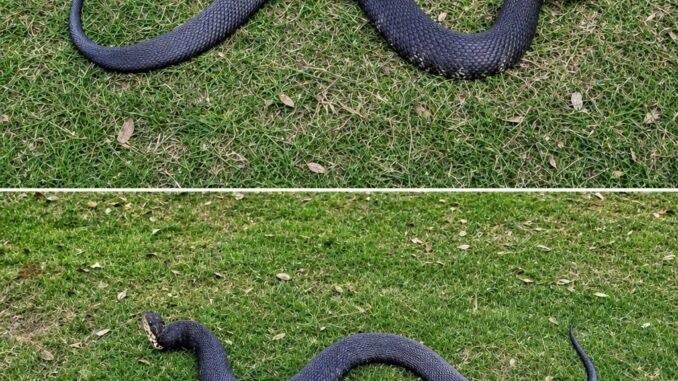
A peaceful day outdoors can change in an instant.
One minute, you’re walking through the woods enjoying the quiet—the sound of leaves moving in the breeze, birds calling somewhere overhead, and the steady rhythm of your footsteps. The next, you notice something lying across the trail that wasn’t there a moment ago.
You stop.
At first, it looks like a pile of leaves or a fallen branch.
Then it moves.
A copperhead has been resting just a few feet away.
For many people, that moment produces an immediate rush of fear. Copperheads are venomous snakes, and their camouflage can make them remarkably difficult to see until you’re already close.
But an encounter doesn’t have to turn into an emergency.
In fact, understanding how copperheads behave and knowing what to do when you encounter one can make the difference between a frightening moment and a dangerous situation.
The most important rule is simple: give the snake space.
You don’t need to chase it away, touch it, kill it, or prove that you’re brave enough to walk past it.
Back away, give it a wide berth, and let it continue doing what it was doing.
Why Copperheads Are So Difficult to See
Copperheads are masters of camouflage.
Their bodies typically feature patterns of brown, tan, and copper that can blend remarkably well with leaves, bark, rocks, and forest debris.
In the autumn, when the forest floor becomes covered with fallen leaves, that camouflage can become especially effective.
A copperhead may be sitting only a short distance from a trail and be almost impossible to distinguish from the surrounding environment.
This is one reason people sometimes report that they nearly stepped on one.
It isn’t necessarily because the snake was aggressively approaching them.
The person simply didn’t see it.
For hikers, gardeners, hunters, campers, and anyone else who spends time outdoors, awareness is therefore more useful than fear.
Pay attention to the trail ahead.
Watch where you place your feet.
Be cautious when stepping over logs or rocks.
And don’t put your hands into spaces you can’t see clearly.
These habits can reduce the likelihood of an accidental encounter.
Copperheads Usually Aren’t Looking for a Fight
The image of a venomous snake aggressively chasing a person through the woods makes for good movie scenes, but it doesn’t reflect the typical behavior of a snake that wants to avoid unnecessary conflict.
Copperheads generally prefer to be left alone.
Like other wild animals, they have limited reasons to interact with humans. A person is not a normal prey item, and an encounter with a much larger animal creates potential danger for the snake as well.
A copperhead may remain completely still when someone approaches because its camouflage is its primary defense.
In some cases, a snake may rely on remaining hidden rather than immediately fleeing.
That’s one reason getting too close can be dangerous.
If you don’t notice the snake and suddenly step beside it, reach toward it, or corner it, the animal may respond defensively.
The safest strategy is therefore not to test how close you can get.
Give it room before it feels threatened.
What Should You Do If You See One?
If you spot a copperhead, stop.
Take a moment to determine where the snake is and where you can safely move.
Then slowly increase the distance between yourself and the animal.
You don’t need to make dramatic movements.
You don’t need to shout.
And you certainly don’t need to pick up a stick and try to move it.
If the snake is on a trail, simply wait for it to move away if doing so is safe, or carefully choose another route around it.
Give the animal a wide enough path that it doesn’t feel cornered.
Remember that a snake can move more quickly than you may expect over short distances.
There’s no reward for getting close.
The goal is simply to get yourself safely away.
Never Try to Handle a Copperhead
This is one of the most important rules to remember.
Don’t try to pick up a copperhead, even if you believe it is dead.
Don’t attempt to move it with your hands.
Don’t try to capture it for a photograph.
And don’t assume that using a long stick makes handling it safe.
Snake bites frequently happen when people attempt to interact with snakes rather than simply leaving them alone.
A snake that appears calm can react quickly if it feels threatened.
The best photograph is the one you take from a safe distance.
If you can’t get a picture without approaching the animal, don’t take the picture.
The memory of seeing a copperhead is more valuable than a photograph that puts you at risk.
Watch Where You Put Your Hands
Most people instinctively watch where they put their feet while hiking.
Your hands deserve the same attention.
Be especially cautious around fallen logs, rock piles, cracks, dense vegetation, brush, and other places where a snake could be hiding.
If you’re climbing over a log, don’t automatically grab the other side without looking.
If you’re moving a piece of firewood, inspect it first.
If you’re reaching into a dark space beneath a rock or structure, stop and make sure you can see what is there.
The principle is simple:
Don’t put a hand or foot somewhere you haven’t checked first.
This habit isn’t specific to copperheads. It can also protect you from spiders, insects, sharp objects, and other hazards.
Clothing and Footwear Matter
You don’t need specialized equipment to enjoy most outdoor activities safely, but appropriate clothing can provide an additional layer of protection.
When hiking in areas where venomous snakes are known to occur, sturdy, closed-toe footwear is preferable to sandals or bare feet.
Long pants can also provide some protection from vegetation, insects, and other hazards.
Snake-resistant gaiters or other specialized equipment may be useful for people who routinely work or spend significant time in environments with substantial snake activity, but most casual hikers don’t need to turn a short walk into an expedition.
Awareness remains the most important tool.
Good footwear simply gives you another layer of protection.
What If You Accidentally Get Close?
Sometimes you don’t see the snake until you’re already beside it.
If that happens, don’t panic.
Sudden movements can make an already stressful situation worse.
Instead, stop and slowly move away.
If you have already stepped near the snake, give it room to retreat. Don’t try to block its path.
If you’re hiking with other people, calmly let them know where the snake is so they don’t accidentally walk toward it.
Children should be taught the same rule.
If they see a snake, they should not approach it.
Instead, they should stop, move away, and tell an adult.
Teaching children this behavior is much safer than teaching them to identify every snake they might encounter.
Identification can be useful, but distance is more important.
What Happens If Someone Is Bitten?
A suspected copperhead bite should be treated as a medical emergency.
The first priority is to get away from the snake so that no one else is bitten and the person isn’t exposed to additional danger.
Then seek emergency medical care immediately.
Don’t wait to see whether symptoms become severe.
Snakebite symptoms can vary, and their progression isn’t always predictable. A person may initially feel relatively well and develop more significant symptoms later.
Medical professionals can assess the bite and determine the appropriate treatment.
If possible and if it can be done safely, remembering the snake’s appearance can help medical professionals understand what may have happened.
But don’t attempt to catch or kill the snake for identification.
Your safety comes first.
If someone is bitten while hiking, call emergency services or use the appropriate local emergency medical system. Follow the instructions provided by professionals while waiting for help.
Don’t Try Old-Fashioned Home Remedies
Snakebites have generated countless myths over the years.
Some of the most persistent involve cutting the skin over the bite, attempting to suck venom from the wound, applying ice, using a tourniquet without medical guidance, or trying various chemicals and herbal preparations.
These approaches can cause additional injury and are not substitutes for professional medical treatment.
Don’t cut the bite.
Don’t try to suck out venom.
Don’t apply ice directly.
Don’t use an untested home remedy.
And don’t delay medical care while experimenting with something you’ve seen online.
The appropriate response is to seek professional medical evaluation as quickly as possible.
Modern medical care is far more useful than improvised treatments.
Stay Calm After a Suspected Bite
This is easier said than done.
Being bitten by a venomous snake is frightening, and it’s natural for a person to panic.
But staying as calm as possible is important.
Avoid unnecessary physical activity and focus on getting medical assistance.
If you’re with someone who has been bitten, reassure them and help them remain still and calm while emergency care is arranged.
Don’t encourage them to walk long distances if other options for getting help are available.
If you’re hiking alone, having a charged phone and letting someone know your planned route before heading into the woods can be extremely valuable.
Good preparation can make a major difference during any outdoor emergency—not just a snakebite.
Prevention Starts Before You Enter the Woods
The best snakebite treatment is avoiding a bite in the first place.
Before heading outdoors, learn something about the environment you’re entering.
Are venomous snakes common in the area?
Are you hiking through rocky terrain, dense brush, wetlands, or other habitats where snakes may be present?
Knowing what to expect can make you more attentive without making you afraid.
Wear appropriate footwear.
Stay on established trails when possible.
Watch where you’re walking.
Use a flashlight when hiking in low-light conditions.
Be particularly careful around logs, rocks, tall grass, and piles of leaves.
And never reach blindly into a hole, crevice, or pile of vegetation.
These precautions don’t guarantee that you’ll never encounter a snake.
They simply reduce the chances of an accidental close encounter.
What About Snakes Near Campsites and Homes?
Copperheads don’t necessarily stay deep in the wilderness.
Depending on where you live, they can sometimes be found around rural properties, wooded neighborhoods, gardens, sheds, woodpiles, or other areas that provide food and shelter.
If you encounter a snake around your home or campsite, the same basic rule applies.
Give it space.
Don’t corner it.
Don’t try to handle it.
If the snake is in an area where people or pets are likely to encounter it repeatedly, contact an appropriate local wildlife or animal-control professional for advice.
Keeping outdoor areas tidy can also reduce wildlife encounters. Remove unnecessary piles of debris, keep woodpiles organized, and avoid creating dense, undisturbed hiding places immediately around frequently used areas.
The goal isn’t to eliminate every wild animal from your property.
It’s to reduce unnecessary interactions.
Respecting Snakes Protects Everyone
It’s understandable to be afraid of venomous snakes.
But fear can sometimes encourage exactly the behavior you want to avoid.
A person who panics may run directly toward a snake, attempt to kill it, or make sudden movements.
A person who understands the situation is more likely to stop, create distance, and leave the animal alone.
That benefits both sides.
The snake doesn’t need to be harmed.
You don’t need to risk being bitten.
Everyone gets to continue with their day.
Copperheads are part of the ecosystem, and like other predators, they play a role in controlling populations of smaller animals.
You don’t have to like snakes to recognize that they belong in the natural environment.
The Unexpected Lesson From a Copperhead Encounter
A copperhead can turn an ordinary walk into a memorable experience in a matter of seconds.
But the lesson doesn’t have to be that the woods are dangerous.
It can be that the woods deserve attention.
Nature isn’t a controlled environment. Trails have uneven ground. Branches fall. Wildlife moves through vegetation. Weather changes. And sometimes a beautifully camouflaged snake is resting only a few feet from where you’re walking.
The safest response isn’t panic.
It’s awareness.
Look where you’re stepping.
Watch where you place your hands.
Wear appropriate footwear.
Give wildlife plenty of space.
And if you encounter a snake, let it remain a snake instead of turning it into a confrontation.
Most outdoor encounters end exactly that way: quietly.
You notice the animal, realize what you’re looking at, step back, and continue on your way.
If a bite is suspected, seek emergency medical attention immediately and avoid unproven remedies.
Otherwise, there’s no reason a copperhead sighting has to ruin the rest of your day.
In fact, after the initial shock wears off, you may find yourself appreciating just how remarkable the encounter was.
You were walking through the woods, completely unaware that another creature was sharing the trail.
For a few seconds, you noticed each other.
Then you gave it room.
And you both went on with your day.
Leave a Reply