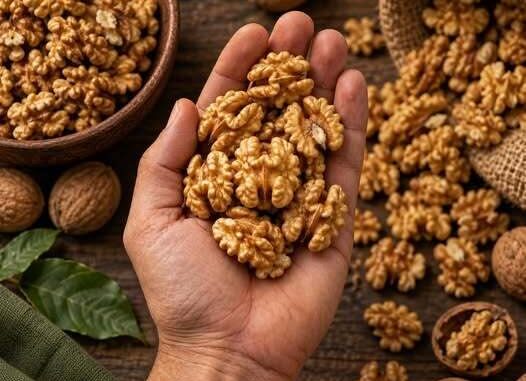
What happens when you make walnuts a regular part of your diet? This small, crunchy nut may offer considerably more nutritional value than its size suggests.
For generations, nuts have been valued as convenient sources of energy and nourishment. Among them, walnuts stand out because of their distinctive flavor, unusual appearance, and particularly interesting fat profile. Their wrinkled kernels may resemble a tiny brain, but their nutritional importance has much more to do with what is inside them than what they look like.
A modest serving of walnuts provides healthy fats, plant-based omega-3 fatty acids, protein, fiber, vitamins, minerals, and naturally occurring plant compounds. When included as part of a balanced diet, these nutrients can contribute to overall health.
But walnuts are not a miracle food. Their benefits are best understood as part of a broader eating pattern that includes vegetables, fruits, whole grains, legumes, and other nutritious foods.
So, what makes this familiar nut so interesting?
An Ancient Food With a Long History
Walnuts have been eaten by humans for thousands of years.
The English or Persian walnut, scientifically known as Juglans regia, has a long history across parts of Central Asia, the Middle East, and regions around the Mediterranean. Over time, walnut cultivation spread to many other parts of the world.
Their popularity was practical as well as culinary. Walnuts are energy-dense, relatively easy to transport, and can be stored for periods of time when handled properly.
Ancient cultures also developed traditional beliefs about walnuts. Because the wrinkled kernel looks somewhat like a human brain, some historical traditions associated the nut with brain health.
Modern nutrition does not support the old idea that foods must resemble an organ to benefit it. However, interestingly, walnuts do contain nutrients that are relevant to normal brain and nervous-system function.
The scientific explanation is far more useful than the ancient symbolism.
What Makes Walnuts Nutritionally Different?
One of the most notable characteristics of walnuts is their fat composition.
Many nuts contain substantial amounts of unsaturated fats, but walnuts are particularly notable for their polyunsaturated fatty acids. They are also one of the better plant sources of alpha-linolenic acid, commonly called ALA.
ALA is an essential omega-3 fatty acid. The body cannot produce it in sufficient amounts, so it must come from food.
A typical 1-ounce serving, which is roughly a small handful, contains a meaningful amount of ALA.
The body can convert some ALA into the longer-chain omega-3 fatty acids EPA and DHA, although the conversion is limited. This is one reason walnuts should be viewed as a useful plant source of omega-3 fats rather than an exact nutritional replacement for marine sources of EPA and DHA.
1. Walnuts Provide Plant-Based Omega-3 Fatty Acids
ALA is one of the features that makes walnuts especially interesting.
Omega-3 fatty acids are involved in many normal functions throughout the body, including the structure of cell membranes. They are also associated with cardiovascular and metabolic health when consumed as part of an appropriate diet.
Because ALA is essential, obtaining it through food is important.
For people who eat little or no fish, walnuts can be one convenient way to add plant-based omega-3 fatty acids to the diet.
Other plant sources include flaxseeds, chia seeds, and certain plant oils.
2. They Can Contribute to Heart-Healthy Eating
Walnuts are often studied in relation to cardiovascular health.
Their combination of unsaturated fats, fiber, minerals, and plant compounds makes them a nutrient-dense food that can fit well into a heart-conscious eating pattern.
Research on nuts in general has associated regular nut consumption with favorable cardiovascular outcomes, although this does not mean that eating walnuts alone prevents heart disease.
The overall diet matters.
Replacing foods high in saturated fats or highly processed snacks with a small serving of walnuts may be a more meaningful dietary change than simply adding walnuts on top of an already high-calorie diet.
In other words, what walnuts replace can matter as much as what they add.
3. Walnuts Provide Dietary Fiber
Although walnuts are better known for their fats, they also provide dietary fiber.
Fiber is important for digestive health and can contribute to feelings of fullness after eating.
A diet containing adequate fiber is generally associated with several aspects of good health, including normal bowel function and better overall dietary quality.
Because walnuts are relatively energy-dense, portion size remains important. A small handful can be enough to add their nutritional benefits without turning a simple snack into a very high-calorie one.
4. They Contain Plant Compounds With Antioxidant Properties
Walnuts contain a variety of naturally occurring plant compounds, including polyphenols.
Some of these compounds have antioxidant properties, meaning they can help counter oxidative processes in the body.
Oxidation is a normal part of metabolism, but excessive oxidative stress is associated with various biological processes involved in aging and disease.
It is important, however, not to interpret this as meaning walnuts “detoxify” the body or prevent every disease. The body already has sophisticated systems for managing oxidative stress.
A better way to describe walnuts is as one nutrient-rich food that contributes beneficial plant compounds to the diet.
5. Walnuts Can Support a More Satisfying Snack
A handful of walnuts can be surprisingly filling.
Their combination of fat, protein, and fiber can make them more satisfying than many highly processed snack foods.
For example, replacing a sugary snack or heavily processed convenience food with a modest serving of walnuts may help create a more balanced eating pattern.
That does not mean walnuts automatically cause weight loss.
They are calorie-dense, so eating large quantities can add substantial energy to the diet. Portion awareness is therefore important, especially for people trying to manage their weight.
6. They Can Be Useful for Brain-Friendly Nutrition
The walnut’s brain-like appearance has inspired countless health claims, but its actual nutritional composition is what makes it interesting.
Walnuts contain ALA, polyphenols, vitamin E, and other nutrients involved in normal cellular function.
Research has investigated whether regular walnut consumption may be associated with aspects of cognitive and neurological health. Some findings are encouraging, but it would be too strong to claim that eating walnuts makes a person smarter or prevents cognitive decline.
Brain health depends on many factors, including physical activity, sleep, blood pressure, metabolic health, social engagement, and overall diet.
Walnuts can be one component of that broader lifestyle.
7. They Contain Important Minerals
Walnuts also provide several minerals needed for normal bodily functions.
Among them are magnesium, copper, manganese, and phosphorus.
Magnesium participates in hundreds of biochemical reactions in the body, while copper and manganese contribute to normal metabolic and enzymatic processes.
These nutrients are required in relatively small amounts, but obtaining enough of them through a varied diet is important.
A diverse diet makes it easier to obtain the full range of vitamins and minerals the body needs.
8. Walnuts Are Easy to Add to Everyday Meals
One of the biggest advantages of walnuts may simply be their versatility.
You do not need an elaborate recipe to include them in your diet.
A small portion can be added to:
-
Oatmeal or porridge.
-
Plain yogurt.
-
Fresh fruit.
-
Salads.
-
Whole-grain cereal.
-
Smoothie bowls.
-
Homemade energy snacks.
-
Vegetable dishes.
They can also be eaten on their own as a convenient snack.
Choosing unsalted walnuts can be particularly useful if you are trying to reduce unnecessary sodium intake.
9. They Can Add Texture and Flavor Without Much Effort
Walnuts have a rich, slightly earthy flavor that can make simple meals more interesting.
Their crunchy texture works particularly well with soft foods such as yogurt, oatmeal, and cooked vegetables.
This can make nutritious meals more enjoyable without requiring large amounts of sugar, salt, or heavily processed sauces.
For people trying to improve their diet gradually, small changes like adding nutrient-rich nuts to an existing breakfast may be easier to maintain than completely changing their eating habits.
10. A Little Can Go a Long Way
Because walnuts are concentrated sources of energy and nutrients, you do not need a huge portion.
A common serving size is around 1 ounce, or approximately 28 grams.
That is roughly a small handful, although the exact number of walnut halves can vary depending on their size.
Eating a reasonable portion allows you to enjoy their nutritional benefits while keeping total calorie intake in perspective.
If you are adding walnuts to meals that already contain several calorie-dense ingredients, such as cheese, avocado, oils, or nut butter, you may want to adjust portions accordingly.
11. Choose the Right Type of Walnut
Not all walnut products are nutritionally equivalent.
Plain, raw, or dry-roasted walnuts without excessive added salt or sugar are generally straightforward choices.
Flavored walnuts can contain added sugar, sodium, or other ingredients.
Candied walnuts, for example, may still contain some of the nutrients naturally present in walnuts, but the added sugar changes the overall nutritional profile.
Reading the ingredient label can help you understand exactly what you are eating.
12. Walnuts Are Not Suitable for Everyone
Despite their nutritional value, walnuts are not appropriate for people with tree-nut allergies.
A walnut allergy can cause symptoms ranging from mild itching or hives to potentially severe allergic reactions.
Anyone with a known tree-nut allergy should follow the advice of their healthcare professional and avoid walnuts when instructed.
People with digestive sensitivities may also find that large quantities of nuts cause discomfort. Starting with a modest serving can help determine personal tolerance.
13. Storage Matters
Walnuts contain a significant amount of unsaturated fat, which means they can eventually become rancid if stored improperly.
Heat, light, and oxygen can accelerate the deterioration of fats.
Keeping walnuts in an airtight container in a cool, dark place can help maintain their quality. For longer storage, refrigeration or freezing can be useful.
If walnuts develop an unpleasant paint-like, bitter, or stale odor or flavor, they may have gone rancid and should not be eaten.
How Many Walnuts Should You Eat?
There is no universal number that everyone needs to eat every day.
A small handful is a commonly used portion, but the appropriate amount depends on your overall diet, energy requirements, health goals, and personal preferences.
More is not necessarily better.
Because walnuts are calorie-dense, consuming very large quantities may provide more calories than you intend.
The goal should be to incorporate them sensibly into a varied diet rather than treating them as a supplement that must be consumed in large amounts.
The Bigger Picture Matters Most
It is easy to become fascinated by individual “superfoods,” but healthy eating is rarely about one ingredient.
Walnuts can provide useful fats, plant-based omega-3 ALA, fiber, minerals, and plant compounds. However, they cannot supply every nutrient the body needs.
A balanced eating pattern should include a variety of foods.
Vegetables provide different vitamins and minerals. Fruits offer fiber and naturally occurring plant compounds. Whole grains provide complex carbohydrates and additional fiber. Legumes can provide protein and minerals, while other nuts and seeds contribute their own unique nutritional profiles.
Walnuts are best viewed as one valuable piece of this larger picture.
Final Thoughts
Walnuts may look like an ordinary snack, but their nutritional profile makes them an interesting addition to a balanced diet.
They provide plant-based omega-3 ALA, unsaturated fats, fiber, minerals, and a variety of naturally occurring plant compounds. Regularly eating a modest portion may be a convenient way to improve the nutritional quality of snacks and meals.
Their potential benefits are not based on their brain-like appearance or any mysterious property. Instead, they come from the nutrients and bioactive compounds naturally found inside the walnut.
The simplest approach is also one of the most practical: choose a reasonable portion of plain walnuts and combine them with a varied diet rich in whole and minimally processed foods.
A handful of walnuts will not transform your health overnight. But as part of consistent, balanced eating habits, this small and versatile nut can be a nutritious choice worth keeping in your kitchen.
Leave a Reply