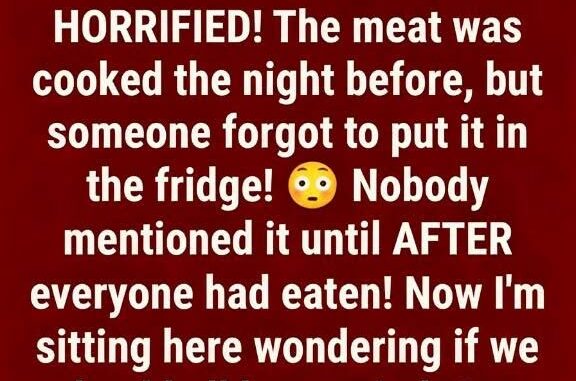
It is easy to forget about leftovers after preparing a meal. You might finish dinner, clean part of the kitchen, and only realize the next morning that a container of cooked chicken or beef was left on the counter.
The food may still look fresh, and there might be no noticeable change in its smell or appearance.
However, that does not necessarily mean it is safe to eat.
Proper food storage plays an important role in preventing foodborne illness. Cooked meat, including chicken and beef, must be handled carefully because harmful microorganisms can multiply when food remains at unsuitable temperatures.
Understanding basic food safety recommendations can help households reduce unnecessary risks while storing meals more effectively.
Why Proper Meat Storage Matters
Chicken, beef, and other types of meat are considered perishable foods.
This means they require appropriate temperature control to remain safe for consumption.
Although cooking meat thoroughly helps destroy many harmful microorganisms, the food can become contaminated again after preparation.
Bacteria may be introduced through utensils, hands, surfaces, or other sources.
If cooked meat is then left at room temperature for an extended period, certain bacteria can multiply.
The longer food remains in conditions that support bacterial growth, the greater the potential risk.
This is why food safety recommendations emphasize prompt refrigeration after cooking and serving.
Understanding the Food Temperature Danger Zone
Food safety professionals commonly use the term danger zone to describe temperatures at which many harmful bacteria can grow rapidly.
This range extends from approximately 40°F to 140°F (4°C to 60°C).
When perishable food remains within this temperature range, bacteria may multiply over time.
Room temperature usually falls within this range.
For example, cooked chicken left on a kitchen counter overnight may spend several hours at temperatures that allow bacterial growth.
The same concern applies to cooked beef, seafood, and many other perishable foods.
Keeping hot food appropriately hot and cold food appropriately cold helps reduce these risks.
Refrigeration slows bacterial growth, while proper cooking helps reduce harmful microorganisms already present in food.
Can You Eat Cooked Chicken That Was Left Out Overnight?
Cooked chicken should not be eaten if it has remained at ordinary room temperature overnight.
Poultry requires careful handling because it can be associated with microorganisms that cause foodborne illness.
Raw chicken may contain bacteria such as Salmonella or Campylobacter.
Cooking poultry to the recommended internal temperature helps reduce these hazards.
However, cooking does not make chicken safe to leave unrefrigerated indefinitely.
After preparation, the food may become contaminated again, and bacteria can multiply if it is stored improperly.
For example, imagine preparing roasted chicken in the evening and forgetting to refrigerate the leftovers.
The next morning, the chicken may appear unchanged.
Nevertheless, its appearance cannot confirm that it is safe.
The recommended action is to discard chicken that has been left at room temperature overnight.
Is Cooked Beef Any Different?
Beef also requires appropriate storage after cooking.
Some people believe that cooked beef is less likely to become unsafe when left unrefrigerated.
However, cooked beef remains a perishable food.
Steak, roast beef, ground beef, and other cooked beef dishes can support bacterial growth when stored at unsuitable temperatures.
Even if the meat was cooked thoroughly, leaving it on the counter for several hours can create food safety concerns.
This applies to both large portions and smaller servings.
For example, leftover roast beef should be refrigerated promptly rather than left in a covered dish overnight.
A lid or food covering may protect the meal from dust or insects, but it does not maintain a safe storage temperature.
Cooked beef that has been left at room temperature overnight should be discarded.
Why Food Can Look Normal Even When It Is Unsafe
One of the most important food safety principles is that appearance alone cannot establish whether food is safe.
Many people examine leftovers for changes in color, texture, or smell.
While visible spoilage can indicate that food should be discarded, the absence of these signs does not guarantee safety.
Some harmful bacteria do not produce noticeable changes in food.
A piece of chicken may smell normal while still containing microorganisms capable of causing illness.
The same is true of beef and other perishable foods.
For this reason, tasting a small portion is not a reliable way to test questionable leftovers.
Instead, decisions should be based on storage time, temperature, and proper handling.
The Two-Hour Rule for Perishable Foods
A widely recommended food safety guideline is the two-hour rule.
Under general U.S. food safety recommendations, perishable foods should not remain at room temperature for more than two hours.
This includes cooked meat, poultry, seafood, and many prepared dishes.
When the surrounding temperature exceeds 90°F (32°C), the recommended limit is reduced to one hour.
This shorter period is particularly relevant during hot weather, outdoor gatherings, and meals served in warm environments.
A simple guide to food storage
| Situation | Recommended action |
|---|---|
| Cooked meat left out for less than two hours at ordinary room temperature | Refrigerate promptly |
| Cooked meat left out for more than two hours | Discard |
| Perishable food left out for more than one hour above 90°F (32°C) | Discard |
| Chicken or beef left on the counter overnight | Discard |
| Properly refrigerated cooked leftovers | Generally use within 3–4 days |
These recommendations assume the food was handled safely before being left out.
Does Reheating Make Overnight Meat Safe?
Reheating is useful for properly stored leftovers, but it cannot reliably correct unsafe storage.
Heating food can destroy many types of bacteria when the appropriate temperature is reached.
However, certain bacteria can produce toxins that may remain in food even after reheating.
As a result, placing meat in a microwave, oven, or frying pan does not guarantee that food left out overnight will become safe again.
This is an important distinction.
Reheating should be used for leftovers that were stored correctly, not as a way to recover food that has spent too long at room temperature.
For properly refrigerated leftovers, the generally recommended reheating temperature is 165°F (74°C).
A food thermometer is the most reliable way to confirm that the center of the food has reached the appropriate temperature.
Can You Refrigerate Meat After It Has Been Left Out Too Long?
Refrigeration slows bacterial growth, but it does not reverse what may have occurred during prolonged room-temperature storage.
If cooked meat has remained unrefrigerated beyond the recommended time limits, placing it in the refrigerator afterward does not reliably make it safe.
The same principle applies to freezing.
Cold temperatures can slow or stop the growth of many microorganisms, but they do not necessarily eliminate bacteria or toxins already present.
For this reason, chicken or beef that has been left out overnight should not be refrigerated or frozen for later consumption.
The safest approach is to discard it.
How to Refrigerate Cooked Meat Correctly
Proper storage begins soon after cooking.
A few practical habits can help keep leftovers safe and maintain their quality.
1. Refrigerate food promptly
Cooked chicken and beef should be refrigerated within two hours of cooking or serving.
If the surrounding temperature is above 90°F (32°C), refrigerate within one hour.
There is no need to leave food on the counter until it reaches room temperature.
2. Divide large portions into smaller containers
Large amounts of hot food may cool slowly.
Dividing leftovers into smaller portions and placing them in shallow containers helps them cool more efficiently.
This is especially useful for large roasts, cooked chicken, stews, and similar dishes.
3. Use suitable food storage containers
Clean, food-safe containers help protect leftovers from contamination.
Containers with secure lids can also help maintain food quality during refrigeration.
4. Maintain the correct refrigerator temperature
A refrigerator should be kept at 40°F (4°C) or below.
Using a refrigerator thermometer can help confirm that the appliance is operating at a suitable temperature.
5. Label leftovers
Adding a preparation or storage date to containers can make it easier to track how long food has been refrigerated.
This is particularly useful when preparing meals in advance.
How Long Can Cooked Chicken Stay in the Refrigerator?
Properly handled cooked chicken can generally be stored in the refrigerator for three to four days.
This recommendation assumes that the chicken was refrigerated promptly and kept at 40°F (4°C) or below.
Examples include roasted chicken, grilled chicken, and other cooked poultry dishes.
If you do not expect to eat the leftovers within the recommended period, freezing them is a practical option.
However, refrigeration time should not be treated as a guarantee of safety if the food was handled improperly beforehand.
If chicken has been left unrefrigerated beyond the recommended limits, it should be discarded regardless of how recently it was cooked.
How Long Can Cooked Beef Be Refrigerated?
Most properly stored cooked beef leftovers can also be refrigerated for approximately three to four days.
This includes cooked steak, roast beef, and ground beef dishes.
The exact storage needs may vary depending on the preparation method and ingredients.
For example, a dish containing beef, dairy products, and other perishable ingredients should be handled according to appropriate food safety recommendations for the complete meal.
If the leftovers will not be eaten within a few days, freezing may help preserve them for later use.
Always ensure the food was cooled and stored safely before freezing.
Freezing Meat for Longer Storage
Freezing is an effective method for preserving properly handled food.
When food remains continuously frozen at 0°F (-18°C) or below, bacterial growth is effectively halted, although some microorganisms may survive.
Frozen food can remain safe for extended periods when stored continuously at that temperature.
However, quality may gradually decline.
Changes in texture, flavor, and moisture can occur during long-term freezer storage.
Freezer burn is one example.
It occurs when moisture is lost from the surface of frozen food, producing dry or discolored areas.
Freezer burn primarily affects quality rather than automatically making food unsafe.
For better results, use suitable freezer containers or packaging and label items with their freezing dates.
Safe Ways to Thaw Frozen Chicken and Beef
Proper thawing is another important part of food safety.
Leaving frozen meat on the kitchen counter for several hours is not recommended because the outer portions can reach temperatures that support bacterial growth while the center remains frozen.
Safer thawing methods include refrigeration, cold water, and microwave thawing.
Refrigerator thawing
Place frozen meat in the refrigerator and allow it to thaw gradually.
This method helps keep the food at a controlled temperature.
Cold-water thawing
Place meat in leakproof packaging and submerge it in cold water.
Change the water approximately every 30 minutes to maintain a suitably cold temperature.
Food thawed this way should be cooked promptly.
Microwave thawing
A microwave’s defrost setting can be used for certain foods.
However, meat thawed in the microwave should be cooked immediately because portions may become warm during the process.
These methods are preferable to leaving meat at room temperature for an extended period.
What If the Meat Was Left in a Covered Pot?
A common question involves food left overnight in a pot with a lid.
Some people assume that covering the food keeps it safe.
While a lid can reduce exposure to certain external contaminants, it does not prevent bacterial growth caused by improper temperature control.
A pot of cooked chicken or beef can remain within the danger zone for several hours.
This is especially relevant when a large quantity of food cools slowly.
The same concern applies to food left inside an oven that has been turned off.
Unless the food has been continuously maintained at a safe hot-holding temperature, it should not be considered safely stored.
What About Meat Left in a Slow Cooker?
Slow cookers are designed to prepare food using controlled heat over an extended period.
However, the safety of food in a slow cooker depends on whether the appliance maintains an appropriate temperature.
A functioning appliance set to a suitable hot-holding setting may keep cooked food at a safe temperature.
By contrast, a slow cooker that has been switched off does not provide reliable temperature control.
If cooked meat remains in an unplugged or switched-off slow cooker overnight, it should generally be discarded unless reliable temperature records establish that safe conditions were maintained.
Simply keeping the lid closed is not enough.
What Happens If Someone Eats Improperly Stored Meat?
Eating chicken or beef that has been stored incorrectly does not mean illness will always occur.
However, the risk of foodborne illness increases when harmful microorganisms have had an opportunity to multiply.
Possible symptoms include nausea, vomiting, diarrhea, abdominal cramps, and fever.
The timing of symptoms can vary.
Some foodborne illnesses develop within hours, while others may take several days to appear.
The severity can also differ depending on the microorganism involved and the person’s health.
If someone develops severe symptoms, bloody diarrhea, persistent vomiting, signs of dehydration, or a high fever, medical attention is important.
Certain groups, including young children, older adults, pregnant individuals, and people with weakened immune systems, may be more vulnerable to serious complications.
How to Reduce Food Waste Without Compromising Safety
Throwing away food can be disappointing, especially when time and money were spent preparing it.
Fortunately, a few simple habits can help reduce the likelihood of forgotten leftovers.
One approach is to transfer extra portions into storage containers soon after serving a meal.
Another is to plan refrigerator space before cooking large quantities of food.
Meal preparation can also be organized around realistic portion sizes.
If a household regularly prepares more food than it can eat within a few days, freezing suitable portions promptly may be helpful.
Keeping the refrigerator organized and labeling containers can make stored meals easier to identify.
These habits can reduce waste while supporting safe food handling.
Common Questions About Meat Left at Room Temperature
Is cooked chicken safe after four hours on the counter?
Under general food safety recommendations, cooked chicken left at ordinary room temperature for more than two hours should be discarded.
Can I eat steak that was left out overnight?
No. Cooked steak is perishable and should not be eaten after being left at room temperature overnight.
Does food poisoning always cause an unusual smell?
No. Harmful microorganisms may be present even when food looks and smells normal.
Can boiling leftover meat make it safe again?
Boiling or reheating cannot reliably eliminate all hazards associated with prolonged improper storage.
Is it safe to put warm food directly into the refrigerator?
Yes. Warm food can be refrigerated promptly. Large portions should be divided into shallow containers to help them cool efficiently.
Does freezing kill all bacteria in meat?
No. Freezing prevents the growth of many microorganisms while food remains frozen, but it does not reliably destroy all bacteria.
Final Thoughts
Cooked chicken and beef should not be eaten after being left at ordinary room temperature overnight.
Although the food may appear fresh, harmful microorganisms can multiply without producing obvious changes in smell, taste, or appearance.
Reheating, refrigerating, or freezing meat after prolonged improper storage does not reliably make it safe again.
The simplest way to reduce food safety risks is to refrigerate perishable leftovers within two hours, or within one hour when temperatures exceed 90°F (32°C).
Keeping your refrigerator at 40°F (4°C) or below, using shallow storage containers, and consuming properly refrigerated leftovers within three to four days are practical habits that can help protect your household.
When cooked meat has been left out overnight, discarding it is the recommended food safety choice.
Leave a Reply