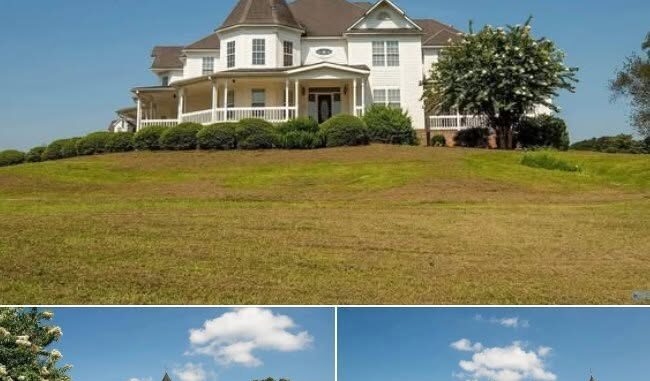
A residential property reportedly built in 1995 offers an impressive amount of interior space, with approximately 8,332 square feet, ten bedrooms, and eleven bathrooms.
The combination of a large floor area and numerous private rooms makes this property an interesting example of spacious residential design.
For households that need additional accommodations, a home of this size may provide flexibility for family members, visitors, workspaces, and other everyday activities.
However, the number of rooms is only one part of evaluating a property.
Its layout, condition, maintenance history, location, and operating costs are equally important considerations.
Here is a closer look at the reported features of this residence and what prospective buyers should know before exploring a property of this scale.
A Residence Offering Approximately 8,332 Square Feet
One of the property’s most notable characteristics is its reported interior size.
At approximately 8,332 square feet, the residence provides a substantial amount of space compared with many conventional single-family homes.
A larger interior can offer opportunities for different room arrangements and household activities.
However, square footage alone does not explain how a property functions.
Two homes with identical measurements may have very different layouts.
One might feature larger shared living areas, while another could distribute more space among bedrooms, hallways, and supporting rooms.
The available description does not provide a detailed floor plan for this residence.
As a result, the exact distribution of its 8,332 square feet remains unknown.
Prospective buyers should review official measurements and property documentation to understand how the interior is organized.
Ten Bedrooms Provide Flexible Accommodation
The home is described as having ten bedrooms.
This is a substantial number of private rooms for a residential property.
For larger households, the bedrooms may provide separate sleeping areas for family members.
Additional rooms could potentially accommodate relatives or overnight guests.
Depending on their dimensions and arrangement, some bedrooms may also be suitable for alternative uses.
For example, a room could become a home office, study, reading area, or hobby space.
A household with fewer occupants might prefer to reserve certain rooms for visitors while using others for personal activities.
However, the actual suitability of each room depends on its size, lighting, ventilation, accessibility, and layout.
The available information does not include individual bedroom measurements.
Those details should be confirmed through the official listing or an in-person viewing.
Eleven Bathrooms Add Practical Convenience
Another notable feature is the reported eleven-bathroom configuration.
Having multiple bathrooms can be useful in a residence designed to accommodate numerous occupants.
It may reduce the need for household members and visitors to share a limited number of facilities.
For example, bathrooms located near different bedroom areas can make daily routines more convenient.
Additional facilities near common spaces may also be helpful when guests visit.
However, the property description does not specify whether all eleven bathrooms are full bathrooms.
Some may be partial bathrooms containing only a toilet and sink.
Their locations, dimensions, fixtures, and current condition are also unknown.
A detailed floor plan and property inspection can help establish how these facilities are distributed throughout the residence.
Built in 1995: Understanding the Home’s Construction Era
The residence was reportedly constructed in 1995.
This places its original construction within the final decade of the 20th century.
Homes from this period can differ from both older historic properties and contemporary new construction.
Building materials, room arrangements, insulation practices, and mechanical systems have continued to evolve since the 1990s.
However, the construction year does not necessarily reveal the home’s current condition.
A property built in 1995 may have undergone significant renovations or system replacements.
Other components may still date from the original construction.
Without documentation, it is not possible to determine which features have been updated.
Buyers should therefore evaluate the home’s maintenance and renovation history rather than relying on its age alone.
Why the Floor Plan Matters in a Large Home
A property with ten bedrooms and eleven bathrooms requires careful consideration of how the rooms connect.
The arrangement of living areas, bedrooms, bathrooms, hallways, and entrances can influence everyday convenience.
For example, a household may prefer bedrooms grouped in one section of the property.
Another household might value greater separation between sleeping areas and shared spaces.
The location of staircases and the number of floors can also affect accessibility.
A large total floor area does not automatically guarantee that every room is conveniently positioned.
Some square footage may be dedicated to corridors, storage, mechanical areas, or other supporting spaces.
Reviewing a detailed floor plan is therefore essential.
It can help prospective buyers determine whether the property offers the type of layout they need.
Could Some Bedrooms Be Used as Home Offices?
As remote and hybrid work arrangements have become more common, dedicated workspaces are an important consideration for some homebuyers.
A ten-bedroom residence may offer opportunities to create separate areas for professional activities.
Depending on the room configuration, one bedroom could potentially serve as a home office.
Another might be used as a study or creative workspace.
These arrangements can help separate work activities from shared household spaces.
However, the suitability of a room depends on practical factors such as internet connectivity, electrical access, lighting, and privacy.
Any intended use should also comply with applicable local requirements.
The property description does not confirm whether dedicated office spaces already exist.
Space for Visiting Family and Guests
A larger home may be appealing to households that frequently welcome visitors.
Having additional bedrooms can provide more flexibility when relatives or friends stay overnight.
Multiple bathrooms may also make visits more convenient.
However, the number of rooms does not reveal how the property is arranged for guests.
Some bedrooms may be located close together, while others may be separated by different floors or sections.
The relationship between guest accommodations and common living areas can influence comfort and privacy.
Buyers interested in hosting visitors should examine the floor plan and assess whether the arrangement meets their expectations.
Shared Living Areas Are Just as Important
Although the residence has a large number of bedrooms and bathrooms, the available description does not provide information about its shared living areas.
These spaces are important in any household.
A property with numerous bedrooms may also need practical areas for dining, relaxation, and everyday activities.
Kitchen capacity can be particularly relevant when several people occupy the residence.
Storage areas and laundry facilities may also influence convenience.
However, none of these features can be confirmed from the reported room counts.
Prospective buyers should request photographs and documentation showing the kitchen, living spaces, and other shared areas.
This can help them understand whether the home’s design supports their intended lifestyle.
Understanding the Maintenance Needs of a Large Property
A residence measuring approximately 8,332 square feet may require substantial ongoing maintenance.
The actual responsibilities depend on the property’s design, condition, and installed systems.
Larger homes can contain more windows, plumbing fixtures, electrical components, and surfaces requiring regular care.
Heating and cooling systems may also need to serve a considerable amount of interior space.
However, the total cost of maintenance cannot be determined from square footage alone.
Energy efficiency, equipment condition, local climate, and occupancy patterns all influence expenses.
Buyers should request maintenance records and information about major building systems.
A professional inspection can also help identify components that may require attention.
Reviewing the Roof and Exterior
The condition of the roof and exterior structure is important when evaluating any residential property.
For a home built in 1995, some exterior components may have been replaced or repaired since construction.
However, the available information does not identify the roofing material, replacement history, or exterior finishes.
A professional inspection can help assess visible conditions and identify areas that may require further evaluation.
Buyers may also wish to review records of past repairs.
Understanding the history of the roof, exterior walls, windows, and drainage systems can provide useful information about future maintenance requirements.
Electrical and Plumbing Systems
A home with eleven bathrooms may contain a substantial plumbing network.
However, the number of bathrooms does not establish the condition or capacity of the plumbing system.
Buyers should verify water pressure, drainage performance, and the age and condition of relevant components.
Electrical systems are another important consideration.
A large residence may have numerous circuits serving lighting, appliances, heating and cooling equipment, and other household needs.
The available description does not provide information about the electrical panel, wiring, or previous upgrades.
Qualified professionals can evaluate these systems and identify any necessary repairs or improvements.
Heating, Cooling, and Energy Use
Heating and cooling requirements can vary considerably among large residential properties.
Factors such as insulation, window efficiency, climate, ceiling height, and equipment design influence energy consumption.
A home built in 1995 may have undergone upgrades to improve comfort or efficiency.
Alternatively, some original equipment may remain in use.
The property description does not identify its heating or cooling systems.
It also does not provide utility expenses.
Prospective buyers should request information about equipment age, maintenance history, and typical energy costs.
These details can help establish a more realistic understanding of ongoing ownership expenses.
Renovations and Improvements Since 1995
Over the years, a residential property may undergo numerous changes.
Renovations can affect kitchens, bathrooms, flooring, lighting, windows, and other interior features.
Major systems may also be replaced as they age.
For a property originally constructed in 1995, reviewing improvement records can help distinguish original components from later upgrades.
However, no specific renovations have been confirmed for this residence.
Buyers should request available permits, contractor documentation, and maintenance records.
These materials may provide useful information about the work completed and whether applicable approvals were obtained.
Outdoor Features and Parking Remain Unknown
Outdoor space can influence how a large property is used.
Some buyers may prioritize gardens, patios, or recreational areas.
Others may be more interested in parking availability and convenient vehicle access.
However, the supplied description does not identify the property’s lot size or outdoor amenities.
It also does not confirm the presence of a garage, driveway, or other parking facilities.
These details should not be assumed based on the size of the residence.
The official listing and property records can help establish what is included.
What About the Property’s Location?
Location is one of the most important considerations in real estate.
It can influence transportation, access to services, local regulations, property taxes, and everyday convenience.
However, the exact location of this residence has not been supplied.
As a result, it is not possible to assess nearby schools, healthcare facilities, shopping areas, or transportation connections.
The local climate and surrounding environment are also unknown.
Buyers should confirm the property’s address and investigate the surrounding area before making a decision.
A property that meets a household’s space requirements may still be unsuitable if its location does not support daily needs.
Understanding the Costs of Ownership
A large residence can involve expenses beyond the initial purchase price.
These may include property taxes, insurance, utilities, maintenance, repairs, and routine upkeep.
The number of bathrooms and the overall interior area may influence certain operating costs.
However, expenses vary widely depending on location, equipment, efficiency, and the condition of the property.
Without reliable financial information, it would be inappropriate to estimate the annual cost of owning this particular home.
Prospective buyers should review available utility records, insurance requirements, property tax information, and maintenance history.
This can help them prepare a realistic ownership budget.
Could the Property Support Different Household Arrangements?
The combination of ten bedrooms and eleven bathrooms may offer flexibility for different residential needs.
A larger household could use many of the rooms as sleeping accommodations.
A smaller household might choose to dedicate additional rooms to work, hobbies, or visiting family members.
However, the property’s suitability depends on its actual floor plan and applicable regulations.
Buyers considering alternative uses should verify local zoning and occupancy requirements.
The available description does not establish whether the property is permitted for commercial activities, short-term rentals, or other specialized purposes.
These possibilities should not be presented as confirmed features.
Why a Professional Inspection Is Essential
A professional inspection provides information that photographs and listing descriptions may not reveal.
Inspectors can assess accessible building components and identify visible concerns.
For a residence of this size, an inspection may require careful attention to multiple rooms and building systems.
Depending on the property’s configuration, additional specialists may be appropriate.
For example, plumbing, electrical, roofing, or mechanical systems may require more detailed evaluation.
The purpose of an inspection is not to assume that problems exist.
Instead, it is to help buyers understand the property’s condition and potential maintenance responsibilities.
Important Information Buyers Should Verify
Before considering a purchase, interested buyers should confirm the following details:
- Exact property address and location.
- Current asking price.
- Official year of construction.
- Confirmed interior square footage.
- Bedroom and bathroom counts.
- Full and partial bathroom configurations.
- Detailed floor plan.
- Lot size and property boundaries.
- Renovation and maintenance history.
- Condition of the roof and structural components.
- Plumbing and electrical systems.
- Heating and cooling equipment.
- Parking and outdoor amenities.
- Property taxes and insurance expenses.
- Zoning, occupancy rules, and permitted uses.
Reviewing this information can help prospective buyers evaluate the property beyond its basic room count.
Property Details at a Glance
| Feature | Reported Information |
|---|---|
| Property type | Residential |
| Year built | 1995 |
| Interior size | Approximately 8,332 sq. ft. |
| Bedrooms | 10 |
| Bathrooms | 11 |
| Construction period | 1990s |
| Exact location | Not provided |
| Asking price | Not provided |
| Lot size | Not provided |
| Architectural style | Not confirmed |
| Renovation history | Not provided |
| Parking | Not confirmed |
| Outdoor amenities | Not confirmed |
All property-specific information should be verified through the current official listing and relevant records.
Why Large Residential Properties Attract Interest
Homes with numerous bedrooms and bathrooms can appeal to buyers who require more space than a typical residence provides.
Some households value the ability to accommodate several family members.
Others may appreciate having separate rooms for work, guests, and personal activities.
However, more space also introduces additional responsibilities.
Maintenance, utility expenses, cleaning, and repairs can require more planning.
The most suitable property is not necessarily the one with the greatest number of rooms.
It is the one whose layout, location, condition, and costs align with the buyer’s needs.
Final Thoughts
This residence, reportedly built in 1995, offers approximately 8,332 square feet of interior space, ten bedrooms, and eleven bathrooms.
Its substantial size and room count may provide flexibility for a variety of household arrangements.
However, important information remains unavailable, including the property’s exact location, asking price, floor plan, condition, and additional amenities.
The size of a home can be an attractive feature, but a well-informed purchase decision requires much more than square footage and room counts.
Prospective buyers should review official property documentation, verify the available details, and obtain appropriate professional inspections before making financial commitments.
Understanding the home’s layout, operating costs, and maintenance needs can help determine whether it is a practical choice for long-term ownership.
Leave a Reply