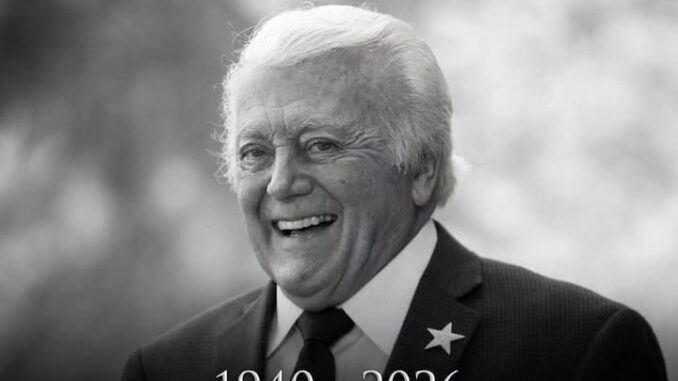
Tony Butala, a founding member of the American vocal group The Lettermen, is remembered for his contributions to popular music and a career that spanned several decades.
Tony Butala, the singer and founding member of the celebrated American vocal group The Lettermen, has died at the age of 87, according to a statement attributed to the group on November 1, 2026.
Butala was the last surviving member of The Lettermen’s original lineup, a trio that became widely recognized for its smooth vocal harmonies and romantic pop recordings during the 1960s.
Throughout his career, he helped shape the group’s musical identity and introduced audiences to recordings that would remain popular for generations.
From his early experiences as a child performer to his decades of work with The Lettermen, Butala built a lasting legacy in American popular music.
Early Life and Musical Beginnings
Tony Butala was born in Sharon, Pennsylvania, in 1938.
His interest in music developed at an early age, and he began performing professionally while still a child.
According to biographical accounts attributed to the Associated Press, Butala started singing professionally at approximately seven years old.
By the age of eight, he was performing on Pittsburgh radio station KDKA.
These early opportunities helped him develop the experience and confidence that would later support his professional music career.
When he was around ten years old, Butala moved to Los Angeles with his mother.
The move introduced him to new opportunities in the entertainment industry.
He eventually joined the Mitchell Boys Choir, a children’s vocal ensemble known for participating in Hollywood productions.
Through the choir, Butala gained valuable experience working in professional recording and film environments.
His Early Connections to Hollywood
Before becoming widely known as a member of The Lettermen, Butala was involved in musical performances associated with several Hollywood productions.
His early career included work connected to films such as White Christmas, On Moonlight Bay, and The War of the Worlds.
He was also associated with music from Disney’s animated film Peter Pan.
These experiences introduced him to the demanding standards of professional entertainment at a young age.
Working with established musicians and production teams helped him develop his vocal abilities and understanding of musical arrangements.
Although his later success came primarily through popular music recordings and live performances, his early Hollywood experiences remained an important part of his career.
The Formation of The Lettermen
In the late 1950s, Butala joined Jim Pike and Bob Engemann in establishing the vocal group that would become known as The Lettermen.
The trio focused on creating a distinctive sound through carefully arranged three-part harmonies.
Their musical approach emphasized smooth vocals, romantic melodies, and polished performances.
At a time when American popular music was experiencing significant changes, The Lettermen developed a style that appealed to listeners who appreciated traditional vocal arrangements.
Rather than relying on a single lead vocalist, the group emphasized the way three voices could complement one another.
This approach became one of their defining characteristics.
The group’s recordings soon attracted attention, setting the stage for their first major commercial successes.
The Breakthrough Success of “The Way You Look Tonight”
The Lettermen achieved an important breakthrough in 1961 with their recording of “The Way You Look Tonight.”
The song had previously been introduced by Fred Astaire and was already recognized as an American popular music standard.
The Lettermen’s interpretation brought the composition to a new generation of listeners.
Their version reached No. 13 on the Billboard Hot 100.
The recording also earned a Grammy nomination, while the group received recognition in the Best New Artist category.
The success helped establish The Lettermen as an emerging presence in American popular music.
It also demonstrated the appeal of their vocal style.
Their carefully blended harmonies gave familiar songs a distinctive character while preserving the melodies that audiences already loved.
Another Major Hit With “When I Fall in Love”
In 1962, The Lettermen enjoyed another significant success with their recording of “When I Fall in Love.”
The song reached No. 7 on the Billboard Hot 100, becoming one of the group’s most recognizable releases.
Its romantic lyrics and gentle arrangement complemented the trio’s vocal strengths.
For many listeners, the recording became associated with important personal memories, celebrations, and special occasions.
The success reinforced The Lettermen’s reputation for performing romantic ballads.
It also helped expand their audience during a highly competitive period in popular music.
While musical styles continued to evolve, the group’s emphasis on melody and harmony remained central to its appeal.
The Lettermen’s Popular Recordings
Throughout the 1960s and beyond, The Lettermen released numerous recordings that contributed to their popularity.
Among their best-known songs were:
- “The Way You Look Tonight”
- “When I Fall in Love”
- “Goin’ Out of My Head/Can’t Take My Eyes Off You”
- “Hurt So Bad”
- “Put Your Head on My Shoulder”
- “Shangri-La”
- “Come Back Silly Girl”
These recordings demonstrated the group’s ability to interpret both established standards and contemporary popular songs.
Their arrangements often featured smooth transitions between lead vocals and carefully coordinated harmonies.
This consistency helped listeners recognize The Lettermen’s musical style across different recordings.
The group’s catalog became an important part of the easy-listening and traditional pop music landscape.
The Success of Their 1968 Medley
Another important milestone came in 1968 with The Lettermen’s recording of “Goin’ Out of My Head/Can’t Take My Eyes Off You.”
The medley combined two familiar compositions into a single performance.
Its arrangement highlighted the group’s ability to blend melodies while maintaining a cohesive vocal sound.
The recording received a Grammy nomination and became one of their signature performances.
It also illustrated how The Lettermen adapted familiar material to suit their distinctive approach.
Rather than simply reproducing existing recordings, the group developed arrangements that emphasized the interaction between their voices.
This attention to vocal presentation contributed to their continued popularity.
A Recording Career That Spanned Decades
Over the years, The Lettermen developed an extensive catalog of albums and singles.
According to the group’s published history, they recorded more than 75 albums and earned 18 gold records internationally.
Their commercial achievements reflected a long period of recording activity and audience support.
The group continued performing as musical tastes changed and new generations of artists entered the industry.
Their sound remained closely associated with romantic ballads, vocal harmony, and carefully arranged popular songs.
For listeners who grew up during the 1960s, The Lettermen’s music became part of the soundtrack of everyday life.
For younger audiences, their recordings offered an introduction to a particular era of American pop music.
Connecting With Audiences Through Live Performances
The Lettermen’s career extended well beyond recording studios.
The group performed at concert venues, universities, theaters, and special events.
Live performances allowed the singers to maintain a personal connection with their audiences.
Their concerts often featured familiar songs alongside stories about their musical history.
Butala remained closely associated with the group’s performances and public identity for many years.
As membership changed over time, the group continued preserving its recognizable vocal style.
That continuity was an important part of The Lettermen’s enduring appeal.
Audiences attending their concerts could expect the romantic melodies and harmonies that had made the group successful.
The Original Members of The Lettermen
The Lettermen’s original lineup consisted of Tony Butala, Jim Pike, and Bob Engemann.
Each contributed to the group’s early sound and commercial development.
Over the decades, the group experienced changes in membership, but its original recordings remained central to its history.
Bob Engemann died in 2013.
Jim Pike died in 2019 at the age of 82.
Following their deaths, Butala became the last surviving member of the original trio.
His connection to The Lettermen’s earliest years made him an important figure in preserving the group’s musical heritage.
He continued to be associated with the group until retiring from regular performances in 2019.
Recognition on the Hollywood Walk of Fame
One of the major honors associated with Butala’s career came in 2020, when The Lettermen received a star on the Hollywood Walk of Fame.
The ceremony took place on February 24, 2020, on Vine Street in Los Angeles.
The group was recognized in the Recording category.
The honor acknowledged its contributions to the music industry and the lasting popularity of its recordings.
For a group that had first achieved national success nearly six decades earlier, the recognition represented an important career milestone.
It also highlighted the continued cultural relevance of vocal harmony groups whose music helped define an earlier era of American popular entertainment.
Tony Butala’s Retirement and Later Years
Butala retired from regular performances in 2019 after spending decades connected to The Lettermen.
His retirement marked the end of an important chapter in the group’s history.
By that point, he had experienced significant changes in the recording industry, from the popularity of traditional vocal groups to the emergence of new musical genres and digital distribution.
Despite these changes, The Lettermen’s recordings continued to be available to listeners.
Their music remained familiar to audiences who appreciated classic pop standards and romantic ballads.
Butala’s work also provided a connection to the early years of a group that had maintained a recognizable musical identity for generations.
Remembering His Personality and Family
Beyond his professional achievements, Butala was remembered by colleagues and loved ones for his personality and dedication to entertaining audiences.
In the statement announcing his passing, The Lettermen expressed condolences to his children, grandchildren, siblings, and others close to him.
The group also recalled his friendly manner and ability to connect with people.
Those personal memories offered another perspective on a performer whose public life had been closely associated with music.
While audiences knew him primarily through recordings and concerts, his family and friends remembered the person behind the performances.
His career was an important part of his life, but it was not the only part.
The Announcement of His Passing
According to the group’s reported statement, news of Tony Butala’s passing became public on November 1, 2026.
He was 87 years old.
At the time of the announcement, a cause of death had not been publicly disclosed.
The group indicated that there would be no public viewing.
Information about memorial gatherings in Wisconsin and California was expected to be shared separately.
The announcement prompted reflection on Butala’s career and the role The Lettermen played in American popular music.
For longtime listeners, his passing marked the loss of the final member of the group’s original lineup.
The Musical Legacy of Tony Butala
Tony Butala’s contributions to The Lettermen extended across several decades.
He helped establish the group’s early identity and remained associated with its music through changing trends and generations of listeners.
The group’s recordings continue to represent an era when carefully arranged vocal harmonies were a prominent feature of popular music.
Songs such as “When I Fall in Love” and “The Way You Look Tonight” remain familiar examples of that tradition.
Butala’s career also demonstrated how a distinctive musical approach could maintain an audience over time.
While the music industry changed considerably, The Lettermen continued to be recognized for the qualities that defined their earliest successes.
Their emphasis on melody, vocal balance, and romantic themes became an enduring part of their legacy.
Why The Lettermen’s Music Still Matters
The Lettermen’s recordings hold a special place for listeners who appreciate traditional pop music.
Their songs are often associated with memories of family gatherings, relationships, and earlier periods of life.
Music has a way of connecting personal experiences with particular moments in time.
A familiar recording can remind someone of a celebration, a loved one, or a meaningful event.
For many listeners, The Lettermen’s catalog serves that purpose.
Their performances also offer a historical example of the importance of vocal arrangement in popular music.
The group’s three-part harmonies required coordination, musical sensitivity, and an understanding of how individual voices could create a unified sound.
Those qualities remain relevant to vocal performers today.
Final Thoughts
Tony Butala’s career began when he was a young performer and developed into a decades-long contribution to American popular music.
As a founding member of The Lettermen, he helped create a recognizable sound that brought romantic ballads and carefully arranged harmonies to audiences around the world.
His work with the group included successful recordings, Grammy nominations, extensive touring, and recognition on the Hollywood Walk of Fame.
His passing at the age of 87 marks the end of an important chapter in the history of The Lettermen’s original lineup.
Although Tony Butala is no longer here, his contributions to music remain part of the recordings and performances that listeners can continue to appreciate.
For fans of classic American pop, his legacy lives on through the harmonies that helped make The Lettermen a memorable part of music history.
Leave a Reply