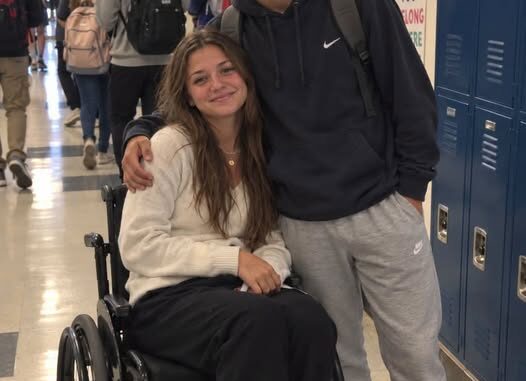
Sarah Vance never imagined that an empty guitar stand in her son’s bedroom would lead to one of the most meaningful experiences of her family’s life.
Her thirteen-year-old son, Julian, loved music. His custom electric guitar was his most treasured possession, a gift his parents had spent nearly a year saving to buy.
When Sarah discovered that the guitar was missing, she expected a simple explanation.
Instead, Julian told her he’d sold it to help a classmate who needed a new wheelchair.
What followed was a story about friendship, gratitude, and how one thoughtful decision inspired an entire community to support children who needed mobility equipment.
A Guitar That Meant Everything
Julian had been interested in music since he was nine years old.
He spent hours listening to classic rock, studying guitar techniques, and watching musicians perform.
Whenever his family visited Westbrook Music Exchange, he stopped to admire a particular Fender Stratocaster.
It had a sunburst finish, a rosewood neck, and custom components.
The guitar cost $2,100, far more than his parents could comfortably spend on an ordinary birthday present.
Sarah worked as a dental hygienist, while her husband, Ben, was employed by the local electric company.
They had household expenses, car payments, and a mortgage.
Nevertheless, they decided to save for the instrument.
For eleven months, they set aside money whenever possible.
Sarah accepted additional work hours, and Ben took extra shifts.
On Julian’s twelfth birthday, they surprised him with the guitar.
He could hardly believe it.
Rather than immediately playing, he sat quietly beside the case, looking at the instrument he’d dreamed of owning.
Then he hugged his parents.
From that day forward, music became an even bigger part of his routine.
An Empty Guitar Stand
Almost every afternoon, Julian came home from school and went straight to his bedroom.
He practiced familiar songs, experimented with new techniques, and composed melodies of his own.
Sarah often heard him repeating the same musical phrases while she prepared dinner.
His dedication made her proud.
That’s why she immediately noticed when his guitar disappeared.
One Monday afternoon, Sarah entered Julian’s room to put away clean laundry.
The guitar stand beside his desk was empty.
She checked the closet, the space beneath his bed, and the instrument case.
Nothing.
When Julian returned from school, she asked where the guitar was.
He hesitated before answering.
Then he quietly explained that he’d sold it.
Sarah was stunned.
She knew how much the instrument meant to him.
She also knew how hard she and Ben had worked to purchase it.
But Julian had a reason she hadn’t expected.
A classmate named Maya needed a replacement wheelchair, and he wanted to help her.
A Classmate Facing Everyday Challenges
Maya Medina was in Julian’s eighth-grade class at Westbrook Middle School.
She was friendly, enjoyed singing, and participated in school activities.
She also used a wheelchair for mobility.
Her current chair had become increasingly difficult to use.
According to Julian, one of its front casters was damaged, and the seat cushion no longer provided adequate comfort.
The chair sometimes caught on doorways and uneven surfaces.
Moving through the school’s older hallways could be frustrating.
Julian had noticed that these difficulties occasionally made Maya late for class.
He also knew that some students had made unkind comments about the sounds her wheelchair produced.
Maya generally tried to ignore the remarks, but Julian could tell they bothered her.
Sarah listened carefully as her son described what he’d observed.
She asked whether Maya’s family knew about the equipment problems.
Julian explained that they did.
However, replacing the wheelchair had become financially difficult.
Why Maya’s Family Needed Help
Maya’s family had been managing substantial medical and household expenses.
Her father, Rafael, had experienced health problems following a serious road accident years earlier.
Her mother, Elena, worked long hours to help support the household.
The family had already paid for medical treatment, rehabilitation, and accessibility-related expenses.
A replacement wheelchair was another significant cost.
Julian understood that insurance coverage and replacement rules could be complicated.
He believed Maya might have to wait many more months before her family could obtain suitable equipment through their existing arrangements.
Rather than wait, he began researching alternatives.
He found a lightweight manual wheelchair with improved casters and a supportive cushion.
The advertised price, including delivery, was approximately $1,412.
He wanted Maya to have it as soon as possible.
But Julian didn’t have that much money.
So he began looking at the possessions he could sell.
The Decision to Sell His Guitar
Julian took his guitar to Westbrook Music Exchange, the same shop where he’d admired it for years.
The owner, Lenny Marsh, offered him $800.
Although the amount was considerably less than the original purchase price, Julian accepted.
He then sold his gaming console, controllers, and games for another $240.
Finally, he emptied the savings tin where he’d kept birthday money, allowances, and earnings from small neighborhood jobs.
The tin contained $382.
Together, the money was enough to cover the wheelchair and shipping.
Sarah was deeply moved when she learned what he’d done.
But she was also concerned.
Julian had sold several valuable belongings without discussing the decision with his parents.
She explained that helping someone was admirable, but important financial decisions should involve a trusted adult.
Julian apologized.
He admitted that he’d been worried a family discussion would delay the purchase.
Sarah assured him that they could work together to find ways to help others in the future.
She also told him how proud she was of his compassion.
A Gift Delivered With a Personal Message
Julian had already arranged for the wheelchair to be delivered to Maya’s home.
He included a handwritten note.
He didn’t tell his mother what it said.
At dinner, he explained the purchase to his father.
Ben was surprised to learn that Julian had sold the expensive guitar they’d saved so long to buy.
He needed a moment to process the news.
Then he told his son that he admired the kindness behind the decision.
Like Sarah, he emphasized that Julian should have spoken with them first.
But both parents recognized that their son had acted because he cared about a friend.
They went to bed that evening believing the story had reached its conclusion.
The next morning brought an unexpected development.
An Early Morning Visit
At seven o’clock, two police officers arrived at the Vance family home.
Sarah was preparing coffee when she heard the knock.
Seeing officers at her front door made her anxious.
She immediately wondered whether something had happened to her husband or another relative.
The officers introduced themselves as Daniels and Cooper.
They explained that Julian wasn’t in trouble.
Instead, someone wanted to thank him.
The person was Sergeant Rafael Medina, Maya’s father.
Sarah hadn’t known that Rafael worked for the Westbrook Police Department.
The officers explained that he’d learned about Julian’s gift the previous evening.
He hoped Sarah and Julian would visit the station before the morning shift began.
Although confused, Sarah agreed.
Julian quickly got dressed, and they accompanied the officers.
The Story Behind Maya’s Family
During the journey, Officer Daniels explained more about Rafael’s circumstances.
Years earlier, Rafael and Maya had been involved in a serious road accident.
Both had experienced lasting effects.
Maya began using a wheelchair, while Rafael’s injuries changed the kind of work he could perform.
The family faced years of medical appointments, rehabilitation, and financial adjustments.
Rafael had struggled emotionally with the accident.
Although another driver had caused the collision, he continued questioning whether he could have prevented it.
His colleagues had offered assistance several times.
Rafael repeatedly declined.
He believed he should handle the family’s challenges independently.
When Maya’s new wheelchair arrived, he initially assumed his colleagues had arranged the purchase.
Then Maya showed him Julian’s handwritten card.
The message changed his understanding of the gift.
A Friendship That Began Years Earlier
Julian’s note revealed something even Sarah hadn’t known.
Four years earlier, Julian had broken both legs in a trampoline accident.
During his recovery, he used a wheelchair for several months.
He found the experience challenging.
Some classmates treated him differently, and he sometimes felt excluded.
Maya had recently joined the school.
She approached Julian during lunch and began talking to him.
Because she was experienced in using a wheelchair, she offered practical advice about navigating ramps and doorways.
The two became friends.
Maya helped Julian become more confident during his recovery.
She reminded him that using a mobility aid didn’t define his personality or abilities.
As Julian recovered, he gradually returned to his usual activities.
But he never forgot Maya’s friendship.
Years later, when he saw her struggling with an unsuitable wheelchair, he remembered how much her kindness had meant to him.
The gift was his way of saying thank you.
A Meaningful Meeting at the Police Station
When Sarah and Julian arrived at the police station, they were led into a meeting room.
Dozens of officers and staff members had gathered.
At the front stood Sergeant Medina.
Maya was beside him in her new wheelchair.
When she saw Julian, she smiled.
Rafael approached the boy and introduced himself.
He explained how grateful his family was for the gift.
He also shared something personal.
For years, he’d struggled to accept help because he felt responsible for protecting and providing for his family.
Julian’s gesture helped him reconsider that belief.
The boy hadn’t acted out of obligation.
He simply remembered a friend who had helped him and wanted to return the kindness.
Rafael realized that accepting support didn’t mean he had failed as a parent.
It meant allowing others to be part of his family’s support system.
An Unexpected Gift From the Music Store
The gathering included another surprise.
Lenny Marsh, the owner of Westbrook Music Exchange, was waiting with a familiar black guitar case.
Inside was Julian’s Fender Stratocaster.
After hearing why Julian had sold it, Lenny decided to return the instrument.
He didn’t ask the family to repay the $800.
He wanted Julian to continue pursuing his love of music.
Julian was overwhelmed.
He opened the case and carefully touched the guitar he’d thought he’d never see again.
The instrument was exactly as he remembered it.
His parents watched as he realized that his sacrifice had inspired someone else to act generously.
But the surprises weren’t over.
More Support From the Community
The officers had also contacted the store where Julian sold his gaming console.
The equipment was returned to him.
Then they presented his small red savings tin.
It was filled with donations from officers and other community members.
The money exceeded the amount Julian had originally saved.
The officers explained that many people wanted to contribute after learning what he’d done.
Julian was grateful.
However, he didn’t want the donations to become a reward for helping Maya.
He believed the wheelchair had been a gift, not an exchange.
So he asked whether the money could be used to help other children who needed mobility equipment.
His suggestion inspired a larger conversation.
A New Idea for Helping Other Students
Julian turned to Maya and asked whether she knew other students who needed wheelchair repairs or replacements.
Maya mentioned several children in the school district.
One student, Devon, needed safer brakes.
Another, Priya, had outgrown her wheelchair.
A younger student named Isaiah was using a chair that didn’t fit him properly.
Julian suggested that the donated money could support children in similar situations.
The officers agreed that the idea was worth pursuing.
They began discussing how to establish an organized fund with appropriate oversight.
The goal was to help families access necessary mobility equipment while working with parents, healthcare professionals, and suitable suppliers.
Julian’s original gesture had focused on one friend.
Now the community saw an opportunity to help others.
A Song Inspired by Friendship
Before the gathering ended, Maya asked Julian whether he’d play something on his guitar.
One of the officers found a small amplifier.
Julian connected his Stratocaster and began playing an original melody.
Sarah recognized the music immediately.
It was a piece she’d heard him practicing for years.
Until that morning, she’d never heard the entire composition.
The melody had begun when Julian was in fourth grade.
He’d been inspired by the feeling of learning to move confidently in his temporary wheelchair.
Maya’s friendship had helped him through that period.
He called the composition The Wheelie Song.
He’d recently finished writing it.
For Sarah, hearing the completed song added another layer to the experience.
She realized that Maya’s kindness had influenced her son long before he’d purchased the wheelchair.
How the Community Fund Developed
Over the following months, the community established a charitable initiative called Maya’s Wheels.
According to the story, the program was organized with support from the local police union and participating businesses.
Donation containers were placed at the police station and several shops.
Community members contributed what they could.
During its first month, the initiative reportedly collected approximately $11,000.
The organizers used donations to address mobility equipment needs.
Devon received replacement brakes.
Priya obtained a wheelchair better suited to her size.
Isaiah received a chair designed for his needs.
The program continued growing.
Within eight months, the initiative was said to have assisted fourteen children.
What began as one student’s effort to help a friend had become a broader community project.
Positive Changes for Maya’s Family
The support also affected the Medina family.
Rafael became more comfortable accepting assistance from his colleagues.
Their support helped the family address financial pressures and transportation needs.
Elena was eventually able to reduce her working hours.
Rafael also began participating in counseling and peer support.
He had spent years struggling with difficult emotions connected to the accident.
Speaking with others gave him an opportunity to process those experiences.
The changes didn’t erase the family’s challenges.
But they helped create a stronger network of practical and emotional support.
A Change in the School Community
At school, Julian and Maya’s friendship became more widely known.
Other students learned about the wheelchair gift and the community fundraiser.
The attention encouraged conversations about kindness, inclusion, and respectful treatment of classmates who use mobility aids.
Maya noticed that some of the students who’d previously made unkind comments began behaving differently.
One even contributed money to the fundraiser.
These changes were small compared with the larger project, but they mattered.
Maya could move through school more comfortably, and classmates were becoming more aware of the barriers some students encountered.
The experience also highlighted the importance of accessible school facilities and timely equipment support.
A Special Performance at the Spring Concert
Several months later, Westbrook Middle School held its spring concert.
Maya performed as a vocalist.
Julian accompanied her on guitar.
They chose The Wheelie Song.
Maya had written lyrics inspired by their friendship and the importance of helping others feel included.
Sarah and Ben attended.
So did Rafael and Elena, along with several officers and community members who had supported the fundraiser.
Other children who’d benefited from the initiative were also present.
As Julian played and Maya sang, the audience listened attentively.
For both families, the performance represented much more than a school concert.
It brought together years of friendship, recovery, generosity, and community support.
What Sarah Learned From Her Son
Looking back, Sarah realized that the experience had changed how she thought about teaching kindness.
She’d always believed that parents should explain the importance of generosity through conversations and examples.
She still believed those lessons mattered.
But Julian had shown her something else.
Children also learn through the kindness they receive.
Maya had helped Julian when he felt uncomfortable and isolated during his recovery.
He remembered her encouragement for years.
When she needed assistance, he wanted to offer the same support.
Sarah remained clear that Julian should have involved his parents before selling valuable belongings or purchasing medical equipment.
Those decisions require adult guidance, especially when specialized equipment must be appropriate for the person using it.
Nevertheless, she was proud of his willingness to notice someone else’s difficulties and respond with compassion.
Why Accessibility and Community Support Matter
The story also highlights broader issues surrounding mobility equipment and accessibility.
Wheelchairs are not interchangeable products.
A suitable chair depends on the user’s body measurements, mobility needs, environment, and recommendations from qualified professionals.
Proper seating, safe brakes, and appropriate components can make a meaningful difference in daily comfort and mobility.
Families may face difficulties when equipment needs change before insurance or other funding arrangements provide replacement coverage.
Schools and communities can help by identifying accessibility barriers, responding to bullying, and connecting families with appropriate resources.
Fundraising can be valuable, but purchases and repairs should be coordinated with the individual, their caregivers when applicable, and qualified equipment providers.
The most effective support respects the person’s independence, preferences, and dignity.
A Lasting Reminder
Julian eventually returned to his regular routine.
He went to school, completed homework, and spent afternoons practicing guitar.
His Stratocaster once again rested on the stand beside his desk.
Sarah could hear familiar melodies coming from his bedroom.
But something had changed.
Julian placed a handwritten reminder near the instrument.
It encouraged him to notice when someone needed help rather than simply passing by.
For Sarah, that message captured the meaning of the entire experience.
Her son hadn’t expected public recognition or a community fundraiser.
He’d wanted to help a friend who had once helped him.
The kindness he’d received years earlier had inspired another act of kindness, which encouraged others to participate.
Final Thoughts
Julian’s decision to sell his guitar began with a simple observation: a classmate was having difficulty using her wheelchair, and he wanted to make her school day easier.
His parents were surprised by his actions and reminded him of the importance of discussing major decisions with adults.
But they also recognized the empathy behind his choice.
The story illustrates how friendship, gratitude, and community cooperation can encourage meaningful change.
It also offers a reminder that people who need assistance deserve practical support delivered with respect.
Sometimes, one thoughtful act can encourage many others—not because anyone expects a reward, but because kindness has a way of inspiring more kindness.
Leave a Reply