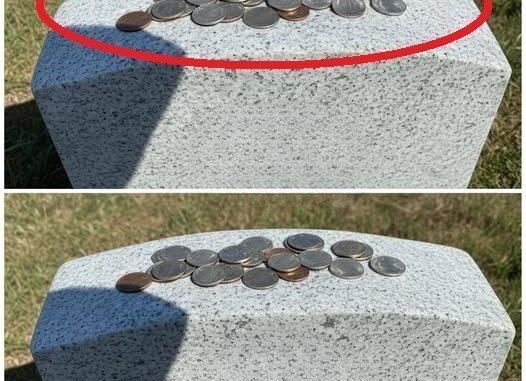
If you have ever visited a cemetery—especially one dedicated to military service members—you may have noticed something small but deeply intriguing: coins placed carefully on top of gravestones.
At first glance, these coins might seem accidental. Some may assume they were dropped by visitors or left behind without purpose. However, this quiet practice carries a meaningful history and a deeply emotional message that many people are unaware of.
Each coin—whether it is a penny, nickel, dime, or quarter—represents a specific sentiment. These small objects form a silent language of remembrance, respect, and shared experience, particularly among military communities.
Understanding this tradition reveals not just a ritual, but a powerful expression of human connection that transcends time, distance, and even loss itself.
A Tradition That Speaks Without Words
Cemeteries are places of silence, reflection, and memory. In such environments, even the smallest details can carry deep emotional significance. The presence of coins on gravestones is one of those details.
Rather than being random or decorative, these coins often represent intentional acts of remembrance. They serve as quiet messages left for the deceased—and sometimes for the families who visit their resting places.
This practice is especially common in military cemeteries, where bonds formed in service are remembered long after life has ended.
What makes this tradition unique is that it does not rely on spoken words, written notes, or formal ceremonies. Instead, it uses simple currency to communicate complex emotions such as respect, grief, gratitude, and solidarity.
Why Coins Are Used as Symbols
Coins are small, universally recognized objects that carry value in everyday life. However, in the context of gravesites, their monetary worth is not what matters.
Instead, their meaning is symbolic.
A coin is durable, long-lasting, and resistant to time. Unlike flowers that fade or paper notes that decay, coins remain in place, often for extended periods. This makes them powerful symbols of memory that endure just like the legacy of the person being honored.
Over time, different denominations of coins have come to represent different messages. This unspoken system of meaning has been passed down informally, especially among military personnel and veterans.
The Meaning Behind Each Type of Coin
Although interpretations can vary slightly depending on tradition and region, the most widely recognized meanings are as follows:
1. The Penny – A Sign of Remembrance
A penny is the most common coin found on gravestones.
It typically represents a simple but heartfelt message: “I remember you.”
Leaving a penny does not require personal connection or shared experience. It is often placed by visitors who want to acknowledge the life of the deceased, even if they never met them.
In military cemeteries, a penny can also symbolize gratitude for service and sacrifice.
For families visiting gravesites, even an unknown penny can bring comfort. It suggests that someone, somewhere, took a moment to acknowledge their loved one’s existence and legacy.
2. The Nickel – Shared Experience in Service
A nickel carries a more personal meaning.
It is often interpreted as a sign that the person who left it served alongside the deceased, typically during early stages such as training or basic service.
This coin symbolizes shared experiences—long days of preparation, discipline, and the formation of bonds that often last a lifetime.
Even if those individuals later went their separate ways, the nickel acknowledges that their paths once crossed in meaningful service.
It reflects camaraderie, mutual understanding, and respect built through shared commitment.
3. The Dime – A Bond Formed in Service or Combat
A dime represents a deeper connection than the nickel.
It often signifies that the individuals not only served together but also shared direct experiences in challenging or dangerous situations.
This may include deployment, active missions, or combat environments.
The dime reflects trust, loyalty, and unity formed under pressure. It acknowledges that lives were closely connected in moments that required courage and reliance on one another.
It is a tribute to partnership and shared sacrifice.
4. The Quarter – Present at the Final Moment
The quarter is considered the most significant and emotional coin.
It indicates that the person who left it was present when the service member passed away.
This could mean they were physically there during the final moments, witnessed the loss, or shared the immediate aftermath.
The quarter represents closure, final respect, and deep emotional connection.
It is not simply about service—it is about being there at the end of a life.
Because of its meaning, it is often seen as the most powerful and personal form of tribute in this tradition.
The Emotional Purpose Behind the Tradition
Beyond symbolism, this practice serves an important emotional purpose.
For families of fallen service members, coins left on gravestones offer reassurance that their loved one is still remembered. Even if they do not know who left the coin, they understand its meaning.
It becomes a silent message that says:
- “Your sacrifice is not forgotten.”
- “Your life mattered.”
- “You are still honored.”
This can be especially meaningful during long periods when families are unable to visit gravesites regularly.
The coins act as ongoing reminders that memory continues even when physical presence is not possible.
A Practice Rooted in Military Brotherhood
While the tradition has spread more widely over time, it is strongly associated with military culture.
Service members often form close bonds during training and deployment. These relationships are built through shared challenges, trust, and reliance on one another in high-pressure situations.
In such environments, words are not always necessary. Understanding is often unspoken.
Leaving a coin on a gravestone becomes a continuation of that silent communication. It is a way for veterans to acknowledge fallen comrades without needing formal ceremonies or elaborate tributes.
This simplicity is part of what makes the tradition so powerful.
Historical Influences Behind the Tradition
The use of coins in burial practices has roots that extend far back into history.
Ancient Beliefs and Burial Customs
In ancient civilizations such as Greece and Rome, coins were placed with the dead as part of burial rituals. These coins were believed to serve as payment for passage into the afterlife.
One well-known belief involved the mythical ferryman who transported souls across the river separating the living world from the afterlife. Coins were placed with the deceased as a symbolic fee for this journey.
Although modern gravestone coins do not carry this exact meaning, the historical connection to remembrance and transition remains significant.
Modern Military Evolution of the Practice
In more recent history, especially following major conflicts of the 20th century, the tradition evolved into its current form within military communities.
Veterans and active service members began using coins as quiet symbols of respect. This allowed them to honor fallen comrades without large public displays or formal ceremonies.
Over time, this practice became widely recognized within military cemeteries and later understood by the general public.
What Happens to the Coins Left on Graves?
In many cemeteries, especially military ones, coins are occasionally collected and repurposed.
Rather than being discarded, they are often used to support charitable efforts, including programs for veterans and their families.
These funds may help with:
- Medical assistance
- Housing support
- Mental health services
- Educational programs
- Family aid initiatives
In this way, the tradition carries both symbolic and practical value. A simple coin can contribute not only to remembrance but also to ongoing support for those who served.
How to Respect This Tradition
If you ever encounter coins on gravestones, it is important to understand their meaning and treat them with respect.
Here are a few important guidelines:
Do Not Remove the Coins
They are not accidental or abandoned. Each one represents a deliberate message.
Recognize Their Meaning
Even if you are unfamiliar with the tradition, understanding the symbolism helps preserve its significance.
Respect the Space
Cemeteries are places of memory and honor. Observing quietly is a form of respect in itself.
Why This Tradition Still Matters Today
In a fast-paced world, small traditions like this remind us of something important: memory does not have to be loud to be meaningful.
A simple coin can carry emotion, history, and connection across generations.
It can represent friendship, service, sacrifice, or remembrance—all without a single word being spoken.
This quiet practice continues because it fulfills a deeply human need: to remember those who came before us and to acknowledge the bonds that remain even after death.
Final Thoughts
The tradition of placing coins on gravestones is more than a symbolic gesture. It is a language of memory that speaks softly but powerfully.
Each coin tells a story:
- A penny for remembrance
- A nickel for shared service
- A dime for bonds formed in duty
- A quarter for final moments of connection
Together, they form a quiet but meaningful tribute to lives lived, sacrifices made, and relationships that continue beyond loss.
So the next time you walk through a cemetery and notice a small coin resting on a gravestone, take a moment to pause.
It is not just metal.
It is a message.
A memory.
And a sign that someone, somewhere, has not been forgotten.
Leave a Reply