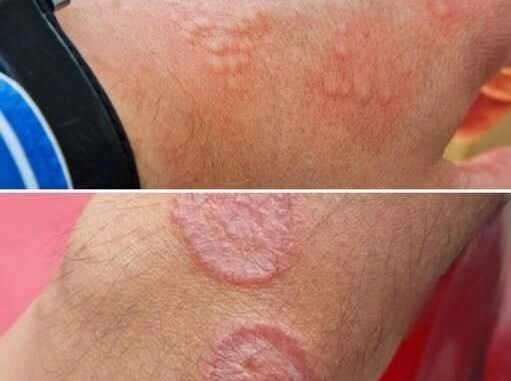
A few red patches or unusual circles on the skin may seem harmless at first. Sometimes they are temporary and disappear on their own, while in other cases they may be a sign that something deserves closer attention.
Skin changes can have many different causes, ranging from irritation and allergies to infections and other conditions. Because several problems can produce similar-looking symptoms, appearances alone usually aren’t enough to determine the exact cause.
When a Small Mark Gets Your Attention
Imagine noticing a faint rash on your wrist or several small bumps that weren’t there before.
It’s natural to wonder whether a new soap, detergent, cosmetic product or environmental exposure caused the change. Sometimes that explanation is correct. In other situations, however, the skin may be reacting to an infection or another underlying issue.
One type of skin infection that can produce circular or ring-shaped patches is ringworm, a common fungal infection. Despite its name, ringworm is caused by a fungus rather than a worm.
The affected area can sometimes appear red, scaly or itchy, and the characteristic shape may develop as the infection progresses.
Skin Changes Have Many Possible Explanations
It’s important not to assume that a particular appearance automatically identifies a specific condition.
Circular marks can occur for different reasons, and similar-looking rashes may require completely different treatments. A healthcare professional can examine the affected area and, when necessary, perform additional testing to determine the cause.
This is particularly important when a rash is spreading, becoming painful, developing blisters, showing signs of infection or failing to improve.
Some Fungal Infections Can Spread Between People
Certain fungal skin infections are contagious and can spread through close contact or by sharing contaminated items such as towels, clothing or personal equipment.
That means discovering a fungal infection does not automatically indicate how someone acquired it.
A person can encounter these infections in a variety of everyday settings, including households, gyms, sports facilities and other environments where close contact or shared items are involved.
For that reason, a skin condition should not be treated as proof of a person’s behavior or as evidence of what happened in a relationship.
The Importance of Avoiding Quick Conclusions
Stories about unusual rashes can easily become sensational when a medical symptom is connected to a personal accusation.
But the appearance of someone’s skin cannot reveal whether a person has been unfaithful.
A rash may provide a reason to seek medical advice, but it cannot establish the circumstances that caused the condition. Making serious personal accusations based solely on a physical symptom can lead to unnecessary fear, conflict and misunderstanding.
The better approach is to separate the medical question from the personal one.
When to Have a Rash Checked
Anyone who develops an unexplained or persistent skin change should consider speaking with a healthcare professional, particularly if the area continues to spread or becomes increasingly uncomfortable.
Medical attention can help determine whether the problem is related to an infection, irritation, allergy or another cause.
Avoiding unnecessary scratching and maintaining good hygiene can also be helpful, but suspected fungal infections may require specific treatment recommended by a healthcare professional.
The Real Warning
The most important lesson isn’t that a rash can expose someone’s secrets.
It’s that new or unexplained changes in the body deserve appropriate attention rather than immediate assumptions.
A small mark on the skin can have a simple explanation, but it can also be a reason to seek professional advice. Understanding the possible causes—and recognizing that similar symptoms can come from very different conditions—is far more useful than trying to draw conclusions from appearance alone.
Sometimes the real warning is simply a reminder to pay attention to your health and get reliable answers when something doesn’t look or feel normal.
Leave a Reply