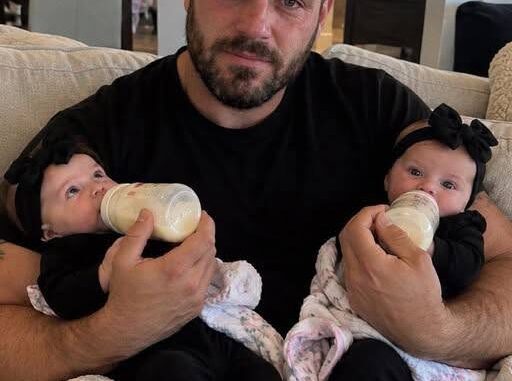
For three months after my wife, Mary, passed away following complications during the birth of our twin daughters, her mother barely spoke to me.
At first, I believed she blamed me for what had happened at the hospital.
I couldn’t blame her for feeling that way. I was struggling with guilt myself.
But when she finally appeared at my front door holding an envelope, I learned that her silence had a very different explanation.
Inside that envelope was a letter Mary had written before the twins were born.
And its contents helped me understand something about my wife that I had never fully known.
The Day Our Family Changed
Mary and I had been married for nine years.
We had spent years imagining what it would be like to become parents. When we learned we were expecting twins, our excitement was difficult to contain.
We bought two cribs, decorated the nursery, and spent countless evenings discussing baby names.
Mary insisted that twins didn’t need matching names.
I joked that we should have made a decision months earlier.
Even on the morning of the delivery, we were still debating our choices.
She laughed and asked me to pass her a glass of water.
It was such an ordinary moment.
I had no idea how often I would remember it afterward.
Mary’s pregnancy had involved several medical concerns, but our most recent appointment had been encouraging.
The babies were developing well, and we were hopeful.
Then serious complications arose during delivery.
The medical team worked urgently to care for Mary and the babies.
Despite their efforts, Mary did not survive.
Our daughters were born alive, but the day that should have marked the beginning of a new chapter also brought an unimaginable loss.
The Conversation I Couldn’t Forget
During the emergency, Mary had been conscious long enough to speak to me.
She held my hand tightly.
“Please make sure the girls are okay,” she said.
I assured her that the doctors were doing everything possible.
She repeated her request.
I promised that I would care for our daughters.
For months afterward, I replayed that conversation in my mind.
I wondered whether I should have asked different questions or said something more reassuring.
I knew that medical decisions during an emergency depend on the patient’s condition and the professional judgment of the care team.
Still, grief made it difficult to stop questioning myself.
I had promised Mary that the girls would be safe.
But I couldn’t stop wishing that all three of them had come home.
Learning to Care for Two Newborns
The first weeks were exhausting.
I returned home with two babies, a bag of Mary’s belongings, and no clear idea of how I would manage.
I learned to prepare bottles, change diapers, and recognize the small differences between the girls’ cries.
I wrote down their feeding schedules because I was so tired that I sometimes forgot which daughter had eaten most recently.
My sister visited regularly.
She brought meals, helped with laundry, and reminded me to rest.
I appreciated everything she did.
But once the house became quiet, I felt Mary’s absence everywhere.
Her favorite mug was still in the kitchen cupboard.
Her books remained beside our bed.
The sweatshirt she had worn to the hospital was still folded inside her overnight bag.
I couldn’t bring myself to put it away.
I didn’t know whether keeping those things close was helping me or making the loss harder.
I only knew I wasn’t ready to change anything.
The Silence From Mary’s Mother
Mary’s mother had always been an important part of our lives.
She visited frequently during the pregnancy and was excited about becoming a grandmother.
Before the twins arrived, she had purchased tiny dresses and blankets.
She talked about helping us once the babies were home.
But after Mary’s passing, she withdrew.
She attended the funeral, yet we barely spoke.
When I sent photographs of the girls, she replied with a brief thank-you.
She didn’t ask to visit.
She didn’t call to check how we were managing.
As the weeks passed, I began to believe she held me responsible for losing her daughter.
I wanted to ask her directly.
But I was afraid of hearing the answer.
So we remained distant.
Until one Thursday morning, when the doorbell rang.
An Unexpected Visit
Mary’s mother stood on the porch holding an envelope.
She looked tired and nervous.
For a moment, neither of us spoke.
Then I began apologizing.
“I never wanted any of this to happen,” I said. “I wish I could have done something.”
She looked at me with surprise.
“Do you think I’ve stayed away because I blame you?”
I didn’t know what to say.
She glanced down at the envelope.
“Mary asked me to keep something private. I thought she’d have time to tell you herself.”
I stepped aside and invited her in.
We sat at the kitchen table.
It was the same table where Mary had spent hours writing possible baby names on scraps of paper.
Her mother held the envelope in her lap.
Then she began telling me about a part of Mary’s childhood I had never understood.
A Loss Mary Experienced as a Child
Mary’s father had passed away when she was eight years old.
I knew that much.
She had occasionally shared memories of him, including family outings and the way he used to carry her on his shoulders.
But she rarely discussed the years immediately after his death.
Her mother explained that she had struggled profoundly with grief.
She continued preparing meals, taking Mary to school, and managing their household.
Emotionally, however, she had withdrawn.
“Sometimes Mary would smile,” she told me, “and she looked so much like her father that I had to leave the room.”
I listened quietly.
Her mother continued.
“One evening, she found me crying over his photograph.”
Mary had sat beside her and asked whether she wished her father were still alive.
Her mother said yes.
Then Mary asked a question that stayed with her for years.
“Do you wish he were here more than you want me?”
Her mother looked down.
“I didn’t answer.”
The Question That Followed Mary Into Adulthood
I struggled to understand what I was hearing.
“She was only eight,” I said.
“I know.”
Her mother explained that she had been overwhelmed by sadness and hadn’t realized how her silence might affect her daughter.
Mary had interpreted the unanswered question as a sign that she was somehow less important than the parent her mother had lost.
She began trying not to upset anyone.
She stopped asking questions about her father.
She rarely requested help.
She became unusually careful about expressing her own needs.
As her mother spoke, I remembered countless moments from our marriage.
Mary apologized whenever she asked me to do something.
She worried about inconveniencing people.
Even when she was exhausted, she often insisted she could manage everything herself.
I had always considered those habits part of her personality.
Now I wondered whether some of them had developed during those difficult childhood years.
An Apology That Came Years Later
Mary’s mother told me that they had eventually discussed what happened.
Before our wedding, Mary had explained how deeply that unanswered question had affected her.
Her mother apologized.
She told Mary that she had always loved her and that her grief had never changed that.
Mary accepted the apology.
But she also admitted something heartbreaking.
“I know you loved me,” she had said. “I just wish I’d understood that when I was little.”
Her mother paused.
“She forgave me. But I don’t think she ever completely forgot how she felt.”
I looked toward the nursery.
Our daughters were sleeping peacefully.
I began to understand why Mary’s mother had come to tell me this story.
But I still didn’t understand the envelope.
Why Mary Worried About Becoming a Mother
During her pregnancy, Mary had revisited the conversation with her mother.
She was excited to welcome our daughters.
But she also worried about how children interpret the emotions of the adults around them.
She didn’t want our girls to grow up feeling responsible for anyone else’s sadness.
Her mother had promised to support us.
“Whatever happens,” she told Mary, “I’ll be there.”
Then she looked at me.
“And when Mary passed away, I didn’t keep that promise.”
I remembered the photographs I had sent her.
The brief replies.
The weeks of silence.
I wanted to understand why she had disappeared at the moment we needed her most.
But before I could ask, a memory returned to me.
A Conversation Before the Twins Were Born
A few weeks before the delivery, Mary and I had been lying in bed.
One of the babies kicked so strongly that we could see the movement beneath her shirt.
I laughed.
Mary remained quiet.
Then she asked an unusual question.
“If something happened to me, would you ever wish we hadn’t had the girls?”
I was surprised.
“Why would you ask that?”
“Please, just answer.”
I turned toward her.
“Of course not.”
She looked at me.
“Even if you missed me?”
I remember answering immediately.
“I would miss you every day. But I would still love them every day.”
Mary began crying.
I held her and assured her that everything would be fine.
At the time, I thought she was simply feeling anxious about the pregnancy.
Now I understood that she had been asking something much more personal.
She wanted to know whether our daughters would always feel wanted, even if our family experienced a loss.
The Envelope on the Table
I told Mary’s mother about our conversation.
She covered her mouth with one hand.
“She asked you that?”
I nodded.
“And you told her you’d still want them?”
“Of course.”
Her eyes filled with tears.
“That’s what I should have told her when she was eight.”
We sat quietly.
Then she slid the envelope across the table.
“Mary wrote this for me,” she explained. “She said I could share it with you if something ever happened to her.”
I opened it carefully.
Inside was a handwritten letter.
I recognized Mary’s handwriting immediately.
She had always formed her letters with a slight slant.
Sometimes she drew tiny hearts beside important sentences.
I unfolded the paper and began reading.
The Letter Mary Left Behind
The letter was addressed to her mother.
Mary began by acknowledging that she understood how deeply her mother had loved her.
She explained that, as a child, she hadn’t always been able to recognize that love through the sadness surrounding them.
For years, she had worried that her presence reminded her mother of what she had lost.
Then Mary wrote about becoming a parent herself.
She described how excited she was to meet our daughters.
She wanted them to grow up knowing they were loved without conditions.
She also wrote about me.
One passage made me stop reading.
He doesn’t realize how much he’s already helped me heal.
I stared at the words.
Mary explained that she trusted me to love our daughters, even during difficult times.
She believed that our children would grow up knowing they were wanted.
Then came the part that affected me most.
If anything happens to me, please remind him that I trusted him. Tell him I wanted our girls, and that I never wanted him to feel responsible for what he couldn’t control.
Near the end, Mary made one final request of her mother.
Please stay close to them. I want my daughters to know their family loves them, even when life becomes difficult.
I read the letter again.
For months, I had been questioning whether I had failed Mary.
Yet she had written about trusting me.
Understanding What Mary Had Been Trying to Tell Me
I thought back to the night Mary asked whether I would still want our daughters if something happened to her.
I had answered without hesitation.
But I hadn’t understood why the question mattered so much.
Mary had grown up worrying that her mother’s grief meant she was less loved.
She didn’t want our children to experience the same uncertainty.
When I promised that I would love them regardless of what happened, I had given her reassurance she had needed for years.
I looked at Mary’s mother.
“She really believed I could do this?”
“Yes,” she answered. “She trusted you.”
For the first time since the hospital, I felt a small part of the guilt I had been carrying begin to ease.
I still missed Mary.
I still wished our daughters could know her.
But those feelings didn’t mean I regretted becoming their father.
They were two different things.
A Difficult Conversation Between Two Grieving People
After reading the letter, I looked at Mary’s mother.
“She asked you not to disappear.”
“I know.”
“And you stayed away for three months.”
She nodded.
I told her how difficult those months had been.
I had been learning to care for two newborns while trying to understand a loss that had changed every part of my life.
I had sent photographs because I wanted her to remain connected to the girls.
Her brief replies had made me feel rejected.
She listened without interrupting.
Then she explained.
“Every time I saw their faces, I thought about Mary. I wanted her to be here holding them.”
Her voice shook.
“I was afraid I would bring my sadness into their lives the way I did with Mary.”
I understood her fear.
But I also knew that avoiding the girls wouldn’t protect them from sadness.
It would simply leave them without another person who loved them.
Why She Finally Came Back
Mary’s mother told me that the previous day, she had looked at a photograph I sent.
Both babies were lying on a blanket.
One was smiling.
The other was reaching toward her sister.
I had written that they were beginning to smile whenever I sang.
The message reminded her of singing to Mary when she was little.
She opened the drawer where she kept Mary’s letter.
She read it again.
Then she found the dresses she had bought before the twins were born.
They were still wrapped.
That morning, she drove to our house.
She sat outside for nearly an hour, trying to find the courage to knock.
“What made you come in?” I asked.
She looked toward the nursery.
“I imagined them growing up and asking why their grandmother never visited.”
She paused.
“I didn’t want to give them the same kind of unanswered question Mary carried for years.”
Grief and Love Can Exist Together
For the first time, I told her something I hadn’t admitted to anyone.
“Sometimes I hold the girls and wish Mary were here so badly that I feel guilty.”
She listened.
“I think about everything she’s missing. Their first smiles. Their little habits. The way one of them dislikes a cold bottle.”
My voice became unsteady.
“Then I feel terrible for wishing things were different.”
Mary’s mother looked at me.
“Do you wish the girls hadn’t been born?”
“No,” I said immediately. “Never.”
“Then you don’t have to treat those feelings as the same thing.”
I sat quietly.
I could miss Mary deeply while loving our daughters completely.
One feeling didn’t cancel out the other.
I had been struggling to understand that for months.
A Grandmother Meets Her Granddaughters Again
A baby began crying in the nursery.
I went to check on her.
A moment later, her sister woke up too.
I lifted one baby against each shoulder.
Mary’s mother appeared in the doorway.
She watched me for a moment.
Then she smiled faintly.
“Mary would have been proud of you.”
I laughed.
“She used to say I couldn’t carry groceries without dropping something.”
Her mother laughed too.
It was the first time I had heard her laugh since the funeral.
Then she asked a question.
“Could I hold one of them?”
I hesitated.
I wanted the girls to have a relationship with their grandmother.
But I also needed to know that she wouldn’t disappear again.
“These girls need people who will keep showing up,” I said.
She nodded.
“I understand. I’ll do my best to earn your trust.”
I gently handed her the smaller twin.
She held the baby close.
“Hello, sweetheart,” she whispered. “I’m Grandma.”
The baby reached toward her collar.
Mary’s mother smiled through her tears.
It was a small beginning.
But it mattered.
Trust Was Rebuilt Through Everyday Actions
Our relationship wasn’t repaired in a single afternoon.
I still felt hurt by her absence.
And she still struggled with grief.
But the following morning, she returned.
She came again the next day.
Soon, she was helping with bottles, laundry, and bedtime routines.
She learned the differences between the girls’ cries.
She held them while I rested.
She brought groceries and helped organize the nursery.
Gradually, her visits became part of our routine.
One afternoon, I found her sitting in the rocking chair, feeding one of the twins.
The baby had wrapped her tiny fingers around her grandmother’s thumb.
Mary’s mother looked emotional.
“Mary used to hold my hand like that,” she said.
For a moment, she seemed overwhelmed.
Then she looked down at the baby.
“I’m here,” she whispered.
And she stayed.
Sharing Memories of Mary
A week later, Mary’s mother brought an old family photo album.
Inside were photographs I had never seen.
Mary as a little girl with missing front teeth.
Mary wearing a crooked birthday hat.
Mary sitting on her father’s shoulders during a family outing.
Her mother told me the stories behind each picture.
We laughed about Mary’s childhood adventures.
We talked about her stubbornness, her kindness, and her habit of finding humor in ordinary situations.
For the first time, remembering Mary didn’t feel entirely painful.
The memories were still bittersweet.
But they also brought warmth into the house.
I realized that our daughters would need those stories as they grew older.
They deserved to know who their mother had been, not only what had happened to her.
Opening the Hospital Bag
One evening, after the twins were asleep, I finally opened the bag containing Mary’s belongings.
Her sweatshirt was still inside.
It was the one she had worn to the hospital.
I held it for a long time.
Then I folded it carefully and placed it beside the photo album.
When Mary’s mother visited the next day, she noticed it.
“She loved that sweatshirt,” she said.
I smiled.
“She bought it during our first trip together.”
I remembered how it had rained that weekend.
Mary had insisted the weather made everything more romantic.
We laughed about it.
For months, I had been afraid that putting away her belongings would mean leaving her behind.
Now I understood that I could organize those memories without losing them.
Mary would always be part of our family.
The Stories I Want Our Daughters to Hear
That evening, I sat between the twins’ cribs.
They were beginning to settle for the night.
I told them about their mother.
I described how excited she had been when she learned we were having two babies.
I told them about our endless discussions over names.
I talked about her laugh and her terrible singing.
I told them how she loved rainy weekends and always tried to make ordinary moments special.
One of the girls waved her tiny hand.
The other watched my face.
I smiled.
“Your mother loved you both before she ever met you,” I whispered.
“And I love you too.”
I knew they were too young to understand my words.
But one day, they would ask questions.
And I wanted to be ready to answer them with honesty, love, and stories that helped them understand their mother.
Moving Forward Without Forgetting
Life didn’t suddenly become easy after Mary’s mother returned.
There were still sleepless nights.
There were moments when I felt overwhelmed.
There were days when I missed Mary so much that even familiar routines felt difficult.
But I no longer felt quite so alone.
The twins had a grandmother who was making a genuine effort to be present.
I had someone who could share memories of Mary and help me create new ones with our daughters.
Most importantly, I began to understand that caring for our children was not a reminder of something I had failed to do.
It was a continuation of the love Mary and I had shared.
Final Thoughts
For three months, I believed Mary’s mother had stayed away because she blamed me.
In reality, she was struggling with her own grief and the fear of repeating mistakes from her past.
The letter Mary left behind helped both of us recognize something important.
Children need to know that they are loved, even when the adults around them are experiencing difficult emotions.
Grief can change how families communicate.
It can create distance, misunderstandings, and unanswered questions.
But honest conversations, consistent support, and a willingness to acknowledge mistakes can help people reconnect.
I will always miss Mary.
There will be birthdays, school events, and milestones when I wish she could be standing beside me.
But I will also celebrate every one of those moments with our daughters.
Missing someone we love doesn’t mean we love the people who remain any less.
That is the lesson Mary’s letter helped me understand.
And it is something I hope our daughters will always know.
Leave a Reply