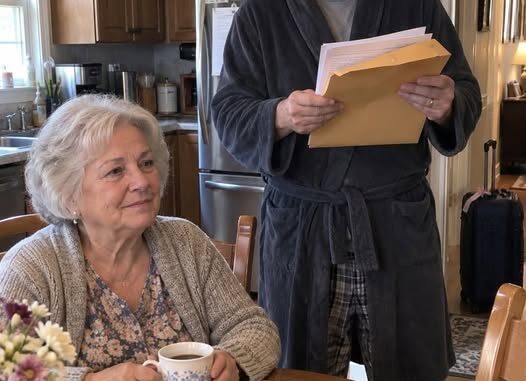
On my seventy-third birthday, my daughter-in-law handed me a two-dollar scratch-off lottery ticket.
It was the only present I received from my son’s family that year.
I had prepared my own birthday dinner and baked a vanilla cake, decorating it with blue icing. When I returned from the kitchen, the ticket was waiting beside my plate.
“Happy birthday, Margaret,” Jessica said.
“Thank you,” I replied.
She smiled and added, “Maybe you’ll win enough for bus fare.”
My son, Colin, laughed. My grandchildren joined in, although my eight-year-old granddaughter, Lily, looked uncertain about the joke.
I smiled and picked up the ticket.
As everyone began eating cake, I scratched away the silver coating with my thumbnail.
The first row showed nothing unusual.
The second revealed two sevens.
Then I uncovered the final symbol.
Another seven.
I scratched the prize amount and stared at the numbers.
I checked them again.
And again.
$11,000,000.
My heart began racing.
Nobody noticed.
Jessica was commenting on how sweet the frosting tasted. Colin was pouring another drink, and the children were occupied with their own conversations.
I quietly folded the ticket and slipped it into my cardigan pocket.
“No luck, Mom?” Colin asked.
I smiled.
“No bus fare.”
Everyone laughed again.
I didn’t tell them what I had won.
And that decision would change far more than my bank account.
The Life I Shared With Arthur
My name is Margaret Vance.
For forty-nine years, I was married to a wonderful man named Arthur.
We lived near Lake Monroe, outside Bloomington, Indiana, where we operated a small bait and tackle shop called A&M Outdoor Supply.
The letters stood for Arthur and Margaret.
Arthur painted the sign himself shortly after our wedding in 1974.
He understood fishing better than anyone I knew. He could tell customers which bait to use, where to cast, and when the fish were most likely to be active.
I handled the bookkeeping, inventory, and suppliers.
Together, we built a modest but comfortable life.
Our only son, Colin, grew up in that shop.
He helped organize supplies, worked the register, and listened to his father talk about fishing.
But Colin wanted a different future.
He dreamed of becoming a lawyer.
Arthur and I supported him completely.
We saved for years to help pay for his education at Indiana University and later law school at Notre Dame.
When Colin became a corporate attorney, we were proud.
But as his career developed, he visited less frequently.
Arthur continued inviting him fishing every spring.
“Water’s turning green, Col. Fish are moving. Come down Saturday.”
Colin always seemed busy.
“Maybe next year, Dad.”
Unfortunately, those fishing trips never happened.
Arthur passed away four years ago.
After the funeral, Colin encouraged me to move into his family’s home in Carmel.
He said he didn’t want me living alone.
I believed him.
So I sold our house, the shop, and many of Arthur’s belongings.
I also gave Colin $80,000 from the proceeds.
I told him it was for the children’s education and whatever the family needed.
Later, I learned that much of the money had gone toward credit card balances and kitchen renovations.
I was disappointed, but I said nothing.
I thought helping family was simply what parents did.
When Helping Became an Expectation
At first, living with Colin and Jessica was pleasant.
The children loved having me around.
Lily often climbed into my lap and asked for stories about Grandpa Arthur.
I enjoyed feeling useful.
Jessica worked long hours, so I began preparing dinner.
Then I started doing the dishes.
Soon I was buying groceries, folding laundry, picking up the children, and managing household errands.
Nobody officially assigned these responsibilities to me.
They simply became part of my daily routine.
Over time, I began feeling less like a family member and more like someone whose help was automatically expected.
One evening, I was carrying folded towels down the hallway when I overheard Jessica talking to Colin.
“Your mother is becoming a burden,” she said.
I stopped.
Jessica explained that she wanted more privacy in her own home.
I could understand some of her frustration. Sharing a household isn’t always easy.
But Colin’s response hurt.
“What am I supposed to do? She’s my mother.”
He sounded as though caring about me was an obligation he couldn’t escape.
I quietly put the towels away.
Then I went into my room and sat on the bed.
For years, I’d believed my family wanted me there.
Now I wasn’t so sure.
That memory returned to me on my birthday, as I sat with a winning lottery ticket in my pocket.
Why I Kept the Lottery Win Secret
That night, after cleaning the kitchen, I closed my bedroom door and examined the ticket again.
The prize was real, although I still needed to complete the official verification and claims process.
I thought about telling Colin.
Then I imagined what might happen.
Would everyone suddenly become more attentive?
Would Jessica stop criticizing my cooking?
Would Colin start asking about my day?
Would my family see me differently because I had money?
I didn’t want to find out.
I wanted to know whether they valued me without knowing about the prize.
So I decided to keep it private.
The following Monday, I arranged a meeting with an estate-planning attorney named Richard Sterling.
He reviewed the ticket and explained the steps involved in claiming a significant lottery prize.
He also advised me to consider privacy, taxes, financial security, and long-term planning.
We worked with the appropriate professionals to verify the prize and arrange the claim in accordance with the applicable rules.
The amount I eventually received was considerably less than the advertised jackpot after the payout structure and taxes were considered.
But it was still enough to give me financial independence.
For the first time in years, I could make decisions based on what I wanted.
Planning for My Grandchildren
One of my first priorities was Lucas and Lily.
I wanted them to have educational opportunities without worrying unnecessarily about costs.
Richard helped me establish education trusts with clearly defined terms.
The funds could support college, vocational training, or other qualifying educational expenses.
The arrangements were designed so that the money would be used for the children’s benefit rather than ordinary household spending.
I also updated my estate plan and set aside sufficient resources for my own future needs.
Then Richard asked me a question.
“Margaret, what would you like to do with the rest of your life?”
I couldn’t answer immediately.
For decades, my decisions had revolved around my husband, my son, and my grandchildren.
I hadn’t spent much time considering my own wishes.
But now I could.
Remembering the Things I Loved
I began thinking about the life Arthur and I had shared.
I missed living near water.
I missed watching the lake from our kitchen window.
I missed gardening.
And I missed my older sister, Helen.
Helen lived near Charleston, South Carolina.
We had spoken on the phone every Sunday for decades, but we rarely saw each other.
When I finally told her about the lottery prize, she was stunned.
Then she asked a simple question.
“Why don’t you come live near me?”
I hesitated.
“My family is here.”
“Maggie,” she replied gently, “you can love your family and still have a home of your own.”
Her words stayed with me.
I began looking at properties near Charleston.
I wasn’t ready to move immediately.
But I liked knowing I had a choice.
An Unexpected Opportunity in Indiana
Several months later, Richard called with some interesting information.
The house Colin and Jessica were renting had been placed on the market.
Its owner, an older gentleman living in Texas, wanted to sell because managing the property from another state had become inconvenient.
Richard explained that it might be possible to purchase the property through a properly structured company.
I considered the idea carefully.
At first, I thought owning the house could provide stability for the family.
I could maintain the existing lease and ensure the property was properly managed.
After reviewing the financial and legal implications, I decided to proceed.
The property was purchased through A&M Property Holdings.
I chose the name in memory of Arthur.
The existing rental arrangement continued under the new ownership, subject to its terms and applicable law.
Colin received notice that the property had changed hands.
He didn’t recognize the company name.
“A&M Property Holdings,” he said one evening. “Probably another investment company.”
I smiled quietly.
The same letters had appeared above our family shop for decades.
But Colin made no connection.
I didn’t correct him.
The Little Yellow Cottage
That summer, I visited Helen in South Carolina.
We spent several days exploring neighborhoods, small towns, and quiet roads near the coast.
Then we found a cottage that felt immediately familiar.
It had pale-yellow siding, white shutters, and a wraparound porch.
Roses climbed along the railing.
Behind the house, a narrow creek passed through the trees.
There was even a small wooden dock.
But what made me love the house most was the kitchen.
A large window stood directly above the sink.
I could imagine washing dishes while watching the water and the garden.
For years, I’d been looking at a blank wall in Colin’s kitchen.
Standing in that little cottage, I realized how much I’d missed having a place that felt like mine.
I purchased it.
Helen helped me furnish it with a comfortable blue sofa, an oak dining table, a green reading chair, and the dishes I’d always wanted.
Above the fireplace, we hung Arthur’s old shop sign.
A&M Outdoor Supply.
Seeing it there made the cottage feel like home.
The Retirement Community Brochure
I returned to Indiana, intending to move when the time felt right.
I continued preparing meals, helping with the children, and maintaining my usual routine.
Part of me still hoped Colin would notice how much I contributed.
Then, one evening in November, he brought up an unexpected subject.
“Mom, Jessica and I have been talking.”
Jessica placed a brochure on the table.
It advertised a retirement community called Oakridge Estates.
The pictures showed cheerful residents enjoying activities, meals, and outdoor spaces.
“We think you’d really like it,” Jessica said.
I opened the brochure.
They had already visited the community.
They had even placed a refundable deposit to hold a small studio apartment.
All without asking me.
“Have you decided when I should move?” I asked.
Colin hesitated.
“January first.”
It was only six weeks away.
I looked at him.
“Why January first?”
He explained that Lucas was getting older and needed more space.
They thought my bedroom would be suitable for him.
I glanced at my grandson.
He looked uncomfortable.
I asked whether they had discussed the idea with him.
Colin assured me that they had.
Then Jessica began describing the retirement community’s dining room, activities, and transportation services.
I listened.
Finally, I smiled.
“I agree that it’s time for me to have my own place.”
Both of them looked relieved.
And that relief told me more than the brochure had.
Making a Decision for Myself
That evening, I called Richard.
I told him I was ready to move to South Carolina.
We also discussed my ownership of the rental property and how I wanted to separate my financial affairs from Colin’s household.
I didn’t want to continue as their landlord indefinitely.
Richard reviewed the tenancy agreement and explained the procedures that would apply if I decided not to continue the month-to-month arrangement.
He emphasized that any change needed to follow the lease and relevant legal requirements.
I asked him to prepare the appropriate notice and outline reasonable options for Colin and Jessica.
I didn’t want the children to be caught in an unnecessary dispute.
I also didn’t want to make a decision simply to upset anyone.
My goal was to create a clear separation between my finances and my son’s household.
We discussed an extension if the family needed additional time to make arrangements.
We also considered giving Colin and Jessica an opportunity to purchase the property at my original purchase price, subject to the necessary financing and legal documentation.
I wanted them to have a practical path forward.
But I wanted to begin living independently.
The Letter I Wrote to Colin
I decided to include a personal letter with the property documents.
I wrote it by hand.
It took several hours because I wanted to explain my feelings without turning the letter into an argument.
I told Colin about the birthday ticket.
I explained why I’d kept the prize private.
I reminded him of the conversation I’d overheard in the kitchen.
And I described how difficult it had been to feel appreciated only when I was doing something for someone else.
I also explained that I had purchased a cottage near Helen.
I wanted him to know that I wasn’t moving to the retirement community.
I had chosen my own home.
Then I wrote about the rental property.
I explained that A&M Property Holdings belonged to me and that I’d kept the rent payments received during my ownership in a separate account.
I intended to make those funds available to help with an approved housing transition or a potential purchase, through the appropriate legal arrangements.
I wanted Colin and Jessica to have a chance to establish a stable home of their own.
But I no longer wanted to be financially responsible for their household.
At the end, I wrote:
“Colin, I love you. I always have.
“I loved watching you grow up in your father’s shop. I loved helping you through school. And I love the family you’ve built.
“But I also want to enjoy the years ahead.
“I want to be invited because you enjoy my company, not because there’s something I can do for you.
“My new home has a yellow front door, roses on the porch, and a little dock beside the creek.
“You and the children will always be welcome.
“Come because you want to spend time with me.
“Love, Mom.”
I folded the letter and placed it in an envelope.
The Morning Everything Came to Light
On the morning I was scheduled to leave, a courier delivered the property documents.
Colin opened the envelope in the kitchen.
I was sitting at the table, drinking coffee.
My suitcase stood near the front door.
At first, Colin seemed confused.
He read the notice explaining the proposed end of the tenancy under the applicable legal process.
Then he looked at the name of the property owner.
Margaret A. Vance.
He stared at it.
“Mom?”
I looked up.
“Yes?”
“Are you A&M Property Holdings?”
I nodded.
“Arthur and Margaret.”
His expression changed.
He remembered the shop.
Then he remembered my birthday.
“The lottery ticket,” he said quietly.
Jessica looked from him to me.
“What lottery ticket?”
“The one you gave Mom.”
I waited.
Colin looked stunned.
“Did you actually win something?”
“Yes,” I answered.
“How much?”
I hesitated.
“Enough to make sure I’m financially secure.”
Then I handed him my letter.
The Conversation We’d Avoided for Years
Colin read the letter slowly.
Jessica stood beside him.
As he reached the final paragraphs, his expression softened.
“Mom, I didn’t realize you felt this way.”
“I know,” I said.
That was part of what had been so difficult.
I’d spent years trying to be helpful without asking for much in return.
And my family had become accustomed to it.
Jessica apologized for the birthday joke and for making decisions about my living arrangements without including me.
I appreciated her apology.
But I also needed her to understand that the issue wasn’t one remark or one evening.
It was the pattern that had developed over several years.
Then Lucas spoke.
“Grandma, I never asked you to leave.”
We all turned toward him.
He explained that his parents had mentioned the possibility of him using my room.
He thought they meant we might exchange bedrooms.
He hadn’t realized I would be moving away.
“I like having you here,” he said.
I opened my arms, and he came over to hug me.
Lily joined us.
For a moment, I held both grandchildren close.
Whatever had happened between the adults, I wanted them to know how much I loved them.
Leaving Without Closing the Door
When the taxi arrived, Colin asked whether I could stay a little longer.
I shook my head.
“We can talk again,” I told him. “But I need to go.”
He looked disappointed.
I explained that I wasn’t leaving because I no longer loved him.
I was leaving because I needed a home and routine of my own.
I wanted us to build a relationship based on mutual interest rather than daily obligations.
Before I stepped outside, Lucas handed me a drawing.
It showed a yellow cottage, a porch, and a dock.
Two people were sitting near the water.
One was an older woman.
The other was a boy holding a fishing rod.
Across the top, he’d written:
“CAN I COME FISHING?”
I smiled.
“Of course you can.”
He grinned.
“Promise?”
“Promise.”
Then I picked up my suitcase and left.
Starting Over at Seventy-Three
Helen met me at the Charleston airport.
When we arrived at the cottage, the evening sky was turning orange and pink.
The roses were still blooming along the porch.
I unlocked the yellow door and stepped inside.
The blue sofa was waiting.
The green reading chair stood beside the window.
Arthur’s old shop sign hung above the fireplace.
I walked into the kitchen and looked through the window toward the creek.
For the first time in years, I felt completely at home.
I had made the decision myself.
I wasn’t living according to someone else’s schedule.
I could cook when I wanted.
I could spend time outdoors.
I could visit Helen whenever I liked.
And I could enjoy quiet evenings without feeling that I needed to complete another list of chores.
Discovering New Purpose
Over the following months, I began building a routine.
I joined a local garden club and spent time learning about roses.
I volunteered at an elementary school library, helping children discover books.
Helen and I sat on the porch in the evenings, drinking tea and remembering our childhood.
But one of my favorite activities began at a nearby public fishing pier.
I brought Arthur’s old tackle box and offered free fishing lessons.
At first, only two children came.
The following week, several more arrived.
Soon, families began visiting regularly.
Some children had never held a fishing rod.
Others already knew the basics and wanted to improve.
I taught them what Arthur had taught me.
How to prepare a line.
How to cast safely.
How to observe the water.
And, most importantly, how to be patient.
Fishing had always been an important part of our family history.
Now it gave me a way to share Arthur’s memory with a new generation.
Jessica’s Unexpected Phone Call
Several weeks after I moved, Jessica called.
She sounded nervous.
“Margaret, I’ve been thinking about how I treated you.”
I listened.
She explained that her own grandmother had lived with her family when she was young.
She remembered watching disagreements develop between her mother and grandmother.
As a child, she’d promised herself she would handle family relationships differently.
But over time, she had repeated some of the same behaviors.
“I became impatient,” she admitted. “And I stopped appreciating what you were doing.”
I thanked her for being honest.
Then I told her something that made us both laugh.
“You know, Jessica, you were right about one thing.”
“What?”
“My frosting really is too sweet.”
She laughed.
“Arthur loved it that way,” I explained. “I kept making it the same way for years.”
There was a pause.
“Maybe we could bake together sometime,” she suggested.
“I’d like that.”
It was a small conversation.
But it felt like the beginning of a healthier relationship.
Colin Finally Calls
A week later, Colin called.
This time, he didn’t ask for a favor.
He asked how I was doing.
He wanted to hear about the cottage, the garden, and Helen.
Then he told me that he and Jessica had arranged financing to purchase the Indiana house.
They had used the funds made available for the housing transition toward their purchase, along with their own savings and additional income.
The sale was completed through the proper legal process.
For the first time, the house belonged to them.
“We did it, Mom,” he said.
I smiled.
“I’m proud of you.”
He told me they had been making changes around the house.
The children were helping more.
Colin and Jessica were sharing household responsibilities differently.
Then he asked something I hadn’t heard from him in a long time.
“Can I come visit you?”
“Why?” I asked gently.
He was quiet for a moment.
“Because I miss you.”
Then he mentioned Arthur.
He remembered all the fishing invitations he’d declined.
He regretted assuming there would always be another spring.
“I don’t want to keep putting things off with you too,” he said.
I felt tears in my eyes.
“Then come,” I told him.
A Fishing Trip Years in the Making
Colin arrived in April.
I was sitting on the porch when his rental car pulled into the driveway.
He stepped out and looked at the yellow cottage.
Then he climbed the porch steps and sat beside me.
For a while, we simply watched the creek.
Finally, he asked, “How are you, Mom? Really?”
I smiled.
And I told him.
I talked about the garden club, the children at the library, and the families who came to the fishing pier.
I told him about the roses and the quiet mornings.
He listened without checking his phone.
Then he stood and walked back to his car.
When he returned, he was carrying something wrapped in a blanket.
He placed it on my lap.
Inside was Arthur’s old bamboo fishing rod.
I recognized the worn cork handle immediately.
“Where did you find this?”
“I kept it after Dad passed away,” Colin explained.
He admitted that he’d held on to it because he wanted something that reminded him of his father.
But he’d never used it.
Then he looked toward the creek.
“Would you teach me how to fish?”
I smiled.
“Of course.”
We walked down to the dock together.
I showed him how to prepare the line and choose a suitable spot.
At first, he struggled with his casting.
We laughed.
Then, just as the evening light began fading, his line tightened.
He reeled carefully.
A beautiful redfish appeared near the surface.
Colin was delighted.
He held it briefly, then gently returned it to the water.
We sat together on the dock afterward.
I thought about Arthur and the fishing trips he had always hoped to share with our son.
I couldn’t give them those years back.
But Colin and I could make new memories.
And that mattered.
A Summer Visit From the Whole Family
In July, Jessica brought Lucas and Lily to South Carolina.
They stayed for two weeks.
Lucas spent nearly every day fishing.
Lily discovered the green reading chair and filled it with books.
Jessica and I cooked together in the yellow kitchen.
We still had different opinions about certain things.
But now we could laugh about them.
One afternoon, while washing dishes, Jessica looked through the window.
“My grandmother had a window like this,” she said.
I smiled.
“It’s my favorite part of the house.”
She told me Colin was planning to add a window above the sink in their kitchen.
“He’s watching tutorials and planning to do some of the work himself.”
I laughed.
“Tell him Arthur always said to measure twice.”
Jessica smiled.
“He says that all the time now.”
I looked toward the creek.
It was comforting to know that Arthur’s words were becoming part of our family conversations again.
My Seventy-Fourth Birthday
A year after receiving the lottery ticket, I celebrated my seventy-fourth birthday at the cottage.
The porch was filled with family and friends.
Helen was there.
Colin and Jessica came with the children.
Several people from the garden club joined us.
Some families I’d met through the fishing lessons stopped by too.
Jessica baked the cake.
Vanilla, with less sugar this time.
Lily decorated it with blue icing.
After everyone finished eating, Lucas approached me with a small envelope.
“Happy birthday, Grandma.”
I opened it.
Inside was a familiar green-and-gold scratch-off ticket.
It cost two dollars.
I looked at him.
He grinned.
“It’s a tradition now, right?”
Everyone laughed.
I scratched the ticket while they watched.
This time, the symbols didn’t match.
I held it up.
“No bus fare!”
The porch filled with laughter.
I folded the losing ticket and slipped it into my cardigan pocket.
It wasn’t worth any money.
But it meant more to me than I could explain.
What the Lottery Really Changed
People sometimes ask what I did with my winnings.
I tell them that I bought a small cottage near my sister.
I made plans for my grandchildren’s education.
I arranged for my son and his family to have an opportunity to purchase their home.
And I made sure I had enough resources to live comfortably and independently.
I also bought fishing supplies.
Quite a few fishing supplies, actually.
But the most important changes weren’t financial.
The lottery prize gave me options.
It allowed me to make decisions I’d been postponing.
I realized that I could love my family without organizing my entire life around their needs.
I could be generous while maintaining boundaries.
And I could enjoy meaningful relationships without feeling responsible for everyone else’s happiness.
My relationship with Colin didn’t improve simply because I had money.
It improved when we finally began listening to each other.
He started seeing me as a person with interests, memories, and dreams beyond being his mother.
And I learned that creating some distance didn’t have to mean losing my family.
Sometimes, it creates room for a different kind of connection.
Final Thoughts
On my seventy-third birthday, a two-dollar lottery ticket changed my financial circumstances.
But the year that followed taught me something more valuable.
I learned that it’s never too late to create a life that feels meaningful.
I learned that family relationships can change when people acknowledge mistakes and make a genuine effort to do better.
And I learned that independence and love can exist together.
Today, my home has a yellow door, roses on the porch, and a kitchen window overlooking the creek.
My grandchildren visit.
My sister lives nearby.
And my son occasionally comes fishing.
We still have things to learn about one another.
But now, when Colin sits beside me on the porch, he asks how I’m doing.
And he listens to the answer.
The winning lottery ticket gave me financial freedom.
The relationships we rebuilt afterward gave that freedom meaning.
As for the losing ticket Lucas gave me on my seventy-fourth birthday?
I kept it.
It’s tucked away with some of my favorite family keepsakes.
Because not every valuable gift needs a winning number.
The End
Leave a Reply