Margaret had spent most of her adult life believing that some questions would never be answered.
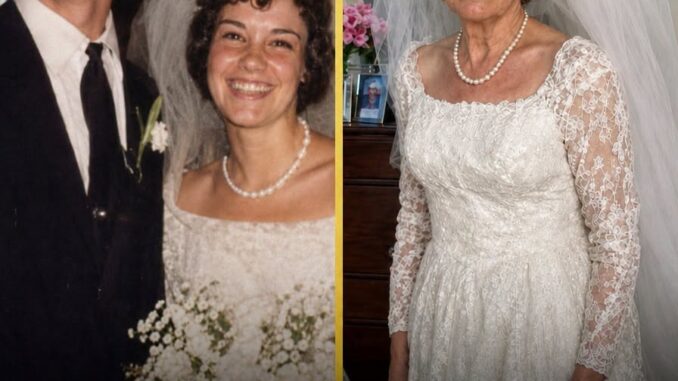
At twenty-two, she’d been preparing to marry the man she thought she’d spend the rest of her life with. She had made her own wedding dress, planned a celebration with their families, and imagined the future they would build together.
But on the day of their wedding, Henry unexpectedly changed his mind.
He left the church without offering an explanation.
For years, Margaret wondered what had happened.
Had she said something wrong? Had Henry stopped loving her? Had someone told him something she didn’t know about?
Eventually, she stopped searching for answers.
She moved to another city, met a kind man named Robert, and built a fulfilling life. They married, raised three children, and shared decades of memories.
After Robert passed away, Margaret found comfort in spending time with her children and grandchildren.
She believed the story of her first engagement belonged firmly in the past.
Then, fifty years after that unforgettable wedding day, someone knocked on her front door.
The visitor carried a small cardboard box.
And inside it was an explanation Margaret had waited half a century to hear.
An Unexpected Visitor
Margaret was in the kitchen preparing cookies for her grandchildren when the doorbell rang.
She wiped her hands on a towel and walked toward the entrance.
A young man stood outside.
He was neatly dressed and held a cardboard box in both hands.
“Mrs. Margaret?” he asked politely.
“Yes?”
“My name is Daniel. I’m an attorney, and I’m here on behalf of Henry.”
Margaret hadn’t heard that name spoken in years.
For a moment, she didn’t respond.
Daniel explained that Henry was seriously ill and wanted her to receive something important.
Margaret immediately felt uncomfortable.
She had spent decades making peace with what happened.
She wasn’t sure she wanted to revisit it.
“I don’t think there’s anything he needs to tell me now,” she replied.
Daniel nodded.
“I understand. But he believes you deserve to know why things happened the way they did.”
Margaret glanced at the box.
“Why wait fifty years?”
Daniel hesitated.
“He’s concerned he may not have another opportunity.”
The kitchen timer began ringing behind her.
For several seconds, Margaret considered closing the door.
Instead, she stepped aside.
“Come in. I suppose we should talk.”
A Box Filled With Memories
They sat at Margaret’s kitchen table.
Daniel placed the box between them.
Before opening it, Margaret asked how he knew Henry.
“He’s my uncle,” Daniel explained. “I’m also helping him organize his personal and legal affairs.”
Margaret slowly removed the lid.
Inside were several photographs, an old wedding invitation, and a faded envelope.
She recognized the invitation immediately.
It was the same design she had chosen when she was twenty-two.
The sight brought back memories of sitting at her mother’s dining table, addressing envelopes and carefully checking the guest list.
Then she noticed the letter.
Her name was written across the front.
The handwriting looked familiar.
Almost too familiar.
She opened the envelope and unfolded the paper.
As she read, her expression changed.
The letter claimed that she had never truly loved Henry.
It suggested that she was marrying him for financial comfort rather than affection.
At the bottom was a signature that looked remarkably like her own.
Margaret stared at it.
“I never wrote this.”
Daniel nodded.
“Henry knows that now.”
She looked up.
“What do you mean, now?”
Daniel took a breath.
“That’s what he asked me to explain.”
A Relationship That Began Years Earlier
Margaret had first met Henry when she was sixteen.
He was a quiet young man who often waited outside the school library because he knew she liked to stay until closing time.
In the winter, he walked her home even when it meant taking a longer route.
Their friendship gradually became something more.
Henry worked long hours at his father’s business.
He drove an old truck that frequently needed repairs.
Margaret didn’t mind.
She liked his sense of humor, his patience, and the way he always seemed genuinely interested in what she had to say.
Their families came from different financial backgrounds.
Margaret’s parents lived modestly and worked hard to provide for their children.
Henry’s family was more financially comfortable.
At first, Margaret didn’t think much about the difference.
But Henry’s mother, Evelyn, certainly did.
A Mother Who Disapproved
Evelyn had never been particularly welcoming toward Margaret.
She was polite in public, but her remarks sometimes made Margaret feel that she didn’t belong.
During one family dinner, Evelyn commented that Henry had grown accustomed to a certain lifestyle.
She suggested that marriage could be difficult when two people came from very different circumstances.
Margaret understood the implication.
She said little and continued helping clear the table.
Later, Henry apologized.
“My mother doesn’t get to decide who I marry,” he told her.
Margaret believed him.
She loved Henry and trusted that they could build a life together.
When he eventually proposed, she accepted without hesitation.
They began planning their wedding.
Margaret and her mother spent several evenings sewing and adjusting her dress.
Her father helped arrange the reception.
Friends and relatives offered to prepare food and decorate the church.
Despite Evelyn’s continued reservations, Margaret looked forward to becoming Henry’s wife.
She had no idea that a single letter would change everything.
The Wedding Day Margaret Never Forgot
On the morning of the wedding, Margaret woke early.
Her mother helped her into the dress they’d spent so many evenings making.
Her father adjusted her veil before they left for the church.
“Are you ready?” he asked.
Margaret smiled.
“I’ve been ready for years.”
When the ceremony began, she walked down the aisle feeling nervous but happy.
Henry stood at the front in a dark suit.
His expression seemed unusually serious.
Margaret assumed he was simply overwhelmed by the occasion.
She reached the altar and stood beside him.
The minister began the ceremony.
Everything appeared to be going as planned.
Then came the moment when Henry was asked to confirm his commitment.
He stepped backward.
“I can’t do this,” he said.
At first, Margaret thought she’d misunderstood.
She turned toward him.
“Henry?”
But he was already moving away.
Within moments, he had left the church.
The guests sat in stunned silence.
Margaret remained standing, holding her flowers, waiting for someone to explain.
No explanation came.
The Weeks That Followed
Margaret remembered very little about the rest of that afternoon.
Her parents stayed close to her.
Friends tried to offer comfort.
But nobody knew why Henry had left.
In the following weeks, rumors began circulating.
Some people believed Henry had changed his mind about marriage.
Others assumed there had been a disagreement between the families.
A few suggested that Margaret must have done something to upset him.
Those comments were especially painful.
She had no idea what she’d supposedly done.
Henry didn’t contact her.
Neither did Evelyn.
Margaret considered writing to him, but eventually decided against it.
She didn’t want to spend her life asking someone to explain why he had walked away.
Six months later, she packed two suitcases and moved to Chicago.
She needed a fresh start.
Beginning Again in Chicago
Margaret found work at a small diner.
She rented a room above a grocery store and began building a new routine.
The first year was difficult.
She missed her family.
She worried about money.
And sometimes, when she was alone, she remembered the church and the wedding that never happened.
But gradually, the memories became less painful.
She made friends.
She learned to enjoy the independence of living on her own.
She discovered that her future could still be meaningful, even if it looked different from the one she’d imagined.
Then she met Robert.
He was a regular customer at the diner.
He usually ordered coffee and a slice of pie.
At first, their conversations were brief.
Over time, they began talking about books, family, and everyday life.
Robert was thoughtful and patient.
He never pressured Margaret to share more than she wanted.
Eventually, their friendship developed into a relationship.
A Different Kind of Love
After several months of dating, Margaret told Robert about Henry.
She explained that she’d once been engaged and that the wedding had ended unexpectedly.
Robert listened without interrupting.
When she finished, he asked a question.
“Do you still love him?”
Margaret considered her answer carefully.
“I don’t think so,” she said. “Sometimes I wonder whether I ever really knew him.”
Robert nodded.
“Then we don’t need to rush anything.”
That response meant more to Margaret than he realized.
He didn’t ask her to forget her past.
He didn’t expect her to pretend she’d never been hurt.
He simply gave her time.
They eventually married in a small ceremony surrounded by close friends and relatives.
Their life together wasn’t always easy.
They managed financial challenges, work responsibilities, and the ordinary difficulties that come with raising a family.
But they supported each other.
They had three children.
They celebrated birthdays, graduations, and holidays.
Years later, they welcomed grandchildren.
Margaret had found the stable, loving home she’d once hoped to create.
Remembering Robert
Robert passed away four years before Daniel arrived at Margaret’s door.
His absence was still felt throughout the house.
Sometimes, Margaret reached for two coffee cups in the morning before remembering that she only needed one.
She missed his familiar footsteps and the conversations they used to have over breakfast.
But she was grateful for their years together.
Their children visited often.
Her grandchildren filled the house with laughter.
And Margaret continued making Robert’s favorite cookies on Sundays, even though he was no longer there to enjoy them.
Her life had been full of love.
That was why the old letter on the kitchen table felt so strange.
It belonged to a different lifetime.
Yet it had shaped a decision that changed everything.
The Truth About the Letter
Daniel explained that Henry had received the letter on the morning of their wedding.
His mother, Evelyn, had given it to him.
She claimed to have found it after Margaret visited their home.
The letter supposedly revealed Margaret’s private thoughts about the marriage.
According to its contents, she was interested in Henry’s financial position rather than building a loving relationship.
Henry had believed it.
Margaret shook her head.
“I was with my mother that morning. We were finishing my dress.”
Daniel opened another folder.
“Henry eventually discovered evidence that the letter wasn’t genuine.”
He removed several handwritten pages.
Margaret examined them.
The pages contained repeated sentences and attempts to reproduce certain handwriting patterns.
Some included versions of her signature.
Another page appeared to be an early draft of the letter Henry had received.
Margaret felt deeply unsettled.
“Someone practiced writing like me?”
Daniel nodded.
“The documents suggest that Evelyn created the letter.”
Evidence Found Years Later
Daniel explained that Henry had discovered the papers after Evelyn passed away twelve years earlier.
They were inside a locked desk among her personal belongings.
At first, Henry hadn’t understood what he was looking at.
But when he compared the pages with the letter he’d kept from the wedding, he noticed similarities.
He eventually asked a handwriting specialist to examine the documents.
According to Daniel, the specialist concluded that the original letter and the practice pages had been written by the same person.
Henry also recognized his mother’s handwriting in several of the notes.
The evidence convinced him that Evelyn had fabricated the message.
Margaret sat quietly.
For years, she’d wondered whether Henry had misunderstood something she’d said.
Now she was learning that someone had deliberately created a false impression of her.
The realization was painful.
But another question immediately came to mind.
“When did Henry find out?”
“Twelve years ago,” Daniel answered.
Margaret stared at him.
“Twelve years?”
He nodded.
She placed the papers on the table.
“Then why am I only hearing about this now?”
Twelve Years of Silence
Daniel explained that Henry had considered contacting Margaret after discovering the truth.
He’d even hired someone to locate her.
The investigator found information about her life in Chicago.
Among the materials was a photograph of Margaret and Robert celebrating a wedding anniversary.
Henry saw the picture.
He learned that Margaret had married, raised children, and built a happy life.
According to Daniel, Henry decided not to interfere.
Margaret wasn’t satisfied with that explanation.
“He didn’t have to interfere,” she said. “He could have told me the truth.”
Daniel nodded.
“I think he understands that now.”
Margaret looked down at the letter again.
For fifty years, she’d lived without knowing why Henry had left.
And for twelve of those years, he’d known the answer.
He had chosen not to share it.
His mother’s deception explained the misunderstanding.
But it didn’t explain all of Henry’s decisions.
Why Henry Wanted to Speak Now
Daniel told Margaret that Henry was receiving treatment for a serious heart condition.
His health had become increasingly fragile.
He was concerned that he might not have another opportunity to explain himself.
The approaching anniversary of their canceled wedding had brought back many memories.
Henry wanted Margaret to know that the letter was false.
He also wanted to apologize.
“Does he expect me to visit?” Margaret asked.
“He hopes you will,” Daniel replied. “But he knows the decision is yours.”
Margaret closed the box.
She needed time to think.
Daniel left his contact information and thanked her for listening.
After he was gone, Margaret returned to the kitchen.
The cookies had cooled.
Her grandchildren would arrive soon.
She looked around the familiar room.
Photographs covered the refrigerator.
Robert’s favorite coffee mug sat on a shelf.
The house was filled with evidence of the life she’d built.
She wasn’t going to let an old misunderstanding erase those memories.
But she did want answers.
Deciding Whether to Visit
That evening, Margaret’s daughter Laura came over with the children.
They decorated cookies and talked about school.
Margaret enjoyed listening to her grandchildren describe their day.
As she watched them, she realized how much her life had changed since she was twenty-two.
She’d once believed that losing Henry meant losing the future she’d imagined.
But her life hadn’t ended that day.
It had taken a different direction.
And that direction had brought her Robert, their children, and the family gathered around her kitchen table.
Later, after everyone left, Margaret sat quietly with a cup of tea.
She thought about the letter.
She thought about Evelyn.
And she thought about Henry, now an elderly man facing serious health problems.
Margaret didn’t want to restart their relationship.
She didn’t want to revisit every possibility of what their lives might have been.
But she wanted to hear him explain his decision.
Two days later, she called Daniel.
She agreed to visit Henry.
Meeting Henry After Half a Century
Henry was staying at a care facility following a recent hospital visit.
When Margaret entered his room, she stopped near the doorway.
He looked very different from the young man she remembered.
His hair was completely white.
His face was thinner.
An oxygen tube rested beneath his nose.
But when he looked up, she recognized his eyes.
“Margaret,” he said quietly.
“Hello, Henry.”
He gestured toward a chair.
She sat down.
For several moments, neither knew what to say.
Then Henry spoke.
“I’m sorry.”
Margaret folded her hands in her lap.
“For what, exactly?”
Henry looked down.
“For everything.”
She waited.
There were fifty years of unanswered questions between them.
A general apology wasn’t enough.
She wanted to understand what he’d been thinking on the morning of their wedding.
The Explanation She Had Waited For
Henry told her that Evelyn had approached him shortly before the ceremony.
She showed him the letter and claimed Margaret had written it.
He’d been shocked by the contents.
The message suggested that Margaret didn’t love him and was interested only in the financial security his family could provide.
Henry admitted that he’d felt deeply embarrassed.
He believed the person he trusted most had deceived him.
Instead of asking Margaret about the letter, he decided to end the wedding.
“Did you ever consider asking me whether it was true?” Margaret asked.
Henry shook his head.
“No.”
“Why not?”
“I was hurt. I was angry. I believed my mother.”
Margaret looked at him for a long moment.
“Your mother gave you a letter, and you believed it without speaking to me?”
He nodded.
She continued.
“You’d known me for years. You knew how I felt about you.”
“I know,” Henry replied.
Margaret took a breath.
“Then why leave me standing in front of everyone?”
Henry was quiet before answering.
He admitted that he’d wanted Margaret to experience the same embarrassment he believed she’d caused him.
The answer saddened her.
His mother had misled him.
But his response had been his own choice.
The Responsibility Henry Couldn’t Avoid
Margaret had imagined many possible explanations over the years.
She’d wondered whether Henry had stopped loving her.
She’d wondered whether he was afraid of marriage.
She’d even considered whether there had been another woman.
But the truth was different.
He’d believed a false letter and acted without giving her an opportunity to respond.
“Your mother made a terrible decision,” Margaret said. “But you made one too.”
Henry nodded.
“I know.”
“You could have asked me one question.”
“I should have.”
Margaret sat back.
For decades, she’d carried uncertainty about something she hadn’t done.
Now she understood that the problem had never been a secret failing on her part.
It had been a misunderstanding created by Evelyn and made worse by Henry’s reaction.
That realization brought relief.
But it also brought disappointment.
Why He Never Contacted Her
Margaret asked about the twelve years following Evelyn’s death.
Henry explained that he’d found the practice pages and recognized what had happened.
He’d felt ashamed.
When he learned that Margaret was happily married to Robert, he convinced himself that contacting her would only cause more pain.
He thought staying away was the considerate choice.
Margaret disagreed.
“You could have written me a letter,” she said. “You could have explained without asking for anything.”
Henry looked at her.
“I was afraid you’d hate me.”
Margaret considered his words.
“Then perhaps you were protecting yourself from hearing what I had to say.”
Henry didn’t argue.
After a moment, he nodded.
“You’re right.”
It was the first time Margaret felt that he fully understood what had happened.
Not simply the letter.
Not simply Evelyn’s actions.
But the years of silence that followed.
Talking About the Lives They Had Lived
After a while, Henry asked about Robert.
Margaret smiled gently.
“He was a good man.”
She told Henry about their marriage.
She described Robert’s patience, his sense of humor, and the way he supported their children.
She spoke about family holidays and ordinary evenings at home.
She told him about their three children and six grandchildren.
Henry listened carefully.
“I’m glad you found happiness,” he said.
“I did,” Margaret replied.
Then she asked whether he’d ever married.
Henry shook his head.
He hadn’t.
For a moment, Margaret felt sadness for the young man she’d once loved.
But she didn’t confuse that sadness with a desire to change the present.
Their lives had taken different paths.
And hers had been filled with people she loved.
Understanding Doesn’t Mean Starting Over
Henry asked whether Margaret ever wondered what might have happened if he’d stayed at the altar.
She thought about the question.
Once, many years earlier, she had wondered constantly.
But not anymore.
“I didn’t come here to imagine another life,” she said. “I came because I wanted to understand this one.”
Henry nodded.
Margaret continued.
“I loved Robert. We built a family together. I wouldn’t exchange those years for anything.”
Henry lowered his eyes.
“I understand.”
She looked at him kindly.
“I can forgive you for believing someone you trusted. But I can’t pretend that the way you treated me didn’t matter.”
Henry accepted her words.
He apologized again, this time more specifically.
He acknowledged that he should have spoken to her before making his decision.
He also admitted that he should have contacted her when he discovered the truth.
Margaret appreciated hearing him take responsibility.
It was something she’d needed for a long time.
A Quiet Goodbye
Eventually, Margaret stood.
Henry looked up.
“Will I see you again?”
She paused.
“I don’t think so.”
He appeared disappointed, but he didn’t argue.
Margaret explained that she had a family and a life she wanted to focus on.
She was grateful to finally know the truth.
But she didn’t want to reopen a relationship that had ended so long ago.
Henry nodded.
“I understand.”
At the doorway, Margaret turned toward him.
“I hope you find peace, Henry.”
He smiled faintly.
“Thank you for coming.”
She returned his smile.
Then she left.
Outside, the late afternoon sun was beginning to set.
Margaret walked to her car and sat quietly for a moment.
She felt emotional.
But she also felt lighter.
The question she’d carried for fifty years finally had an answer.
Returning to the Life She Loved
Margaret arrived home before sunset.
She placed her purse on the kitchen table and removed the old wedding invitation.
For decades, she’d kept it among her belongings.
It reminded her of a day she hadn’t understood.
Now, she finally did.
She took out the forged letter and placed it beside the invitation.
The handwriting looked so much like hers.
Yet the words had never belonged to her.
She thought about how easily one person’s actions could change the course of another person’s life.
Then she looked at the photographs on her refrigerator.
There was Robert smiling beside her at their anniversary celebration.
There were pictures of their children when they were young.
And there were photographs of grandchildren laughing in the backyard.
Margaret realized that although the past had influenced her life, it hadn’t defined everything that came afterward.
She had created something beautiful.
A Sunday Family Tradition
Margaret picked up the telephone and called Laura.
“Are you still bringing the children over on Sunday?” she asked.
“Of course, Mom. Why?”
“I thought I’d make your father’s favorite cookies.”
Laura laughed.
“Mom, you make those every Sunday.”
“I know,” Margaret replied. “Just tell everyone to come hungry.”
After hanging up, she began gathering ingredients.
She measured flour, softened butter, and prepared the baking trays.
It was a familiar routine.
One she’d shared with Robert for years.
The kitchen slowly filled with the comforting smell of freshly baked cookies.
Margaret smiled.
She didn’t need to change anything about her life because of what she’d learned.
The truth had given her understanding.
But the love and happiness she’d experienced were already real.
What Margaret Learned About Closure
For much of her life, Margaret had assumed that closure meant receiving an explanation.
She thought that if she could understand why Henry had left, the painful memory would finally make sense.
And in one way, she was right.
Learning about the forged letter helped her see that she’d never been responsible for the accusations made against her.
But the conversation with Henry taught her something else.
Closure didn’t require rebuilding their relationship.
It didn’t require pretending that the past hadn’t happened.
And it didn’t require changing the life she’d created afterward.
She could understand Henry’s mistakes without excusing every decision he’d made.
She could accept his apology without returning to the relationship.
And she could acknowledge her younger self’s pain while appreciating the happiness that followed.
The Importance of Communication and Trust
Margaret and Henry’s story also illustrated how damaging assumptions can be.
Henry had trusted his mother’s account without asking Margaret for an explanation.
He’d made an important decision based on information he hadn’t verified.
Years later, when he discovered the truth, he allowed embarrassment to prevent another conversation.
Both decisions created unnecessary pain.
Healthy relationships depend on communication, honesty, and the willingness to ask difficult questions.
When concerns arise, speaking directly with the person involved can prevent misunderstandings from growing.
And when mistakes happen, taking responsibility matters.
An apology cannot change the past.
But it can help someone understand what happened and move forward with greater peace.
Final Thoughts
Fifty years after her first wedding was unexpectedly canceled, Margaret finally learned why Henry had walked away.
A forged letter had convinced him that she didn’t truly love him.
The letter had been created by his mother, who disapproved of their relationship.
Henry eventually discovered the truth, but he waited twelve more years before explaining it.
When Margaret finally met him again, she listened to his apology and shared how his decisions had affected her.
She chose to forgive him without reopening their relationship.
Her life had already been filled with love, family, and meaningful experiences.
She had married Robert, raised three children, and welcomed six grandchildren.
The truth about Henry didn’t erase any of that.
It simply helped her understand a chapter that had remained unfinished for decades.
Sometimes, moving forward doesn’t mean returning to the person or place where everything changed. It means understanding what happened, accepting what cannot be changed, and appreciating the life you’ve built since then.
Leave a Reply