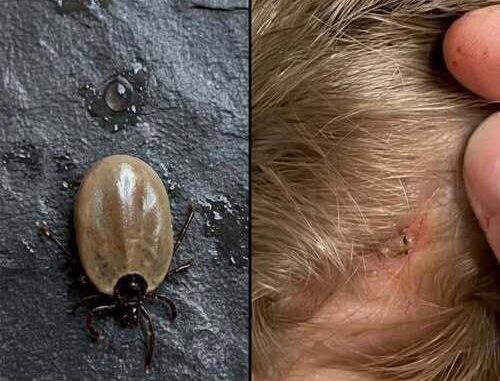
A tick bite may seem like a minor inconvenience at first.
Many people remove the tick, clean the area, and move on with their day, assuming the situation is over. In most cases, it is. However, health experts continue to emphasize that some tick bites can lead to serious illnesses if warning signs are missed or treatment is delayed.
The challenge is that symptoms do not always appear immediately. In some cases, they develop days or even weeks after the bite occurs. Because early symptoms often resemble common illnesses, many people fail to connect them to the tick bite that happened earlier.
Understanding what to watch for—and knowing when to seek medical advice—can make a significant difference.
Why Tick Bites Deserve Attention
Ticks are small parasites that feed on the blood of animals and humans. They are commonly found in wooded areas, tall grass, gardens, hiking trails, and other outdoor environments.
Most tick bites do not result in illness.
However, certain ticks can carry bacteria, viruses, or parasites capable of causing disease. The risk varies depending on geographic location, tick species, and how long the tick remains attached.
Because these illnesses may affect multiple body systems, early recognition and treatment are important.
The key is understanding that the bite itself is often only part of the story.
What happens afterward matters just as much.
Discovering a Tick
Finding a tick attached to your skin—or your child’s skin—can be alarming.
The first priority is removing it properly.
Health organizations generally recommend using fine-tipped tweezers to grasp the tick as close to the skin as possible.
The tick should be pulled upward steadily without twisting or crushing it.
After removal, the area should be cleaned thoroughly with soap and water or an appropriate antiseptic.
Some people choose to save the tick in a sealed container or plastic bag in case identification becomes necessary later.
This can sometimes help healthcare professionals determine potential risks based on the species involved.
Most importantly, avoid panic.
The presence of a tick does not automatically mean illness will occur.
Instead, it should trigger careful observation during the days and weeks ahead.
The Early Symptoms That Can Be Easy to Miss
One reason tick-related illnesses can be challenging to identify is that their early symptoms often resemble common viral infections.
A person may initially experience:
- Fever
- Chills
- Fatigue
- Headache
- Muscle aches
- Joint discomfort
- General feelings of illness
These symptoms can easily be mistaken for a seasonal illness or minor infection.
As a result, people sometimes fail to mention the earlier tick bite when seeking medical care.
That missing detail can delay diagnosis.
Keeping a mental note of recent outdoor exposure and any known tick bites can be extremely helpful if symptoms develop later.
Understanding Skin Changes
One of the most well-known warning signs associated with certain tick-borne illnesses is the appearance of a rash.
However, not every person develops a rash.
When one does occur, it may appear days after the bite.
Some rashes gradually expand over time and may become more noticeable as they grow.
Others may look entirely different.
Because skin reactions vary significantly from person to person, any unusual rash following a tick bite deserves attention, particularly when accompanied by fever or flu-like symptoms.
Photographing the rash can also be useful, as its appearance may change before a medical appointment occurs.
Why Children Require Extra Attention
Children often spend more time outdoors than adults and may be less likely to notice a tick attachment.
Ticks can also be difficult to spot because they frequently attach in hidden locations, including:
- Behind the ears
- Along the hairline
- In the scalp
- Under the arms
- Behind the knees
- Around the waist
Parents are encouraged to perform routine tick checks after outdoor activities, especially during seasons when ticks are most active.
If a child develops unusual symptoms after a known tick bite, prompt communication with a healthcare provider is important.
Children may not always describe symptoms clearly, making observation particularly valuable.
The Importance of Monitoring Symptoms
The period following a tick bite often determines whether potential complications are identified early.
Most people who develop tick-related illnesses begin experiencing symptoms within days to several weeks.
During that time, it can be helpful to monitor:
- Temperature changes
- Unusual fatigue
- New rashes
- Persistent headaches
- Muscle pain
- Joint discomfort
- Changes in energy levels
Tracking symptoms provides useful information if medical evaluation becomes necessary.
Even simple notes on a phone or calendar can help identify patterns that might otherwise be overlooked.
When to Contact a Healthcare Professional
Medical attention should be considered if symptoms develop after a tick bite, especially when fever, rash, significant fatigue, or worsening discomfort is present.
Healthcare professionals can evaluate symptoms, review exposure history, and determine whether additional testing or treatment is appropriate.
The earlier concerns are addressed, the easier it may be to manage potential complications.
Prompt evaluation does not necessarily mean a serious illness is present.
Rather, it helps ensure that important warning signs are not ignored.
Potential Complications of Untreated Illness
One reason public health experts emphasize awareness is that some tick-borne illnesses can affect multiple body systems if left untreated.
Depending on the specific infection involved, complications may include problems affecting:
- Joints
- Nervous system function
- Heart health
- Overall physical well-being
Fortunately, many tick-related illnesses respond well to treatment when identified early.
This is why awareness and timely medical evaluation remain so important.
Early recognition often leads to better outcomes and faster recovery.
Prevention Remains the Best Strategy
While understanding symptoms is important, preventing tick bites remains the most effective approach.
Experts commonly recommend:
- Wearing long sleeves and long pants in wooded areas
- Staying on marked trails
- Using insect repellents as directed
- Performing tick checks after outdoor activities
- Showering soon after spending time in tick-prone environments
- Checking pets for ticks before bringing them indoors
These simple habits can significantly reduce the likelihood of tick attachment.
Prevention is often easier than dealing with illness after exposure occurs.
Avoiding Common Tick Removal Mistakes
Several outdated tick-removal methods continue circulating online despite recommendations against them.
Health experts generally advise against:
- Burning the tick
- Applying petroleum jelly
- Using nail polish
- Attempting to suffocate the tick
These methods may increase the chance of complications and can make safe removal more difficult.
Using fine-tipped tweezers and removing the tick promptly remains the preferred approach.
Why Awareness Matters
The most important lesson regarding tick bites is not fear.
It is awareness.
Most tick bites do not result in serious illness, and many people never experience complications.
However, understanding the warning signs allows individuals and families to respond appropriately if symptoms develop.
Knowledge helps replace uncertainty with informed action.
It encourages observation rather than panic.
And it empowers people to seek medical advice when necessary.
A Small Bite That Deserves Respect
A tick may be tiny, but the attention given to a bite afterward can be important.
Careful removal, cleaning the area, monitoring symptoms, and seeking medical advice when concerns arise are practical steps that help protect long-term health.
The goal is not to assume the worst.
The goal is to remain informed.
By understanding what to watch for and acting promptly when warning signs appear, families can approach tick bites with confidence rather than fear.
In many cases, awareness is the most powerful tool of all.
Leave a Reply