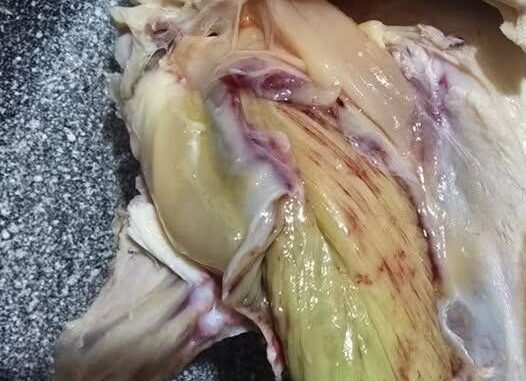
Understanding why chicken sometimes appears green is only part of the picture. The real value comes from knowing how to respond calmly and safely when you encounter it. Many people panic at the sight of unusual discoloration, but with the right knowledge, you can make informed choices without unnecessary stress.
The first step is always awareness. Not every visual difference means danger. Food can vary in color for many harmless reasons, especially when it comes to meat. However, safety should always come first. When there’s any uncertainty, it’s better to slow down and evaluate rather than rush into cooking or consuming something questionable.
Trusting Your Senses
One of the most reliable tools you have in the kitchen is your own senses. Before worrying about technical explanations, take a moment to observe the chicken carefully.
- Smell: Fresh chicken should have little to no odor. A sour, sulfur-like, or unpleasant smell is a strong sign of spoilage.
- Touch: The surface should feel slightly moist but not sticky or slimy.
- Appearance: While minor discoloration can happen, widespread green, gray, or dull coloring—especially paired with other warning signs—should not be ignored.
If something feels off, it usually is. Trusting these simple checks can prevent most food safety issues before they start.
Why Proper Cooking Still Matters
Even when chicken appears normal, proper cooking is essential. Harmful bacteria such as Salmonella and Campylobacter are commonly associated with raw poultry. These microorganisms aren’t visible, which is why cooking to the correct temperature is critical every time.
Reaching an internal temperature of 165°F (74°C) ensures that bacteria are destroyed, making the meat safe to eat. This step is non-negotiable, regardless of how fresh or clean the chicken appears.
Using a food thermometer is one of the simplest ways to guarantee safety. It removes guesswork and ensures consistency, especially when cooking larger or thicker cuts.
When It’s Better to Throw It Away
One of the hardest habits to develop—especially when trying to avoid waste—is knowing when to discard food.
If chicken shows multiple warning signs—such as a bad smell, slimy texture, or unusual discoloration—it’s not worth the risk. Foodborne illness can cause serious discomfort and health complications, and no meal is worth that outcome.
Think of it this way: replacing a piece of chicken is inconvenient, but getting sick is far worse.
The Role of Storage in Preventing Issues
Proper storage plays a major role in maintaining chicken quality. Even fresh, high-quality poultry can spoil quickly if not handled correctly.
To reduce risks:
- Keep chicken refrigerated at a safe temperature (below 40°F / 4°C)
- Store it in sealed packaging to prevent contamination
- Use it within 1–2 days, or freeze it for longer storage
- Avoid leaving it out at room temperature for extended periods
These simple habits significantly lower the chances of spoilage and discoloration.
Understanding the Bigger Picture
Sometimes, green discoloration isn’t about spoilage at all—it can be linked to conditions like Green Muscle Disease (also known as deep pectoral myopathy). This condition occurs when muscle tissue is damaged due to limited oxygen supply, often in fast-growing chickens.
Leave a Reply