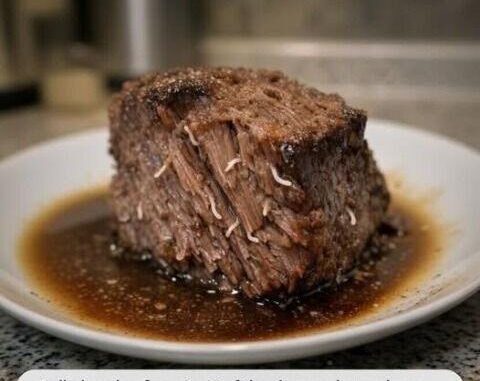
If you’ve ever opened your slow cooker and spotted thin, pale strands running through your beef roast, it’s completely normal to pause for a second. At first glance, they can look unusual—especially if you weren’t expecting them. But in most cases, what you’re seeing is not only harmless, it’s actually a sign that your meal has cooked properly.
Let’s take a closer look at what’s really going on.
What Those Strands Actually Are
The white or slightly translucent strands you’re noticing are connective tissue, mainly made up of collagen. This is a natural part of meat, especially in cuts that come from well-used muscles like chuck roast, brisket, or shoulder.
Collagen acts like a structural support system in the animal’s body. Before cooking, it helps hold muscle fibers together, which is why these cuts can feel firm or even tough when raw.
What Happens During Slow Cooking
The magic happens when you cook meat slowly over low heat.
Instead of staying tough, collagen gradually breaks down over time and turns into gelatin. This transformation is what gives slow-cooked meat its signature tenderness.
As this process happens, the softened connective tissue can appear as:
- Light-colored strands
- Slightly glossy fibers
- Soft, pull-apart pieces within the meat
These strands are simply collagen in the middle of breaking down or already transformed into gelatin.
Why It Can Look Strange at First
Visually, these strands can catch you off guard.
They don’t look like typical muscle meat, and their texture can seem different—so it’s easy to mistake them for something unfamiliar. However, there are a few clear signs that what you’re seeing is completely normal:
- The strands don’t move
- They blend into the meat when shredded
- They match the structure of the roast
Once you pull the meat apart, they usually become part of the overall texture rather than standing out.
Is It Safe to Eat?
Yes—under normal cooking conditions, this is completely safe.
As long as:
- The meat was stored properly before cooking
- It was cooked thoroughly
- There’s no unusual smell
- The color looks typical for cooked beef
Then these strands are simply a natural result of the cooking process.
Slow cooking, in particular, is designed to break down tougher components in meat while bringing it to safe temperatures.
How It Affects Taste and Texture
These softened connective tissues actually improve the final dish.
They help create:
- A tender, pull-apart texture
- Juicier meat
- A richer, more developed flavor
This is why slow-cooked roasts often feel more satisfying and flavorful compared to quickly cooked cuts.
If You Don’t Like the Texture
Even though they’re harmless, not everyone enjoys the look or feel of these strands—and that’s okay.
You can adjust your cooking approach by:
- Trimming visible connective tissue before cooking
- Shredding the meat thoroughly after it’s done
- Choosing leaner cuts with less collagen
These changes won’t affect safety, just the final texture and appearance.
When to Be Cautious
While these strands are normal, it’s always smart to trust your instincts with food.
Take a closer look if you notice:
- A strong or unpleasant odor
- Unusual discoloration (green, gray, or iridescent tones)
- A sticky or slimy texture unrelated to cooking
If everything smells, looks, and tastes as expected, there’s no reason to worry.
Those white, stringy strands in your roast aren’t anything unusual—they’re simply collagen doing exactly what it’s supposed to do during slow cooking.
In fact, they’re part of what makes your roast tender, juicy, and full of flavor.
So the next time you see them, you can relax—they’re not a problem. They’re proof your meal turned out just right.
Leave a Reply