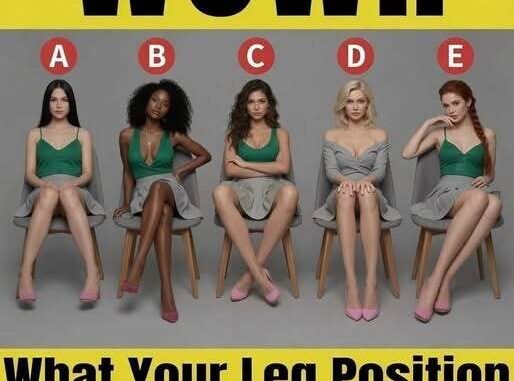
Human beings communicate in countless ways beyond spoken language. Facial expressions, gestures, posture, and body language all contribute to how we express ourselves and how others perceive us. Even seemingly small habits—such as the way we sit—often attract attention from those interested in personality, behavior, and self-discovery.
Over the years, various body-language theories have suggested that our everyday postures may provide clues about our emotions, confidence levels, and social tendencies. Among these ideas is the popular belief that a person’s preferred sitting position can reveal aspects of their personality.
It is important to note that these interpretations are not considered scientifically proven psychological assessments. Human behavior is complex, and no sitting position can accurately define an individual’s character. However, many people find these observations entertaining because they encourage self-reflection and spark conversations about personality and habits.
Whether taken as a lighthearted exercise or a tool for personal insight, exploring these interpretations can be an interesting way to think about how body language connects to everyday life.
Why Body Language Fascinates Us
People have always been curious about what others are thinking and feeling.
Long before modern psychology existed, individuals observed facial expressions, posture, and gestures in an attempt to understand emotions and intentions. Today, body language remains a popular topic in books, articles, and workplace training programs.
Researchers agree that body language can communicate useful information about emotional states, confidence levels, comfort, and social engagement. However, experts also emphasize that no single gesture or posture should be interpreted in isolation.
Context matters.
A person’s sitting position may be influenced by physical comfort, injury, environment, clothing, culture, or habit rather than personality alone.
Nevertheless, many people enjoy exploring common interpretations and considering whether they relate to their own experiences.
The “A Position”: The Creative Dreamer
One commonly discussed posture involves sitting with the knees together while the feet angle slightly apart.
According to popular personality interpretations, individuals who favor this position are often viewed as imaginative, optimistic, and creative.
Supporters of this theory suggest that these individuals tend to focus on possibilities rather than obstacles. They may enjoy exploring ideas, brainstorming solutions, and approaching life with enthusiasm.
People associated with this posture are often described as:
- Creative thinkers
- Friendly and approachable
- Optimistic about the future
- Spontaneous and adventurous
- Open to new experiences
Some interpretations also suggest that these individuals occasionally avoid difficult situations, preferring to focus on positive outcomes rather than confront challenges directly.
Whether accurate or not, the image of a creative dreamer resonates with many people who enjoy imaginative thinking and unconventional perspectives.
The “B Position”: The Private Visionary
Another commonly discussed sitting style involves crossing the legs in a relaxed but contained manner.
Those who favor this posture are often portrayed as thoughtful, introspective, and highly imaginative.
According to popular interpretations, they possess rich inner worlds filled with ideas, ambitions, and creativity. However, they may reveal these qualities only to trusted individuals.
Characteristics frequently associated with this position include:
- Strong imagination
- Preference for meaningful relationships
- Careful decision-making
- Desire for privacy
- Selective social engagement
People who identify with this description may enjoy observing before participating and often take time to develop trust in new relationships.
Their reserved nature is sometimes mistaken for distance, though supporters of these theories argue that it often reflects caution rather than lack of interest.
The “C Position”: The Comfort Seeker
The “C position” typically involves sitting in a way that prioritizes physical comfort above formal posture.
Supporters of body-language theories often associate this position with individuals who appreciate aesthetics, comfort, and personal enjoyment.
These people may place significant value on creating pleasant environments and surrounding themselves with things they enjoy.
Common traits linked to this posture include:
- Appreciation for comfort
- Strong attention to appearance
- Sensitivity to surroundings
- Curiosity and creativity
- Flexible thinking
Some interpretations suggest that comfort-focused individuals occasionally struggle with organization or concentration because they are easily distracted by new ideas and opportunities.
However, they are also frequently described as adaptable and capable of bringing energy and enthusiasm into social situations.
Sitting Upright with Feet Planted: The Composed Individual
A posture characterized by sitting upright with both feet firmly placed on the floor is often associated with discipline and self-control.
People who naturally adopt this position are commonly perceived as organized, dependable, and focused.
Popular interpretations suggest they prefer structure and value responsibility.
Traits frequently linked to this posture include:
- Reliability
- Practical thinking
- Strong self-discipline
- Professionalism
- Goal-oriented behavior
These individuals may appear reserved because they do not always express emotions openly. However, body-language enthusiasts often suggest that beneath their calm exterior lies considerable emotional depth.
Many people view this posture as a sign of confidence and stability, particularly in professional or formal settings.
The Tucked-Feet Position: The Cautious Observer
Some individuals prefer sitting with their feet tucked underneath them or positioned close to the body.
According to popular interpretations, this posture reflects caution and sensitivity.
People associated with this position are often described as thoughtful observers who prefer understanding a situation fully before becoming involved.
Characteristics frequently linked to this posture include:
- Sensitivity to criticism
- Strong self-awareness
- Preference for familiar environments
- Careful observation
- Emotional depth
Supporters of these theories suggest that such individuals value security and may feel most comfortable in settings where they know what to expect.
Rather than seeking attention, they often prefer meaningful interactions with trusted friends and family members.
The “E Position”: Calm on the Surface
The “E position” is sometimes described as sitting with the legs together and angled neatly, creating an appearance of composure and control.
Individuals associated with this posture are often viewed as patient, thoughtful, and detail-oriented.
They tend to approach situations carefully and may spend considerable time evaluating options before making decisions.
Commonly associated traits include:
- Patience
- Reliability
- Attention to detail
- Thoughtfulness
- Emotional restraint
Some interpretations suggest that these individuals occasionally struggle with self-confidence despite appearing calm and capable to others.
Because they prefer preparation and planning, they may be more cautious than impulsive when facing major decisions.
Why We Enjoy Personality Tests
The popularity of sitting-position interpretations reflects a broader fascination with personality assessments.
From quizzes and personality types to astrology and body-language theories, people are naturally drawn to tools that promise insight into themselves and others.
Psychologists suggest that part of this appeal comes from the desire for self-understanding.
People want answers to questions such as:
- Why do I behave this way?
- What motivates me?
- How do others see me?
- What makes me unique?
Even when personality theories are not scientifically rigorous, they often encourage reflection and conversation.
This process can help individuals think more deeply about their habits, preferences, and relationships.
The Limits of Body Language Interpretations
While these theories are entertaining, experts caution against taking them too literally.
Human behavior is influenced by numerous factors, including:
- Personality
- Physical comfort
- Health conditions
- Environment
- Culture
- Mood
- Past experiences
A person may sit differently depending on the chair, setting, clothing, energy level, or social situation.
For example, someone who sits upright at work may relax completely differently at home.
Likewise, an individual who crosses their legs during a meeting may simply be trying to get comfortable rather than expressing a hidden personality trait.
Because of these variables, body-language interpretations should be viewed as interesting observations rather than definitive conclusions.
What Your Sitting Position Really Says
Perhaps the most meaningful takeaway is not whether a particular posture accurately predicts personality.
Instead, these interpretations highlight something deeper about human nature.
People are constantly searching for ways to understand themselves and connect with others.
Even simple habits become opportunities for reflection because they offer clues—real or imagined—about who we are.
Our sitting positions may not reveal secret truths about our personalities, but they do reflect our desire to be seen, understood, and appreciated.
Whether you identify as a creative dreamer, a cautious observer, a comfort seeker, or a composed planner, the value lies not in the label itself but in the self-awareness it inspires.
A Fun Way to Reflect on Yourself
At the end of the day, sitting-position personality theories are best viewed as a fun and thought-provoking exercise.
They encourage people to pause, observe their habits, and consider how body language influences everyday interactions.
While no posture can fully define a person’s character, exploring these ideas can lead to greater self-reflection and interesting conversations with friends and family.
The next time you sit down, take a moment to notice your posture.
You may not uncover a hidden personality secret, but you might gain a new perspective on the small habits that make you uniquely yourself.
Leave a Reply