The Change That Was Hard to Notice
The transformation in our home didn’t happen suddenly. It unfolded so gradually that it was almost impossible to recognize while it was happening. Only when I looked back did I realize how much had shifted in such a quiet way.
There was a time when our home felt full of life. Even on ordinary evenings, there was laughter during dinner, small conversations about the day, and the simple comfort of shared routines. Raising a toddler kept us busy, but there was still a sense of connection between us as a family.
My husband was always an active part of our daughter’s early years. He played with her, responded to her curiosity, and was present in the moments that mattered. At least, that’s how it used to be.
Over time, however, something began to change. It wasn’t dramatic or sudden. It was subtle, almost invisible at first.
And that made it harder to accept.
The First Signs of Distance
The earliest sign was his increasing attachment to his phone.
At first, I didn’t think much of it. Everyone gets busy, and modern life often pulls attention in multiple directions. I assumed it was related to work stress or the need to unwind after long days.
But gradually, the behavior became more frequent. What used to be occasional phone use turned into hours of scrolling, watching, and reading. Even during family time, the phone remained in his hand.
Conversations became shorter. Responses were delayed or automatic. It started to feel as though part of his attention was always somewhere else.
The atmosphere in our home changed, but not in a way I could easily describe. It wasn’t conflict or arguments—it was something quieter. A growing emotional distance that replaced the warmth we once had.
How Our Daughter Reacted
What made the situation more difficult was how our daughter responded to this change.
She was very young—still at an age where emotions are felt more than understood. Even so, she seemed to notice the difference in her father’s presence.
She began seeking me out more often, staying closer to me throughout the day. When she approached her father, her behavior was different than before. Instead of running toward him excitedly like she used to, she would pause, hesitate, and observe him carefully.
Sometimes she would stand nearby, holding a toy or pointing at something she wanted to share. Other times, she would simply watch him quietly, as if trying to understand whether she had his attention.
It wasn’t something she could explain in words, but her behavior reflected a shift she could clearly feel.
That was the moment I began to feel concerned—not angry, but uncertain about what was changing in our family dynamic.
Attempts to Understand the Situation
I tried to address it in small, gentle ways at first.
I asked if he was feeling overwhelmed or stressed. I suggested taking breaks, spending more time together as a family, or setting aside moments without distractions.
His answers were usually simple. He said he was tired, or that he had a lot on his mind. Sometimes he would acknowledge the concern but explain it away as temporary.
Part of me wanted to accept those explanations. It is easier to believe that stress or fatigue is the cause rather than something deeper or more persistent.
Still, the feeling that something was off did not go away.
Instead, it slowly became more noticeable in everyday life.
Growing Emotional Distance
As time passed, the emotional gap between us became clearer.
It wasn’t about major disagreements. There was no specific conflict that marked the beginning of this distance. Instead, it was a series of small moments that added up over time.
He would sit beside us but feel mentally absent. He would hear conversations but not fully engage in them. Even when physically present in the same room, it often felt like his attention was elsewhere.
Our daughter continued trying to connect with him, but her efforts became more cautious. She adapted in small ways, learning to play independently or turning to me when she needed attention or reassurance.
What affected me most was not anger, but observation.
It felt like I was watching a slow shift in how our family interacted without being able to stop it.
A Difficult Decision
One evening, after our daughter had gone to bed, I sat alone and reflected on everything that had changed over the past months.
The house was quiet, but my thoughts were not.
I realized I needed clarity—not assumptions or guesses, but a clearer understanding of what was happening when I wasn’t actively trying to manage or observe the situation.
After a long internal struggle, I decided to place a small recording device in the living room. It wasn’t done out of suspicion of wrongdoing, but out of a need to better understand our daily interactions when I wasn’t focused on them.
It was not an easy decision. I knew it raised ethical and emotional questions. But I also felt that I was missing something important that I couldn’t identify on my own.
What the Footage Showed
The next day, I reviewed the recordings.
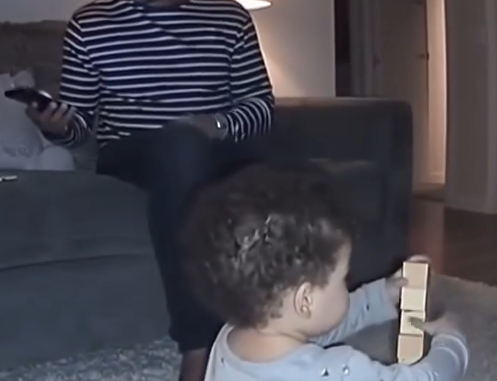
At first, everything appeared normal. The familiar routine of home life continued as expected. Our daughter played on the floor. My husband sat on the couch. The environment looked calm and ordinary.
But as I continued watching, patterns began to emerge.
Our daughter would frequently approach him, trying to engage with him through toys, gestures, or simple attempts to share attention. Each time, his responses were minimal. He would occasionally acknowledge her with brief replies, but often without looking away from his phone.
There were no arguments or harsh reactions—just a lack of engagement.
What stood out most was not any single moment, but the consistency of his distraction.
One specific moment stayed with me longer than the rest. Our daughter climbed onto the couch and leaned against him, seeking closeness. She stayed there for a short while, waiting for acknowledgment. When she didn’t receive it, she quietly shifted away and returned to playing on her own.
There was no distress or visible frustration from her. Instead, there was quiet adaptation.
That was what made the moment difficult to watch.
It showed how children adjust when attention is not fully available to them.
Understanding the Real Issue
After reviewing everything, I realized there was no dramatic event or single cause behind the change in our family dynamic.
Instead, it was a gradual reduction in presence and attention.
Not physical absence—but emotional disengagement during moments that mattered.
This realization was not easy to process. It didn’t involve betrayal or conflict. It was something more subtle, but still impactful: a slow weakening of connection.
It made me reflect on how easily attention can shift in modern life, often without anyone noticing immediately.
A Conversation That Changed Perspective
That evening, I decided to share what I had observed.
I expected defensiveness or disagreement. Instead, the reaction was quieter than I anticipated.
He watched the footage in silence. At first, there was no immediate response. Then, after some time, his expression changed—not into denial, but into recognition.
He admitted that he had not fully realized the extent of his distraction. He acknowledged that what he saw in the recordings was not aligned with how he believed he was behaving in daily life.
It was not a moment of argument, but of reflection.
Beginning to Rebuild Connection
From that point forward, the focus shifted toward improvement rather than blame.
We started making small but intentional changes in our routine. One of the first steps was reducing phone usage during family time. We also began setting aside moments each day where attention was fully directed toward spending time together without distractions.
These changes were not dramatic, but they were meaningful.
Slowly, interaction within the home began to feel more present again. Conversations became more engaged. Time spent together felt more intentional rather than divided.
Most importantly, attention toward our daughter became more consistent and responsive.
She responded naturally to this shift, becoming more expressive and relaxed during interactions.
What the Experience Revealed
Looking back, this experience was not about a single problem or dramatic revelation. It was about awareness.
It highlighted how easily attention can be divided in everyday life, and how that division can affect relationships without clear warning signs.
It also showed how important it is to recognize small changes before they grow into long-term patterns.
Connection in a family is not something that disappears suddenly. It fades gradually when not actively maintained.
Final Reflection
What I learned from this experience is that presence is more than simply being in the same room as someone. It requires active attention, even in small daily moments.
Relationships do not usually change through big events alone. Often, they shift quietly through repeated habits, distractions, and unnoticed routines.
The most important realization was that awareness itself can be a turning point.
When we recognize what is happening early enough, it becomes possible to rebuild what is slowly fading.
And sometimes, that recognition is the most important step of all.
Leave a Reply