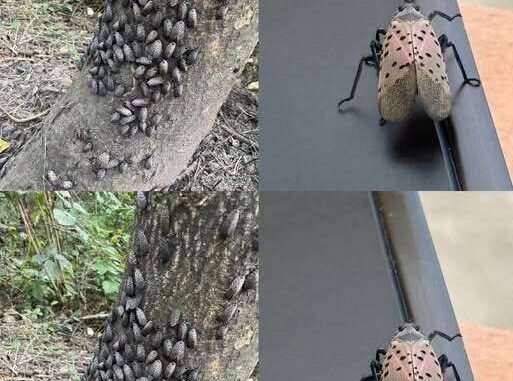
`1You step outside expecting to enjoy the peace of your backyard, only to find your patio furniture covered in a sticky residue, your car speckled with strange droplets, and the leaves on your favorite trees turning black. As you glance upward, you notice a colorful insect clinging to a nearby trunk. At first, it almost looks beautiful, with its spotted wings and flashes of bright red when it flies. Unfortunately, appearances can be deceiving. That insect may be the spotted lanternfly, one of the most destructive invasive pests currently threatening trees, vineyards, gardens, and agricultural crops across parts of North America.
Although the spotted lanternfly doesn’t bite people or directly damage buildings, its impact on plants can be devastating. Originally native to Asia, the insect was first detected in the United States in 2014 and has continued spreading into additional states. Because it feeds on the sap of more than 70 different plant species, including maple, walnut, willow, grapevines, fruit trees, and ornamental plants, large infestations can weaken vegetation over time and create serious problems for homeowners, farmers, and local ecosystems.
One of the first signs of an infestation isn’t actually the insect itself—it’s the sticky substance known as honeydew. As spotted lanternflies feed on plant sap, they excrete large amounts of sugary liquid that falls onto everything beneath the trees. Cars, outdoor furniture, sidewalks, decks, grills, and playground equipment can quickly become coated with this sticky film. Besides being unpleasant, the honeydew attracts ants, wasps, bees, and other insects that feed on sugar.
As the summer progresses, the immature insects become larger and develop striking red patches along with black-and-white markings. This colorful stage often surprises homeowners because the insects look nothing like the adults that appear later in the season.
Adult spotted lanternflies emerge during late summer and early fall. Their folded wings are mostly gray with black spots, giving them a relatively ordinary appearance while resting. However, when they open their wings or take flight, brilliant scarlet hindwings bordered with black become visible, making them easy to identify. Adults measure about one inch long and are strong jumpers, although they generally fly only short distances before landing again.
If you discover spotted lanternflies on your property, experts recommend responding quickly. In areas where the insect is considered invasive, physically removing or eliminating individual insects can help reduce local populations. While a single lanternfly won’t destroy a tree, large numbers feeding together can significantly weaken plants over time.
During autumn, attention should shift toward locating egg masses before they hatch the following spring. Female lanternflies lay eggs on tree trunks, outdoor furniture, rocks, trailers, fences, firewood, campers, and countless other surfaces. The egg masses resemble smears of gray or tan putty or dried mud, often measuring about one to two inches long. Each mass may contain dozens of eggs that could hatch once temperatures begin warming.
Homeowners can carefully scrape egg masses into a container filled with rubbing alcohol or hand sanitizer, which helps destroy the eggs before they hatch. Simply scraping them onto the ground may not be enough, as some eggs can survive if not properly destroyed.
Leave a Reply