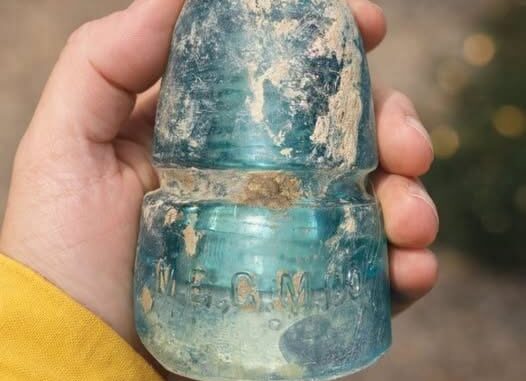
Old telephone and utility poles often feature distinctive glass or porcelain objects shaped like rounded knobs, mushrooms, or layered discs. Although these objects may appear decorative, they were designed to perform an important function in electrical and communication systems.
Known as electrical insulators, these components have played a significant role in the development of telegraph networks, telephone services, and electricity distribution.
Their distinctive appearance and historical significance continue to attract interest among collectors, history enthusiasts, and people curious about everyday infrastructure.
What Are Glass Insulators?
Glass insulators are specially designed components that support electrical wires while separating them from the structures on which they are mounted.
They help prevent unwanted electrical current from passing between wires and supporting materials, such as wooden poles or metal brackets.
This separation contributes to the reliable operation of electrical and communication networks.
Although their designs vary depending on their intended application, traditional insulators are often recognizable by their rounded tops, thick glass construction, and curved edges.
Why Are Insulators Made From Glass and Porcelain?
Glass and porcelain have properties that make them suitable for electrical insulation. Both materials offer high electrical resistance, meaning that electrical current does not easily pass through them under normal operating conditions.
Glass insulators became particularly common during the late 19th and early 20th centuries as communication and electrical networks expanded.
Their practical advantages included:
-
High electrical resistance.
-
Resistance to corrosion.
-
Durability under various weather conditions.
-
Suitability for large-scale manufacturing.
-
Relatively long service life.
Porcelain also became widely used because of its mechanical strength and suitability for various electrical applications.
Both materials contributed to the development of more reliable infrastructure during periods of rapid technological advancement.
How Electrical Insulators Work
Electrical insulators create a protective separation between conductors and the structures supporting them.
Without adequate insulation, electrical current may follow unintended paths, particularly when equipment is exposed to moisture, contamination, or physical deterioration.
Insulators help reduce this possibility by providing electrical resistance and maintaining appropriate separation between components.
Their effectiveness depends on several factors, including material quality, design, operating voltage, environmental conditions, and proper installation.
These components remain an important part of electrical engineering because they support the safe and reliable operation of utility networks.
The Purpose Behind Their Distinctive Shape
One of the most recognizable characteristics of traditional insulators is their unusual shape.
Many feature rounded surfaces, extended skirts, ridges, and layered sections. These elements serve practical engineering purposes rather than simply providing decoration.
Their shape increases what engineers call creepage distance, which is the shortest path along the surface of an insulating material between conductive parts.
Increasing this distance helps reduce the likelihood of unwanted electrical conduction across the insulator’s surface.
The curved sections and overhangs can also help manage rainwater and reduce the formation of continuous moisture paths.
These design features contribute to improved performance in outdoor environments.
Their Role in Early Communication Networks
Before modern wireless communication and fiber-optic technology, telegraph and telephone systems relied extensively on wires supported by wooden poles.
During the 19th century, telegraph networks expanded across considerable distances, allowing messages to travel between communities and countries.
Glass insulators helped support these wires while reducing electrical leakage into surrounding structures.
As telephone networks developed, similar insulating components continued to serve an important purpose.
Their contribution helped improve signal reliability and supported the expansion of communication services.
Today, surviving examples provide an interesting connection to the early development of long-distance communication.
Why Some Insulators Have Different Colors
Traditional glass insulators can be found in several colors, including clear, pale green, blue, and amber.
These variations often reflect differences in glass composition, manufacturing techniques, and the materials available when they were produced.
Some manufacturers also included identifying marks, numbers, or company names on their products.
These details can help collectors and historians learn more about an insulator’s origin and approximate manufacturing period.
Color alone, however, does not necessarily determine an item’s age, rarity, or collectible value.
What Happens When an Insulator Becomes Damaged?
Although glass and porcelain insulators are designed for outdoor use, their condition can change over time.
Exposure to weather, environmental contaminants, and mechanical stress may affect their performance.
Cracks, chips, and accumulated dirt can reduce their insulating effectiveness under certain conditions.
Utility companies use inspection and maintenance procedures to identify components that may require replacement.
Regular maintenance helps support dependable electrical service and reduce equipment-related problems.
Members of the public should never attempt to touch, remove, or inspect insulators installed on utility poles. Such equipment should only be handled by qualified and authorized professionals.
Are Glass and Porcelain Insulators Still Used Today?
Electrical insulators remain essential components of modern utility infrastructure.
Although manufacturing technology has advanced, glass and porcelain continue to be used in various electrical applications.
Modern systems may also incorporate composite insulators made from materials such as fiberglass-reinforced polymers.
These alternatives can offer advantages in weight, mechanical performance, and installation requirements, depending on the application.
Traditional glass and porcelain insulators may still be encountered in older electrical networks, rural infrastructure, historic communication systems, and certain railway installations.
The appropriate material depends on the specific engineering requirements of each system.
Why Vintage Glass Insulators Attract Collectors
Older glass insulators have developed an appeal beyond their original industrial purpose.
Collectors often appreciate their distinctive colors, manufacturing marks, historical significance, and variety of shapes.
Some retired insulators are displayed in homes, museums, and collections dedicated to industrial history.
Their value can vary depending on their condition, manufacturer, age, rarity, and collector demand.
Anyone interested in collecting these objects should obtain them through legitimate sources, such as antique shops, established dealers, or authorized sales of retired equipment.
Why These Objects Continue to Generate Online Interest
Social media has created new opportunities for people to discover unfamiliar historical objects.
Glass insulators are particularly interesting because they combine recognizable materials with shapes that may seem unusual to those unfamiliar with electrical infrastructure.
Online discussions often help people identify these objects and understand their original purpose.
Such conversations also encourage greater appreciation for older technologies and the engineering principles behind everyday systems.
What initially appears to be an unfamiliar glass object can become an opportunity to learn about the history of communication and electricity.
A Small Component With an Important History
Glass insulators demonstrate how relatively simple engineering solutions can contribute to major technological developments.
Their combination of durable materials and carefully designed shapes helped support the expansion of telegraph services, telephone networks, and electrical distribution systems.
Although modern technology has introduced new materials and designs, the fundamental principles of electrical insulation remain important.
These traditional objects offer a valuable reminder of the craftsmanship and engineering knowledge that helped shape modern infrastructure.
Final Thoughts
The glass and porcelain objects found on older telephone and utility poles are not merely decorative features. They are electrical insulators designed to support wires, maintain electrical separation, and contribute to reliable network operation.
Their distinctive appearance reflects practical engineering considerations, while their historical significance connects them to the development of modern communication and electricity distribution.
Whether encountered in historical photographs, museums, or antique collections, glass insulators provide a fascinating glimpse into the technological achievements of earlier generations.
Sometimes, the most overlooked objects reveal some of the most interesting stories about everyday technology.
Leave a Reply