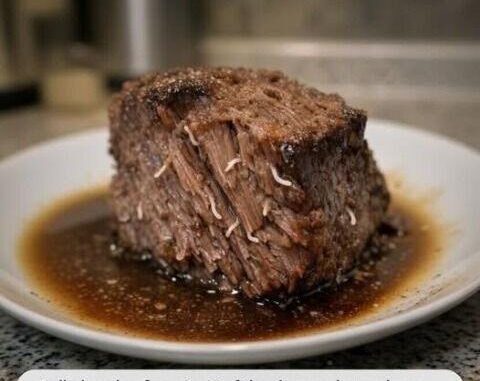
Those White Stringy Strands in Your Roast — What They Really Mean

If you’ve ever opened your slow cooker and spotted thin, pale strands running through your beef roast, it’s completely normal to pause for a second. At first glance, they can look unusual—especially if you weren’t expecting them. But in most cases, what you’re seeing is not only harmless, it’s actually a sign that your meal has cooked properly.

Let’s take a closer look at what’s really going on.


What Those Strands Actually Are

The white or slightly translucent strands you’re noticing are connective tissue, mainly made up of collagen. This is a natural part of meat, especially in cuts that come from well-used muscles like chuck roast, brisket, or shoulder.

Collagen acts like a structural support system in the animal’s body. Before cooking, it helps hold muscle fibers together, which is why these cuts can feel firm or even tough when raw.


What Happens During Slow Cooking

The magic happens when you cook meat slowly over low heat.

Instead of staying tough, collagen gradually breaks down over time and turns into gelatin. This transformation is what gives slow-cooked meat its signature tenderness.

As this process happens, the softened connective tissue can appear as:

  • Light-colored strands
  • Slightly glossy fibers
  • Soft, pull-apart pieces within the meat

These strands are simply collagen in the middle of breaking down or already transformed into gelatin.


Why It Can Look Strange at First

Visually, these strands can catch you off guard.

They don’t look like typical muscle meat, and their texture can seem different—so it’s easy to mistake them for something unfamiliar. However, there are a few clear signs that what you’re seeing is completely normal:

  • The strands don’t move
  • They blend into the meat when shredded
  • They match the structure of the roast

Once you pull the meat apart, they usually become part of the overall texture rather than standing out.


Is It Safe to Eat?

Yes—under normal cooking conditions, this is completely safe.

As long as:

  • The meat was stored properly before cooking
  • It was cooked thoroughly
  • There’s no unusual smell
  • The color looks typical for cooked beef

Then these strands are simply a natural result of the cooking process.

Slow cooking, in particular, is designed to break down tougher components in meat while bringing it to safe temperatures.


How It Affects Taste and Texture

These softened connective tissues actually improve the final dish.

They help create:

  • A tender, pull-apart texture
  • Juicier meat
  • A richer, more developed flavor

This is why slow-cooked roasts often feel more satisfying and flavorful compared to quickly cooked cuts.


If You Don’t Like the Texture

Even though they’re harmless, not everyone enjoys the look or feel of these strands—and that’s okay.

You can adjust your cooking approach by:

  • Trimming visible connective tissue before cooking
  • Shredding the meat thoroughly after it’s done
  • Choosing leaner cuts with less collagen

These changes won’t affect safety, just the final texture and appearance.


When to Be Cautious

While these strands are normal, it’s always smart to trust your instincts with food.

Take a closer look if you notice:

  • A strong or unpleasant odor
  • Unusual discoloration (green, gray, or iridescent tones)
  • A sticky or slimy texture unrelated to cooking

If everything smells, looks, and tastes as expected, there’s no reason to worry.

Those white, stringy strands in your roast aren’t anything unusual—they’re simply collagen doing exactly what it’s supposed to do during slow cooking.

In fact, they’re part of what makes your roast tender, juicy, and full of flavor.

So the next time you see them, you can relax—they’re not a problem. They’re proof your meal turned out just right.

Why Certain Cuts Have More of These Strands

If you’ve noticed that some roasts have more of these white strands than others, there’s a simple explanation: not all cuts of meat are the same.

Cuts like chuck roast, brisket, and shoulder come from parts of the animal that are used more frequently during movement. Because of this, they naturally contain more connective tissue, including collagen. This is what gives them their structure—but also what makes them tougher if cooked quickly.

On the other hand, cuts like tenderloin or sirloin come from less-used muscles. These cuts are naturally more tender and contain less connective tissue, which means you’re less likely to see those stringy strands after cooking.

However, there’s a trade-off.

While leaner cuts may look smoother and more uniform, they often lack the deep, rich flavor that comes from slow-cooked, collagen-rich cuts. The breakdown of connective tissue doesn’t just change texture—it enhances taste in a way that quicker cooking methods simply can’t replicate.


The Science Behind the Transformation

To really understand why these strands appear, it helps to look briefly at what happens on a molecular level.

Collagen is a protein that forms strong, rope-like fibers in raw meat. These fibers are tightly wound and resistant to breaking down under normal conditions.

When exposed to low, steady heat over time—typically between 160°F and 205°F (70°C to 96°C)—collagen begins to unwind. As it does, it absorbs moisture and gradually converts into gelatin.

This gelatin:

  • Softens the overall structure of the meat
  • Adds moisture and richness
  • Creates that signature “melt-in-your-mouth” texture

The white strands you see are simply part of this transition. Some have fully broken down, while others are in the process, which is why they may still appear slightly fibrous.


Why Patience Matters in Cooking

One of the biggest mistakes people make when cooking tougher cuts of meat is rushing the process.

If the cooking time is too short, collagen doesn’t have enough time to break down fully. This can leave the meat feeling tough, dry, or chewy—even if it’s technically cooked through.

That’s why methods like:

  • Slow cooking
  • Braising
  • Pressure cooking (with proper timing)

are so effective. They give collagen the time it needs to transform.

If you’ve ever had a roast that felt tough at first but became tender after cooking longer, you’ve experienced this process firsthand.


How to Tell When Your Roast Is Perfectly Done

Instead of focusing only on cooking time, it’s helpful to pay attention to texture.

A properly cooked roast should:

  • Pull apart easily with a fork
  • Feel soft throughout, not firm in the center
  • Release juices naturally when cut

If you still see strands but the meat is tender, that’s completely normal. In fact, it often means you’ve reached the ideal cooking point.


The Role of Moisture in the Process

Moisture plays a key role in breaking down connective tissue.

That’s why slow-cooked recipes often include liquids such as:

  • Broth
  • Water
  • Wine or sauces

These liquids create a humid environment that helps collagen convert into gelatin more efficiently.

Without enough moisture, the meat can dry out before the connective tissue has time to soften. This can result in a less enjoyable texture, even if the strands are still present.


Why Shredding Changes Everything

If the appearance of these strands still feels off-putting, shredding the meat is one of the easiest solutions.

When you pull the meat apart:

  • The strands blend into the overall texture
  • The gelatin distributes evenly
  • The dish becomes more uniform

This is why shredded beef dishes often feel smoother and more consistent compared to sliced roasts.


Cultural Cooking Traditions That Embrace This

Interestingly, many traditional cuisines around the world rely on this exact process.

Dishes that use slow-cooked, collagen-rich cuts are often considered comfort foods because of their texture and depth of flavor.

Examples include:

  • Braised beef dishes
  • Stews and pot roasts
  • Pulled or shredded meat recipes

In these dishes, the presence of softened connective tissue isn’t just accepted—it’s expected and appreciated.


Storage and Reheating: What Happens Next

After your roast is cooked and stored, the gelatin formed from collagen can change slightly as it cools.

You might notice that:

  • The meat firms up in the refrigerator
  • Juices become thicker or gel-like

This is completely normal. When reheated, the gelatin melts again, returning the meat to its tender and juicy state.

This is another sign that collagen has properly broken down during cooking.


Common Misconceptions

There are a few misunderstandings that often come up when people see these white strands:

“It means the meat is undercooked.”
Not necessarily. In fact, these strands usually appear because the meat has been cooked long enough for collagen to break down.

“It’s something artificial or added.”
No—this is a completely natural part of the meat’s structure.

“It means the meat is low quality.”
Actually, many high-quality, flavorful cuts contain more connective tissue. They just require the right cooking method.


A Better Way to Look at It

Instead of seeing these strands as something unusual, it helps to think of them as part of the cooking process working correctly.

They are a sign that:

  • The meat had enough time to cook properly
  • The connective tissue is breaking down as expected
  • The final texture will be tender and rich

In other words, they’re not a flaw—they’re part of what makes slow-cooked meals so satisfying.


Final Thoughts

Cooking is as much about understanding as it is about technique. Small details—like the appearance of white strands in a roast—can seem confusing at first, but they often have simple, natural explanations.

Once you know what to expect, these moments become less about concern and more about confidence.

So the next time you lift the lid and notice those familiar strands, you’ll know exactly what they mean:

Your roast isn’t just done.

It’s done right.

Be the first to comment

Leave a Reply

Your email address will not be published.


*