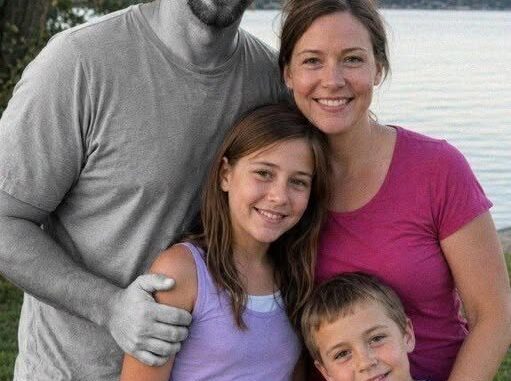
After my husband Jack passed away, everyone told me the same thing.
It was a tragic workplace accident.
That was what the factory report said. That was what the manager explained. That was what the paperwork repeated in different technical phrases that all seemed to point to the same conclusion.
An equipment malfunction.
A sudden failure.
An unfortunate moment.
For a while, I tried to accept that explanation. I had to. I had two children who still needed me, and grief leaves very little space for unanswered questions.
But even then, something never fully felt settled.
Jack had worked at that factory for more than a decade. He was careful, experienced, and methodical. It was difficult to believe he could have made a simple mistake that led to something so serious.
Still, life moves forward even when the mind doesn’t fully agree with it.
Life After Loss
In the weeks after the funeral, our home felt quieter in ways I couldn’t describe.
His mug was still by the sink.
His boots were still by the door.
And the garage — his favorite place in the house — stayed untouched for a long time.
Jack used to say the garage was where he could “fix anything.”
And for a while, I couldn’t bring myself to step inside it.
Eventually, I did.
The Old Toolbox
While cleaning the garage one afternoon, I noticed something familiar under the workbench.
Jack’s old red toolbox.
It was worn down, scratched, and clearly well-used. I had joked about replacing it years ago, but he always refused.
“Don’t throw that away,” he once told me.
At the time, I thought it was just sentimental attachment.
But now, it felt different.
I carried it inside and placed it on the table.
Inside were the usual things:
wrenches
screws
tape
folded notes
old hardware
Nothing unusual at first glance.
But then I noticed something strange.
The bottom panel didn’t feel right.
A Hidden Compartment
Carefully, I lifted the base.
Underneath was an object wrapped in cloth.
A phone.
It was Jack’s old mobile — the one he had said he lost months before his passing.
My hands shook as I plugged it in and waited.
After a long hour, the screen finally lit up.
One Final Video
There was only one video saved on the device.
It was recorded the night before he died.
I remember hesitating before pressing play.
The video showed Jack sitting alone in the garage.
He looked tired. Worried. Not like himself.
After a long silence, he began speaking.
He said he had been trying to handle something difficult at work. Something he hadn’t told me about because he didn’t want to involve the family.
As the video continued, it became clear that he was under a great deal of pressure related to workplace conditions and decisions being made at the factory.
At one point, he mentioned safety concerns and employees being placed in difficult situations.
Then he said something that stayed with me:
“If something happens to me, I want the truth to be known.”
The video ended abruptly shortly after.
After Watching the Video
I sat in silence for a long time after it ended.
It didn’t give me all the answers.
But it changed something important — it made me realize there were things I didn’t know about his daily life, things he carried alone.
In the days that followed, I reached out for legal advice. The video was reviewed, and parts of the workplace situation were later examined more closely.
Over time, other employees also came forward with concerns about safety procedures and internal pressure.
Nothing changed the past.
But it helped bring clarity to questions that had never been answered.
What I Learned
The hardest part wasn’t just losing Jack.
It was realizing how much he had tried to protect us from the weight he was carrying.
Looking back, I can see small signs I didn’t understand at the time — long days, quiet evenings, and moments where he seemed lost in thought.
He never wanted to worry us.
That was just who he was.
Moving Forward
Life didn’t go back to normal after that discovery.
It slowly became something new.
My children and I began rebuilding routines again. Small things at first — fixing broken items, repainting shelves, and learning to handle tasks he once did without thinking.
The garage is still there.
And so is the toolbox.
Not as something painful anymore.
But as a reminder that even ordinary objects can hold pieces of a person’s story.
Final Thoughts
Sometimes the people closest to us carry things we never see.
Not because they don’t trust us.
But because they believe they’re protecting us by staying silent.
What I learned is simple but important:
Even the strongest people need support.
And sometimes, the truth they leave behind only becomes visible when we’re finally ready to see it.
Leave a Reply